
Volleyball
The Outside Hitter: Volleyball's Workhorse, Explained
The outside hitter (also called the left-side hitter or pin hitter) attacks from the left antenna and carries volleyball's heaviest two-way load: she takes more swings than anyone on the court and passes in serve receive on almost every rotation. When a rally breaks down, the ball goes to her, high and outside, which makes the outside hitter the player a team leans on when nothing else is working. Here is the full job description, how it differs from the opposite on the other pin, and what to build if you play or coach the position.
The Job: Attack From the Left, Pass Everywhere
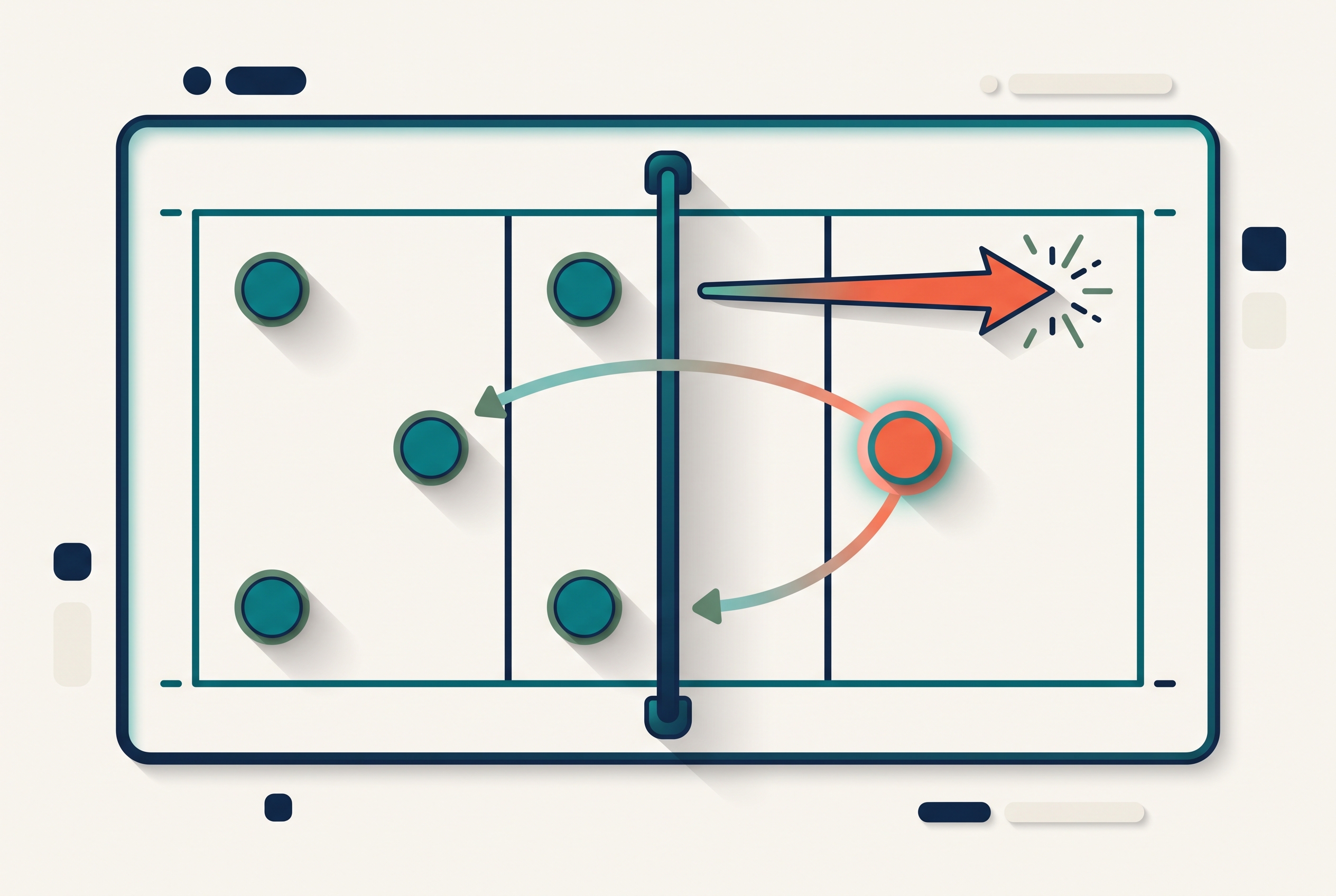
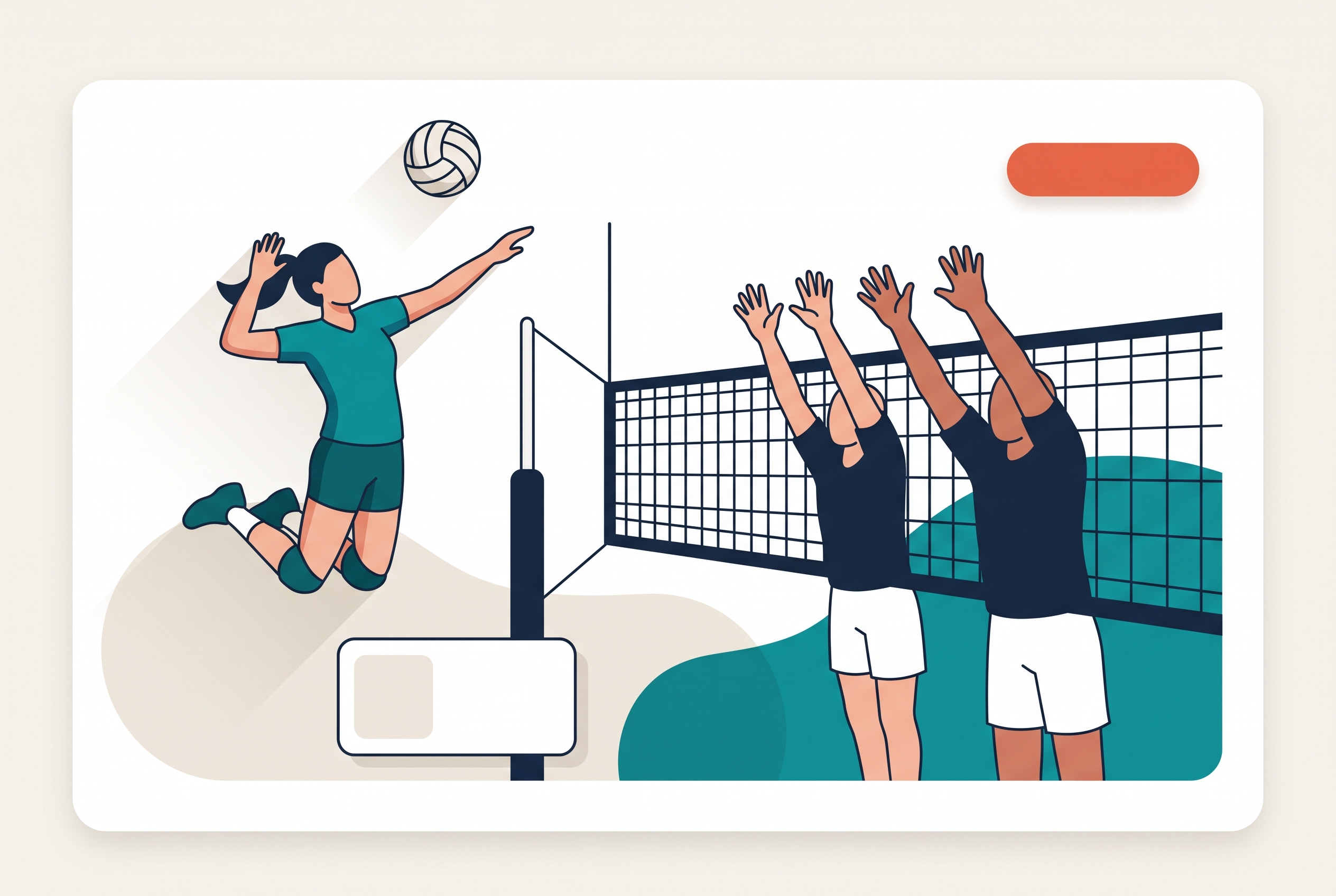
The outside hitter's home is zone 4, the left front. In-system, she attacks sets delivered to the left antenna against the opponent's right-side block. Out of system, when the pass is off the net and the setter is scrambling, the default play at every level of volleyball is the same: high ball to the outside. That default is the position's identity. Middles get the pretty quick sets when the pass is perfect; outsides get the ball when it is not, which is most of the time in youth volleyball.
The second half of the job happens before the attack: outsides are two of the standard three passers in serve receive, standing next to the libero while opposing servers hunt them on purpose. A full rally for an outside often reads: pass the serve, transition off the net, approach and swing, land, and cover the block. No other position strings that many high-effort actions together per rally, which is why conditioning matters more for outsides than anyone except the setter.
Outside Hitter vs. Opposite: The Difference People Search For
The confusion is understandable because both are pin hitters. The outside attacks from the left antenna, passes in serve receive, and gets the out-of-system sets. The opposite attacks from the right antenna, is usually excused from serve receive, and blocks against the opponent's outside hitter, meaning she faces the other team's best attacker all match. Rotation-wise the names are literal: the opposite stands opposite the setter in the service order, while outsides sit opposite each other so one of them is always in the front row. In practice: the outside is the volume attacker and passer; the opposite is the scoring specialist and blocking matchup.
The Skills That Actually Separate Outsides
Watch a tryout and every candidate outside can hit a well-tossed ball. The separators show up under worse conditions, in roughly this order.
Passing that survives targeting. Once opponents identify a weak-passing outside, she receives 20 serves a match. An outside who cannot pass forces her coach to hide her, which caps her court time no matter how hard she swings. The passing drills chart on the 3-2-1 scale is the honest test.
Shot range over raw power. A youth outside with line, angle, roll shot, and tip beats a harder hitter with one shot, because blocks learn a one-shot hitter by the second set. Track it with hitting percentage rather than kill counts: efficiency exposes the hitter who scores five kills on twenty errors.
A repeatable approach. The four-step left-right-left-close pattern, on time from a full transition, off either kind of pass. Approach quality decays fastest under fatigue, which is why transition footwork appears in every serious outside's training plan.
Block coverage and defense. Outsides play six rotations, three of them in back row unless a DS takes over. The best programs treat the outside's back-row skills as a second position, not an afterthought.

Developing and Evaluating an Outside Hitter
Development follows the same order as the separators. Pass volume first: 60 to 100 charted serve-receive reps a week, because passing is the skill that keeps an outside on the floor. Then shot-building against no block, one new shot per month, called before contact so the choice is deliberate. Then transition: block-land-push-approach repeats, which double as conditioning. Wall-and-ball work at home fills the gaps between practices, and coaches on Rizzler assign exactly those reps through Rizzler Reps so offseason work gets logged rather than assumed.
Evaluation should mirror the job's two halves. In Rizzler's volleyball player evaluation template, an outside's profile lives in two categories at once: Attacking (approach and timing, power, shot selection) and Passing (platform control, footwork to the ball). A candidate who scores 4s in attacking and 2s in passing is an opposite or a substitution project, not a starting outside, and having both numbers on one card makes that conversation with the player concrete. On the roster side, the Depth Chart tab in the volleyball Game Manager keeps your outside group ranked two or three deep, which matters at the position most likely to lose players to fatigue and ankle sprains.
Where the Outside Fits in Each System
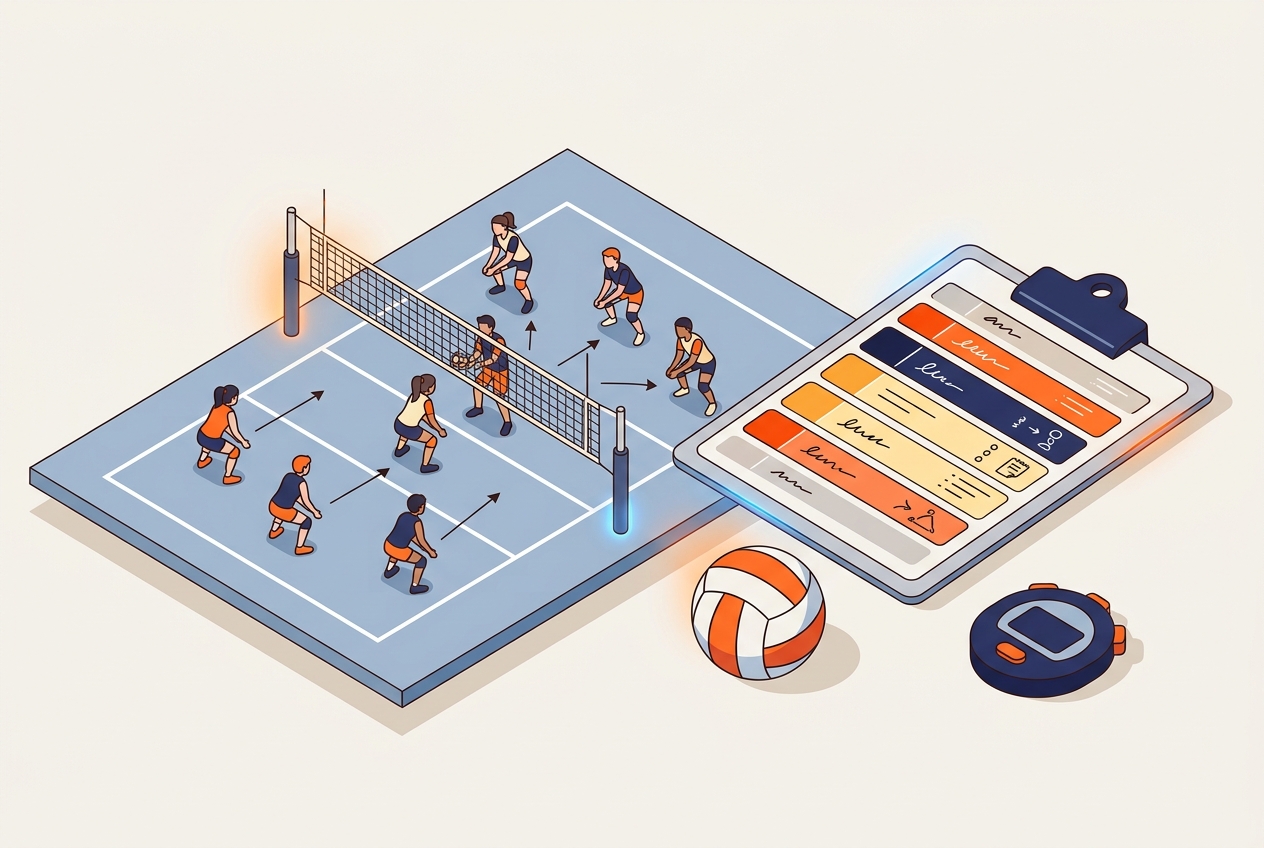
Every standard system carries two outside hitters, seated opposite each other in the service order so one is always front row. That symmetry is what gives the offense a left-side attacker in all six rotations of a 5-1 or 6-2. It also means the two outsides split very different rotations: one spends her front-row turns with the setter, the other with the opposite. Coaches balancing a stronger and weaker outside should test both arrangements; the rotation generator makes the comparison a two-minute exercise instead of a whiteboard session.
Frequently Asked Questions
What does an outside hitter do in volleyball?
She attacks from the left antenna, passes in serve receive, plays back-row defense, and takes the out-of-system sets when the rally breaks down. It is the highest-volume position in volleyball: most swings, most serve receptions, and usually the most total contacts after the setter.
What is the difference between an outside hitter and an opposite?
The outside attacks from the left and passes in serve receive; the opposite attacks from the right, usually does not pass, and blocks against the opponent's outside. The opposite stands opposite the setter in the rotation order, while the two outsides sit opposite each other.
Is outside hitter the hardest position in volleyball?
It carries the heaviest combined workload: attacking volume plus serve-receive duty plus six rotations of play. The setter's job is harder mentally; the outside's is the most physically demanding, and the two-way skill requirement makes it the hardest position to staff well at youth level.
What makes a good outside hitter?
Passing that holds up when servers target her, a range of attacking shots rather than one hard swing, a repeatable approach that survives transition and fatigue, and real back-row skills. Power matters, but efficiency (kills minus errors per attempt) is the number that predicts winning.
How tall do you need to be to play outside hitter?
Less than the middle and opposite: outsides succeed on timing, shot range, and a live arm more than raw reach, and strong high-school outsides run from about 5'6" up. Shorter outsides compensate with a faster arm, better shot selection, and elite passing, which keeps them on the floor.
How do you evaluate outside hitters at a tryout?
Score the two halves of the job separately: attacking (approach, timing, power, shot selection) and passing (platform control, footwork), each 1 to 5 across multiple reps. A dedicated serve-receive station with charted 3-2-1 passing plus a hitting station gives you both numbers in one session.
What does OH mean in volleyball?
OH is the outside hitter, the attacker who hits from the left antenna (zone 4) and also passes in serve receive. Some rosters write LS for left side; it is the same position.
What is a pin hitter in volleyball?
A pin hitter is any attacker who hits from the antennas (the pins) at the ends of the net: the outside hitter on the left and the opposite on the right. Middles are not pin hitters because they attack from the center of the net.
Talk to our team
Want to spend more time coaching and less time with paperwork? Let's talk.
Tell us about your team and we'll show you how to plan games, set lineups, run the schedule, and develop players in one place, so you spend the season coaching instead of chasing admin.
Less admin, more coaching
Plan games, set lineups, and track the season in one place
Keep every family in the loop automatically
Tell us about your program
4 fields · takes 30 seconds
Lands in the same inbox as the Help button · human response only
Read Next
How to Import Stats from GameChanger into Rizzler
FAQ10U Baseball Practice Plan: A 75-Minute Kid-Pitch Practice
Learn6-1 Volleyball Rotation: What It Means and How to Run It
VolleyballVolleyball Practice Plan Template: Printable Session Sheet and Weekly Grid
VolleyballWhat Baseball Stats Should You Track at 12U?
StatsRizzler vs GameChanger: Which Do You Need?
Comparison