
Volleyball
The Libero: Volleyball's Specialist in the Wrong-Colored Jersey
A libero (pronounced LEE-beh-ro, Italian for "free") is volleyball's defensive specialist: a back-row-only player in a contrasting jersey who replaces teammates without using substitutions, anchors serve receive, and digs the opponent's hardest swings. She cannot block, cannot attack above net height, and never rotates to the front row. The position was added to the international game in 1998 to keep rallies alive and give smaller players a genuine path to elite volleyball, and it did both. Here is what the libero is, exactly what the rules allow at each level of American play, and what makes a good one.
Why the Different Jersey
The contrasting jersey is not fashion; it is officiating equipment. Because the libero swaps on and off the court constantly, between rallies and without the referee's whistle, the officials and scorer need to identify her at a glance to track the swaps and enforce her restrictions. The rule sets require the libero's jersey to clearly contrast with her teammates'. That is the entire story parents ask about most: the one kid in the different color is not being punished, promoted, or captained. She is playing a position so specialized it comes with its own uniform.
What a Libero Does
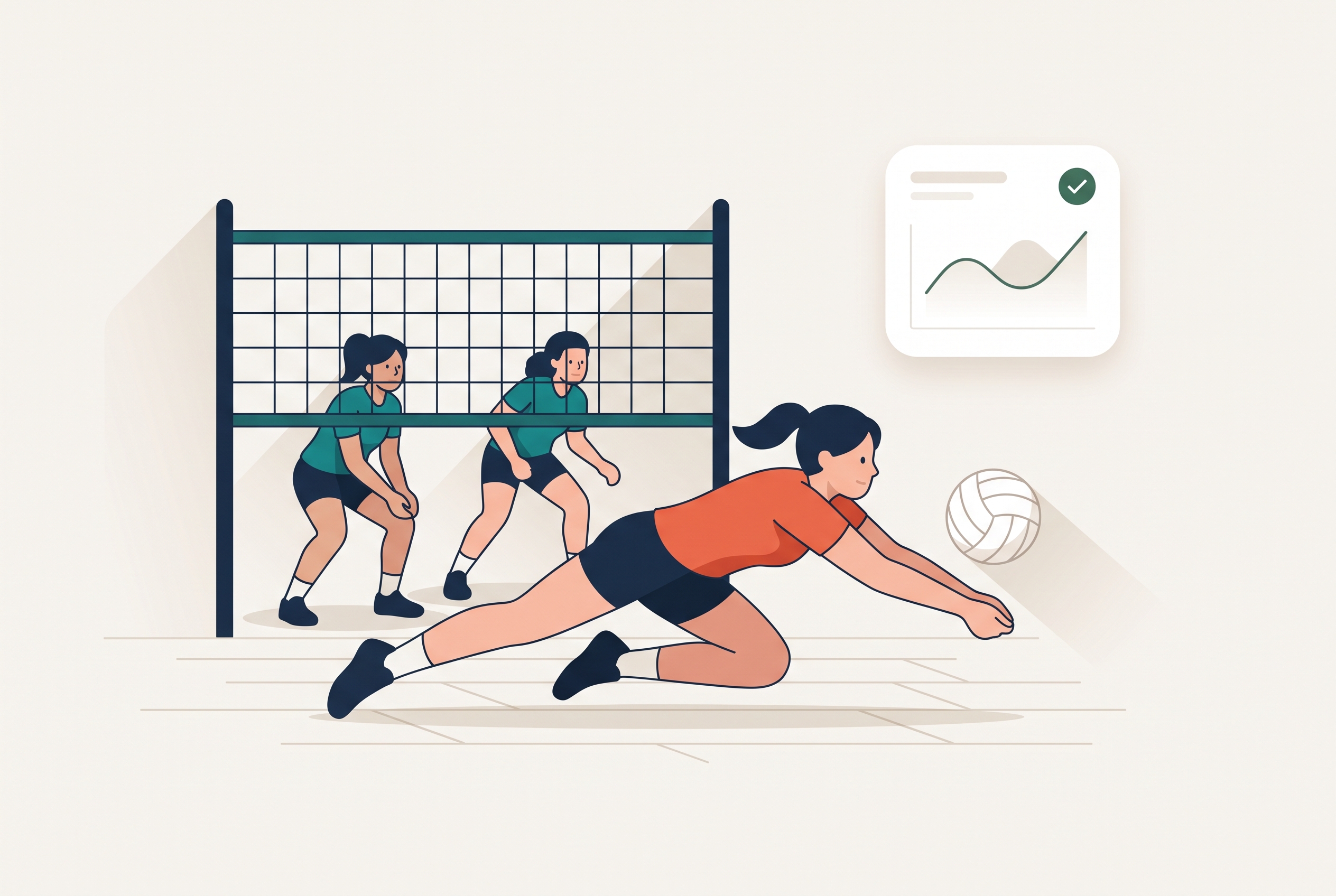
The libero's job is the first contact. In serve receive she is one of the standard three passers, usually stationed where the opponent serves hardest, and strong teams funnel a third or more of all serves at her on purpose, trusting her platform over anyone else's. In defense she patrols the back court, digging attacks that end rallies against lesser defenders and chasing the deflections that keep scrambles alive.
Her limits are just as defining. She may not block or attempt to block. She may not attack a ball that is entirely above net height, from anywhere. And if she hand-sets a teammate from on or in front of the attack line, that teammate cannot attack the ball above net height (platform sets carry no such restriction, and hand sets from behind the line are unrestricted). Within those walls she is the freest player on the court, replacing back-row teammates in unlimited swaps that never touch the team's substitution count. The mechanics of those swaps, where they happen, whose rotation spot she holds, and when she must come off, are covered step by step in our libero rotation guide.
The Rules, by Governing Body
Most libero confusion comes from mixing rule sets: the college match on TV, the club tournament on Saturday, and the school season on Tuesday do not run identical libero rules. The differences that matter:
| Rule | NFHS (high school) | USAV (club) | NCAA (college) | FIVB (international) |
|---|---|---|---|---|
| Liberos per set | 1 (2 beginning 2026-27, one on court at a time) | 0, 1, or 2 designated | 1 per set | 2 designated |
| May the libero serve? | Yes, one rotation slot | Yes, one rotation slot | Yes, one rotation slot | No |
| Replacements count as subs? | No, unlimited | No, unlimited | No, unlimited | No, unlimited |
| May she be team captain? | Yes | Playing captain allowed | Yes | No |
| Attack above net height | Never | Never | Never | Never |
The serving rule is the one to memorize for American play: under NFHS, USAV, and NCAA rules the libero may serve, but only in one rotation slot per set; once she serves in a slot, that slot is hers alone for the rest of the set. Players who "know" the libero can never serve are quoting FIVB rules from international broadcasts.
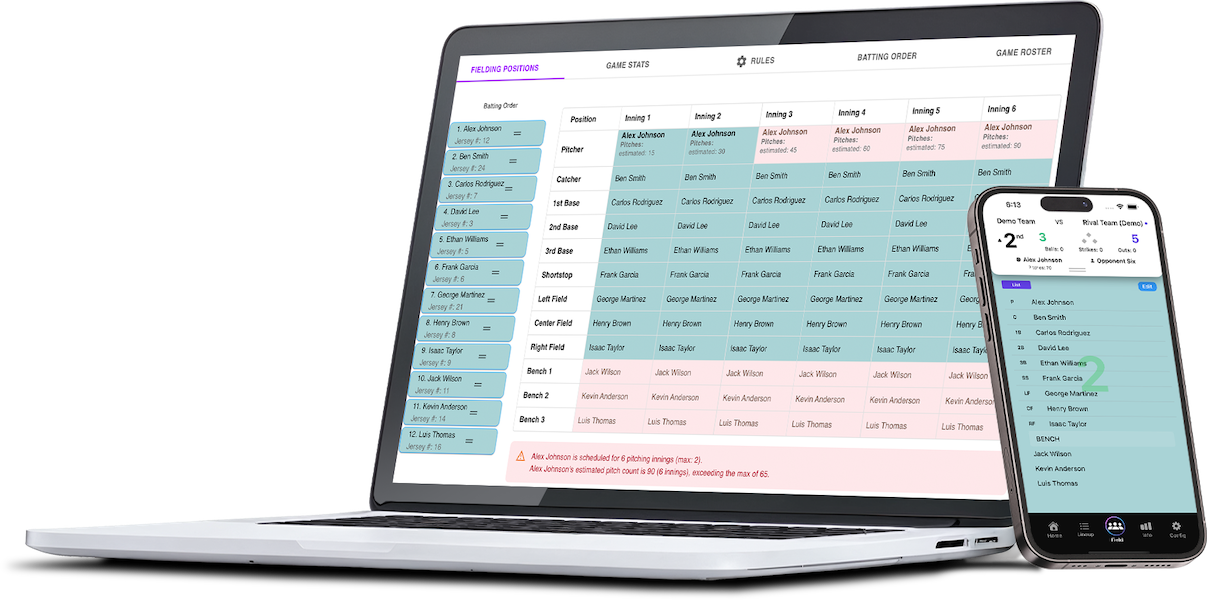
These are exactly the kinds of per-body differences a rules engine has to encode, and Rizzler's does: the free rotation generator and the volleyball Game Manager apply libero constraints under whichever governing body you select (NFHS, USAV, NCAA, or AAU), so the plan you print is legal under the rules you actually play.

What Makes a Good Libero
Passing first. The libero exists to make first contact perfect, and every other gift is decoration on top of a stable platform: early feet, a quiet upper body, and a passing rating that holds up against jump serves. Chart your passers on the 3-2-1 scale for two weeks and the libero candidates identify themselves.
Then speed and courage, in that order of trainability. Reading an attacker's shoulders, taking a full-commitment first step, and hitting the floor without hesitation are what separate a libero from a good back-row player in the wrong jersey. Height is irrelevant; the position exists precisely because a 5'2" player with elite ball control belongs on the court at every level of the sport.
The overlooked third trait is voice. The libero sees the whole court with no blocking duties to distract her, and the best ones run the back-court defense out loud: calling seams before the serve, calling "in" and "out" mid-rally, calling coverage on their own hitters. When choosing between two equal passers, take the louder one.
Developing one is straightforwardly a repetition problem: the passing drills and serve receive drills in our library are the libero's daily bread, and a structured player evaluation closes the loop, since the volleyball template's passing and floor defense categories (platform control, footwork to the ball, digging, pursuit) are precisely the libero's job description scored 1 to 5. Evaluate, assign the drills in Rizzler Reps, re-evaluate mid-season, and the libero decision makes itself.
Should Your Best Athlete Play Libero?
At the youth level, the libero question is really a development question. The rules reward specializing your best passer early, and a dedicated libero measurably stabilizes a team's serve receive. The cost is what she stops practicing: attacking, blocking, and the net skills she might grow into. A 12-year-old who happens to be short today may be your middle blocker at 15.
A sane middle path for club and school teams: rotate libero duties among two or three back-row-strong players until around 14U, then specialize when body types and preferences settle. When you do designate one, treat her like a starter, not a substitution afterthought; she will touch the ball more than anyone except the setter. And if you carry two capable liberos where the rules allow both to dress, alternate sets rather than benching one all match; the depth chart should have a real second name at every specialist position, libero most of all.
Frequently Asked Questions
What is a libero in volleyball?
A back-row defensive specialist who wears a contrasting jersey, replaces back-row teammates without using substitutions, and anchors serve receive and floor defense. She may not block, may not attack above net height, and never rotates to the front row.
Why does the libero wear a different color jersey?
So officials and the scorer can track her constant replacements, which happen between rallies without a whistle, and enforce her special restrictions. The rules require her jersey to clearly contrast with her teammates'.
Can a libero serve in volleyball?
Under American rules (NFHS high school, USAV club, NCAA college), yes, in exactly one rotation slot per set. International FIVB rules do not let the libero serve, which is why broadcasts of international volleyball create the confusion.
Can a libero set the ball?
Yes, with one restriction: if she hand-sets from on or in front of the attack line, the teammate attacking that ball cannot contact it above net height. Platform (forearm) sets from anywhere, and hand sets from behind the line, carry no restriction.
Is libero a good position?
For players with elite ball control, it is the position: guaranteed court time, the most touches after the setter, and a genuine path to college volleyball regardless of height. It suits fearless movers who take pride in defense and communication.
How tall are liberos?
Height does not matter for the role, and that is the point of it. Elite liberos commonly stand between 5'2" and 5'9"; the position was created so that ball-control specialists could stay on the court in a sport that otherwise selects for height at the net.
What is the difference between a libero and a defensive specialist?
The defensive specialist does similar back-row work through normal substitutions: regular jersey, counts against the substitution limit, no special restrictions. The libero replaces players without using substitutions but carries the no-block, no-attack restrictions and the one-serving-slot rule.
What does libero mean?
Libero is Italian for "free," a nod to the position's freedom to replace back-row teammates without using a substitution. The role entered international volleyball in 1998 and spread to college, club, and high school play over the following decade.
Can a libero be a captain?
It depends on the rule set. NFHS high school and NCAA college rules allow the libero to be team captain, USAV club play lets her act as playing captain, and FIVB international rules do not allow it at all. The rules-by-body table above lists the differences side by side.
Talk to our team
Want to spend more time coaching and less time with paperwork? Let's talk.
Tell us about your team and we'll show you how to plan games, set lineups, run the schedule, and develop players in one place, so you spend the season coaching instead of chasing admin.
Less admin, more coaching
Plan games, set lineups, and track the season in one place
Keep every family in the loop automatically
Tell us about your program
4 fields · takes 30 seconds
Lands in the same inbox as the Help button · human response only
Read Next
How to Create a Baseball Lineup: Step by Step
LearnBasketball Practice Plan Template: Printable PDF and Excel Session Plan
BasketballOn-Base Percentage (OBP): Definition, Formula & Youth Benchmarks
StatsSoftball Tryout Evaluation Form: What to Score (Free Template)
LearnOutside Hitter in Volleyball: Role, Skills, and Development
VolleyballWhat is Rizzler Sports?
FAQ