Serve Receive Drills: Training the First Contact as a Team
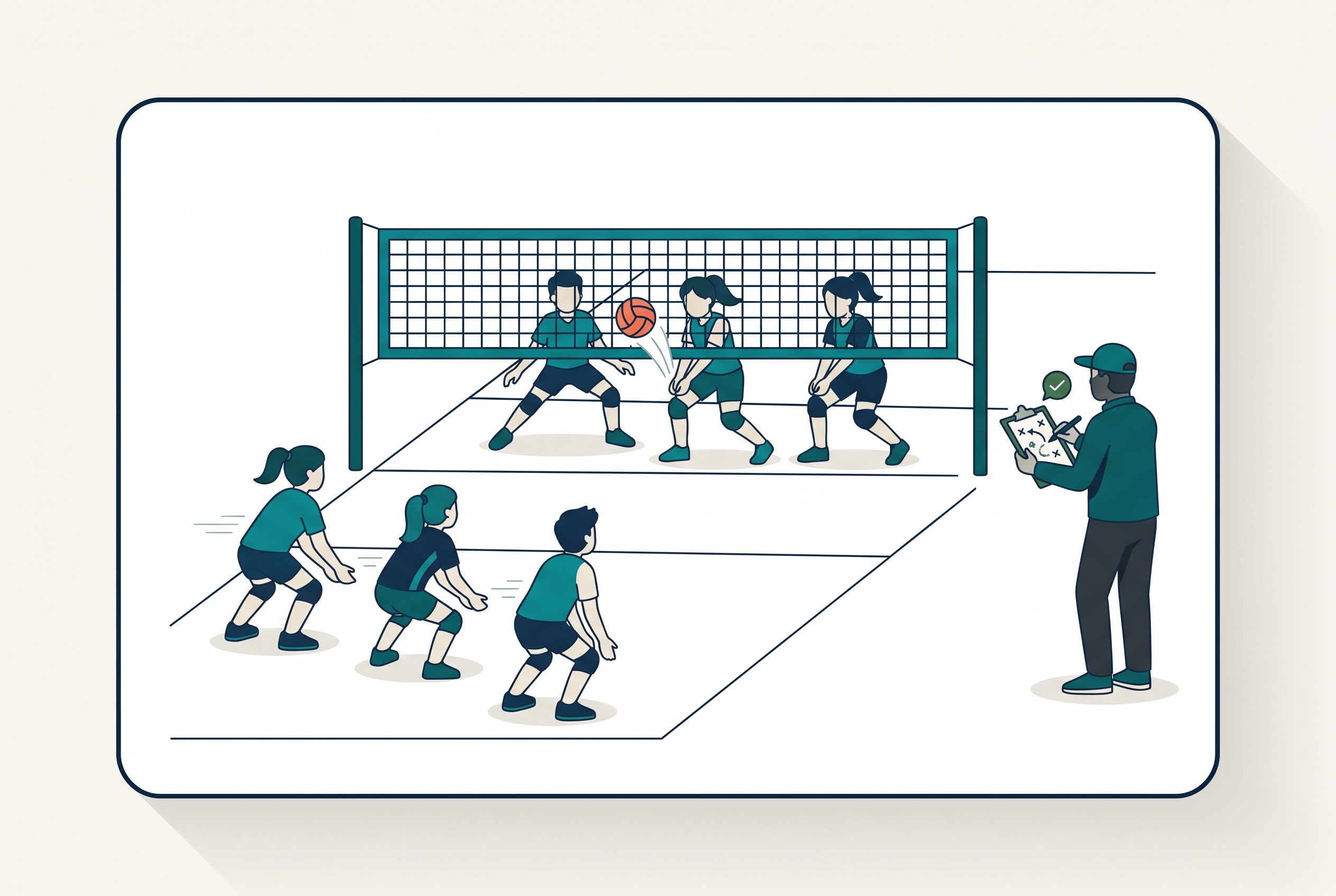
Serve receive drills are team drills. Individual platform work belongs in the passing drills; this page trains what happens when three people share a court against a real server: seams, shapes, communication, and the discipline of standing legal until contact. Every drill below uses the 3-2-1 pass chart (3 at target, 2 playable, 1 kept alive) because receive without a chart is a rumor. Setup, steps, cues, mistakes, and age fit for each; the theory of which formation to run, and who hides where in your system, lives in the serve receive formations guide.
Drill 1: Shape Walkthrough With Freeze Checks
Purpose. Install your six receive shapes and the overlap discipline they depend on, before a single live serve.
Setup. Your starting six (plus libero) on the court, coach across the net with a whistle, printed rotation cards from the rotation generator in every player's hand.
Shape Walkthrough With Freeze Checks
Steps. Walk each rotation's receive shape. Coach mimes a serve and whistles at imaginary contact; everyone freezes; the group checks the seven neighbor relationships out loud, player by player, against the overlap rule. Then rotate and repeat. All six rotations twice takes about ten minutes.
Coaching cues. "Point at your two people": every player physically points at the neighbor in front/behind and the neighbor beside them. Players who can point at their constraints stop breaking them.
Common mistakes. Walking shapes without the freeze (players learn spots, not the timing rule that gets whistled) and skipping the walkthrough once the season starts; run it again the week any rotation changes.
Age fit. Mandatory at every level the first week of a new lineup; even varsity teams re-run it after injuries reshuffle the wheel.
Drill 2: The Wave
Purpose. Maximum receive reps per minute for the whole roster, the workhorse drill of receive training.
Setup. Servers with a cart on one side. On the other, three receive units of three stacked front to back: unit one on the court, unit two waiting behind the endline, unit three shagging. A target at the setter spot.
Volleyball · Serve Receive
The Wave
Three-passer units in waves: unit on court passes to target, sprints off the top side to shag, next unit sprints on from behind the endline.
0:00 / 1:04
Steps. Server serves; the on-court unit passes to target; the instant the ball is played, that unit sprints off, the next wave sprints on, and the next serve is already up. Each unit's passes are charted 3-2-1. Ten minutes puts 25 to 30 charted team passes on every unit with nobody idle, which no scrimmage can match.
Coaching cues. "Talk while you run on": seam ownership ("my line, your middle") must be claimed before the unit's feet stop. The sprint-on chaos is deliberate; matches assemble receive units out of transition chaos too.
Common mistakes. Serving before the arriving unit calls seams (defeats the communication point early in the season; later, do exactly that on purpose) and letting shaggers spectate; shaggers feed the cart, which keeps tempo honest.
Progressions. Two serves per wave; then servers target the seam between passers only.
Age fit. 12U and up; the beginner on-ramp with tosses instead of serves is the triangle drill this drill grows out of.
Drill 3: Seam Battles
Purpose. Solve the specific event that causes most youth aces: the untouched ball between two passers.
Setup. Two passers only, one target, servers instructed to serve nothing but the seam between them.
Seam Battles
Steps. Ten seam serves per pair. Before each, the pair declares ownership out loud ("mine off the line," "yours middle"). Any untouched drop scores 0 and stops play for a two-second ownership review, no lecture, just "whose was it?" Rotate pairs; post pair averages.
Coaching cues. The call happens before the serve, not during the flight. Mid-flight negotiation is how two players watch a ball land between them.
Common mistakes. Running it with three passers (the two-passer version isolates seams cleanly; three re-introduces hiding places) and accepting silent success; a seam pass without a call is a lucky 2, chart it as a 1 and watch the calls appear.
Age fit. Middle school and up. Below that, seam responsibility should be taught inside the W formation first.
Drill 4: Charted Receive Rounds
Purpose. Produce the per-player, per-rotation receive data your lineup decisions deserve.
Setup. Full starting receive unit in a real rotation, live servers, a scorer with a chart that records passer, rotation, and 3-2-1 result.
Charted Receive Rounds
Steps. Rounds of 12 live serves per rotation, then rotate the wheel and repeat. Over a week you accumulate a map: who passes what, in which rotation, against which serve. The map routinely surprises: a passer who charts 2.4 in rotation 1 and 1.6 in rotation 4 has a shape problem in one rotation, not a passing problem.
Coaching cues. For the scorer: rotation context matters more than the total. For passers: nothing; this drill is deliberately quiet coaching, the chart talks later.
Common mistakes. Charting only team averages (hides everything useful) and reacting to one bad round; receive data means something at 40-plus charted serves per player.
Age fit. Any team that has installed its shapes; the natural drill to run the week before tryout or lineup decisions.
Player development
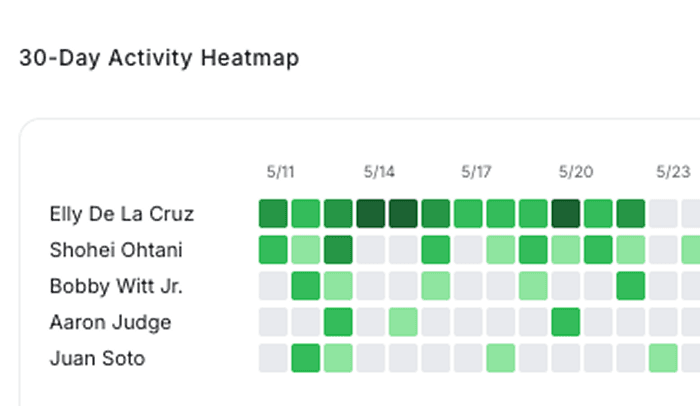
Track development all season, not just on tryout day
Score skills through the season, watch the trend lines move, and send parents a progress report they actually open.
Drill 5: Receive-to-Attack Transition
Purpose. Remind everyone why receive exists: to score. The pass is graded by the swing it buys.
Setup. Full receive unit, live setter, hitters at the pins, live servers. Steps. Serve, pass, set, full attack; the rally ends at the swing. Score the possession, not the pass: 2 points for an in-system attack (setter had all options), 1 for any attack, 0 for a free ball back or error. First unit to 10. Cues. Passers hear "give her choices" instead of "pass better"; the reframe changes targets from a spot on the floor to a setter's hands. Mistakes. Letting hitters freelance out-of-system; the drill grades the pass, so the attack should honestly reflect what the pass allowed, exactly as the three-touch tempo drill does on the passing page. Age fit. Any team with a functioning setter and swing.
Volleyball · Serve Receive
Receive-to-Attack Transition
Serve, pass, set, swing: the passer transitions off the court to the pin and attacks the set; the pin hitter resets to pass.
0:00 / 1:04
Drills 6 and 7: Pressure Formats
Side-out or serve again. Receive unit must side out (pass, set, attack that lands or forces an error) to rotate off; fail and the same server serves again, up to five attempts. Simulates the worst moment in volleyball, the server who has your number, and teaches units to fix a shape mid-crisis instead of waiting for the bench.
Minus-start sets. Play a set to 15 with the receive team starting down 10-12 and the opponent serving. Every set begins in the pressure zone where receive actually decides matches. Rotate which unit gets the deficit. Both formats belong in the last 15 minutes of practice, when legs and focus are match-tired.
Reading the Charts, Closing the Loop
Two weeks of these drills produce three numbers per player: a passing average, a seam-call rate, and a per-rotation map. They tell you who anchors receive (your libero conversation), which rotation needs a shape tweak, and which player's platform needs the individual work on the passing page. Rizzler carries the loop from there: the volleyball evaluation template scores platform control and footwork formally, Reps assigns the individual fixes as logged home drills, and the re-evaluation a month later tells you whether the charts moved because the skill did.
Frequently Asked Questions
What are the best serve receive drills for volleyball?
The wave for volume, seam battles for communication, freeze-check walkthroughs for legal shapes, charted rounds for data, and side-out pressure formats for match transfer. Run walkthroughs first; shapes before serves.
How do you teach serve receive to a youth team?
Install shapes with walk-and-freeze reps before live serving, start in the five-person W where nobody hides, and move to three passers as charted averages justify it. The formation progression and who hides where are covered in our serve receive formations guide.
How do you stop serves dropping between passers?
Seam battles: two passers, serves aimed only at their seam, ownership declared out loud before every serve. Seam drops are decision failures, not platform failures, and they disappear when the call is made before the ball is up.
How many passers should receive serve?
Three is the standard above beginner level, usually both outsides and the libero. Youth teams start with the five-person W and subtract passers as skill grows. Your charted averages, not the calendar, should trigger the change.
What is a good team serve receive average?
On the 3-2-1 scale, above 2.2 is strong youth passing, 2.0 serviceable, below 1.8 an emergency worth three practices of this page. Track per rotation as well as per player; shapes fail by rotation, and averages hide it.
Talk to our team
Want to see how to develop players all season long? Let's talk.
Tell us about your team and we'll show you how season-long skill tracking becomes the progress report a parent opens, while players keep building between practices with Rizzler Reps.
Track skills all season, not just on tryout day
Turn evaluations into reports parents actually open
Players build habits between practices with Rizzler Reps
Tell us about your program
4 fields · takes 30 seconds
Lands in the same inbox as the Help button · human response only