Volleyball Drills for Beginners That Keep the Ball Alive
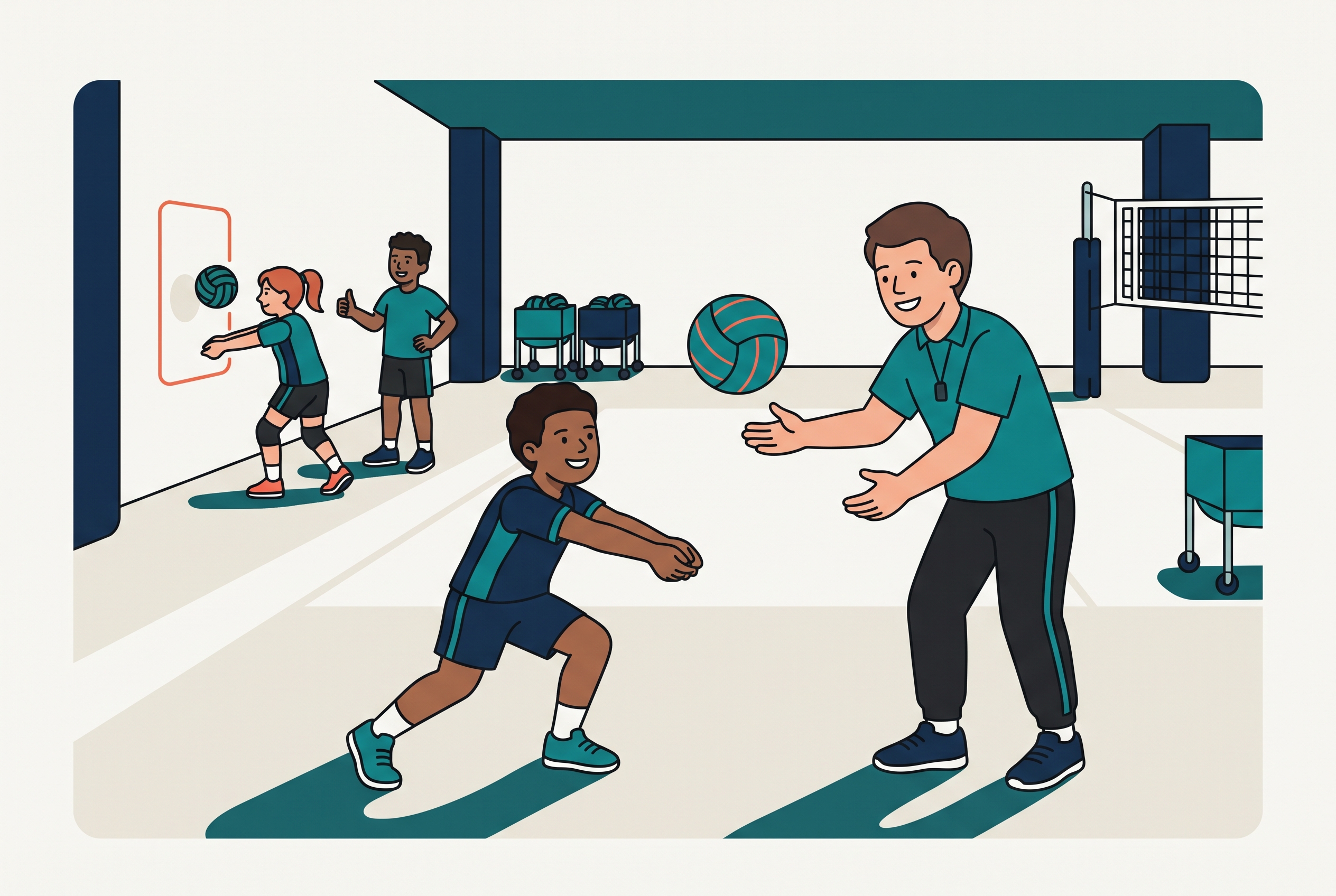
Beginner volleyball drills have one job the drills for older players do not: keep the ball off the floor long enough for players to get repetitions. A new player who touches the ball four times in ten minutes learns almost nothing except how to wait in line. The eight drills below are ordered as a progression, use tosses before serves and catches before rallies, and are chosen so a coach with one court and one bag of balls can run all of them. Each includes the setup, the steps, the cue that fixes the most common mistake, and how to make it harder the week your group stops being beginners.
Before the Drills: The Two Habits Worth Being Strict About
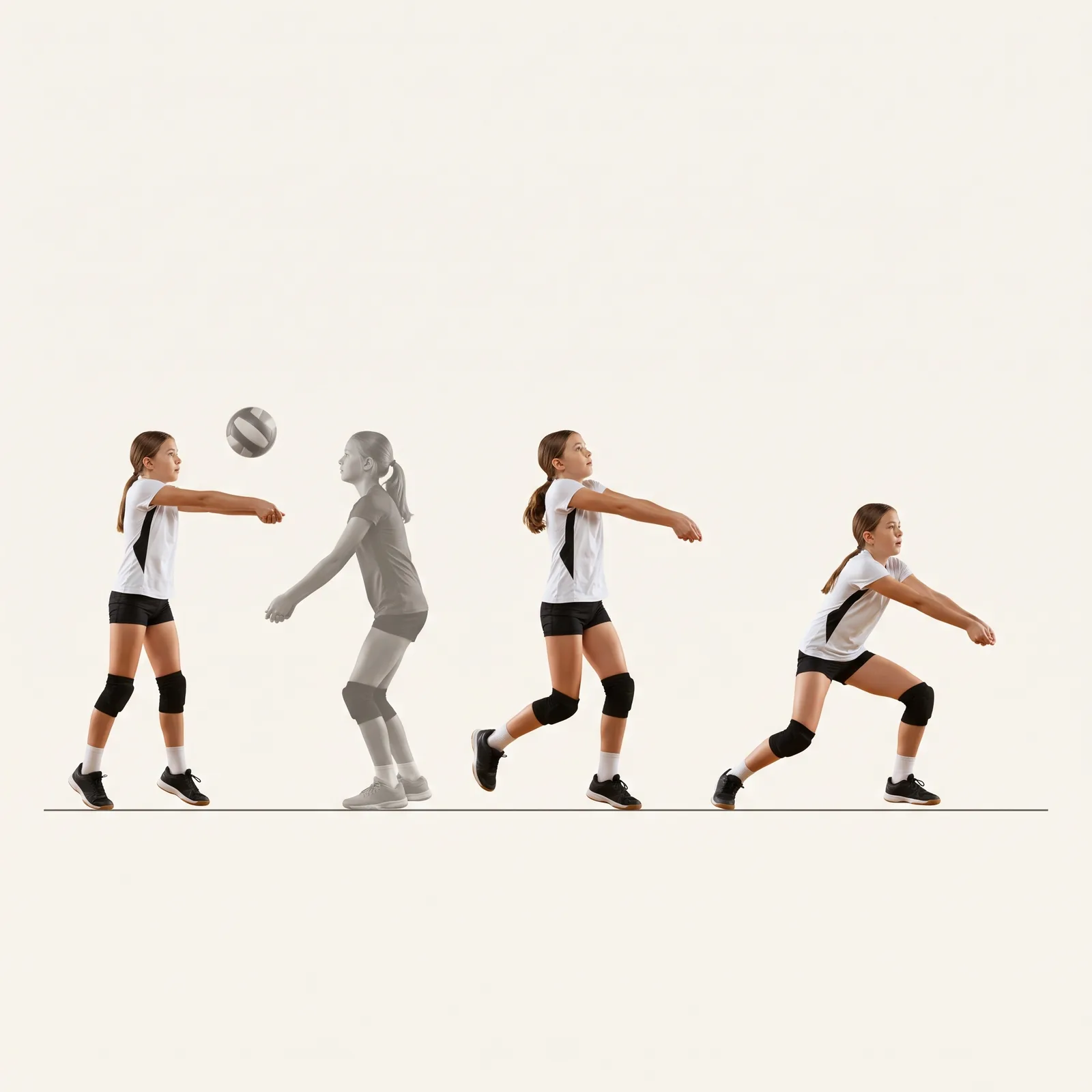
Platform first: wrists together, elbows locked, shoulders shrugged forward, contact on the forearms, not the hands. Feet second: beginners reach because moving feels slower than leaning, and every drill below rewards moving the feet to the ball. If you coach only those two things for a month, you are coaching well. Everything else is variations.
Drill 1: Toss, Pass, Catch (the foundation)
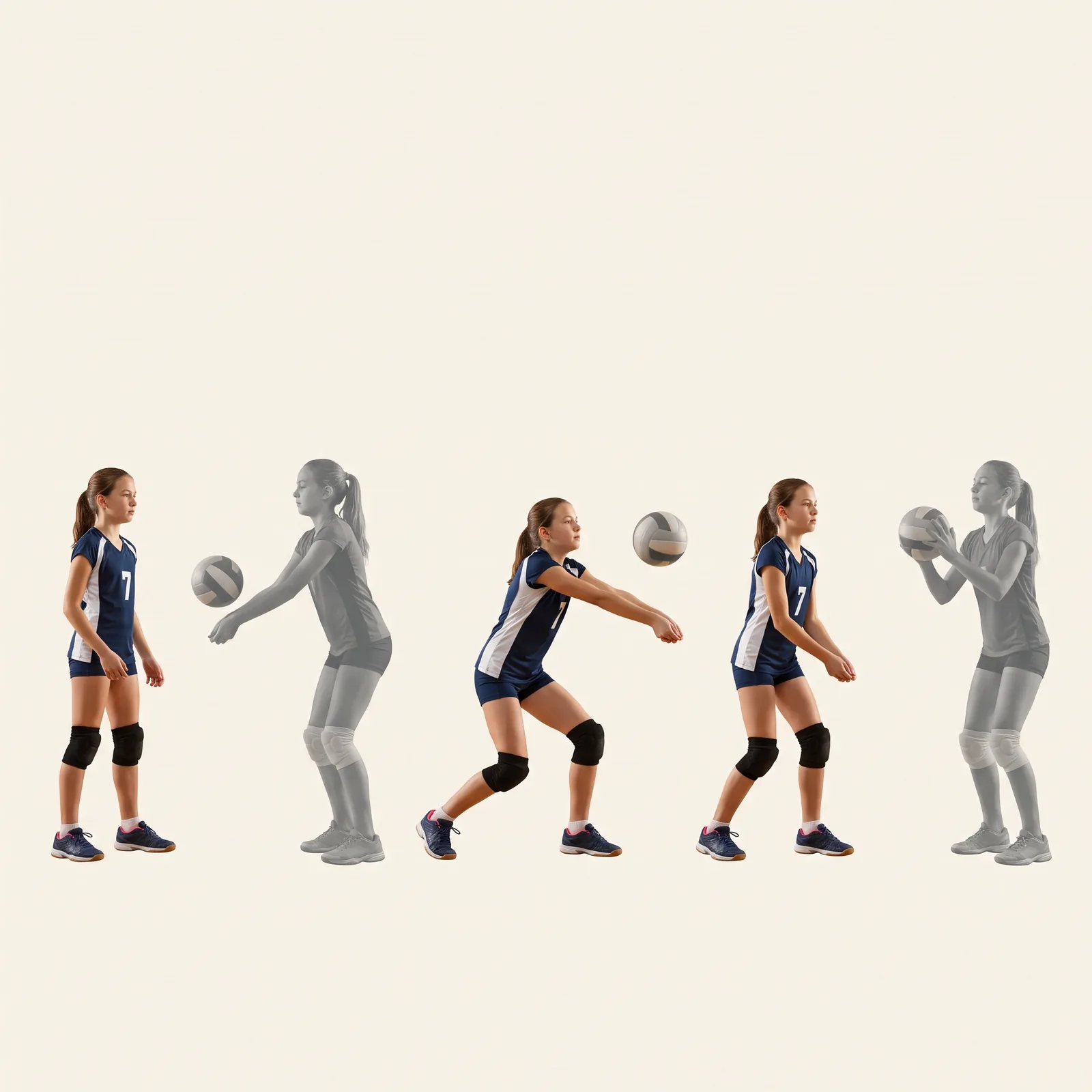
Setup. Pairs, one ball, four meters apart. No net needed.
Volleyball · Beginner
Toss, Pass, Catch
Pairs four metres apart: a gentle toss, one platform pass, partner catches.
Steps. Player A tosses a gentle two-hand ball to player B's midline. B passes off the platform back to A, who catches. Ten good passes, then swap. A pass A cannot catch without moving does not count, which quietly teaches accuracy from day one.
The cue. "Freeze your finish": after contact, B holds the platform pointed at the target for a full beat. Beginners swing their arms; the freeze kills the swing.
Progression. A tosses one step left or right so B must move the feet before passing. Then replace the catch with a second pass and count consecutive controlled passes as a pair.
Drill 2: Partner Pass Over a Line
Setup. Same pairs, now across the attack line or a rope between chairs if you have no free net. The barrier forces arc.
Volleyball · Beginner
Partner Pass Over a Line
Pairs passing back and forth over a line on the floor, keeping every ball playable.
Steps. Continuous platform passing over the line, counting the streak out loud. Restart at zero on a drop. First pair to 15 sits out one round as champions, which beginners find unreasonably motivating.
The cue. "Pass to a spot, not a person": aim for the space above the partner's forehead. Height buys the next passer time, and time is the beginner's scarcest resource.
Drill 3: Wall Setting
Setup. Each player with a ball, two meters from a wall, a target spot marked above net height (chalk or tape).
Steps. Set against the wall to the spot: 10 in a row, take one step back, repeat. Hands start above the forehead, fingers shaped to the ball, contact all ten fingers, no slapping sound. A slap means the ball reached the palms.
The cue. "Look through the window": eyes see the ball through the triangle of thumbs and forefingers before contact. It fixes low hands better than any words about hand position.
Progression. Set, let it bounce, set again on the move; then alternate one high set and one quick low set to build touch.
Drill 4: Serving Progression, Line to Zones
Setup. All players on one endline with balls; empty far court. Beginners start at the attack line, not the endline.
Serving Progression, Line to Zones
Steps. Underhand or standing float serves from the attack line: three makes in a row earns three steps backward, until the player is serving from the endline. Once there, call zones before serving, deep left, deep right, short middle, one make each.
The cue. "Toss low or no toss at all": beginner serve errors are toss errors. For underhand, no toss; for floats, a toss barely above the reach of the tossing hand.
Why the moving start matters. Starting close guarantees early success, and the earned steps backward convert distance from a barrier into a scoreboard. It is the single biggest difference between a serving block beginners love and one they dread.
Player development
Track development all season, not just on tryout day
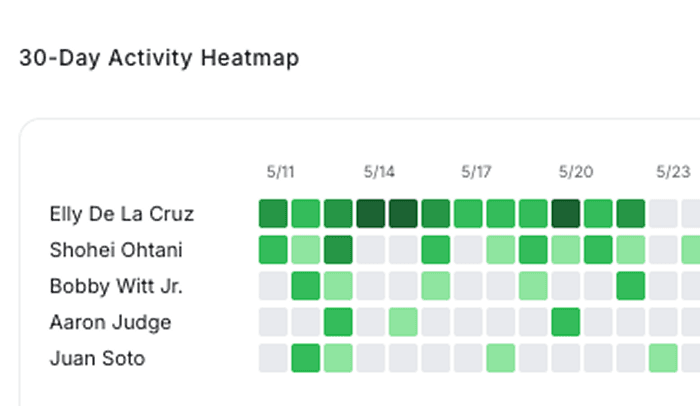
Score skills through the season, watch the trend lines move, and send parents a progress report they actually open.
Drill 5: Butterfly, Half-Court Version
Setup. One half of the court. A tossing line at the endline, a passing spot in zone 6, a catching target at the net. Three stations, lines behind each.
Volleyball · Beginner
Butterfly, Half-Court Version
One half of the court: tosser at the endline, passer in zone 6, target at the net; everyone follows their ball to the next role.
0:00 / 1:20
Steps. Toss over no net (or a lowered rope) to the passer; passer platforms to the target; target catches and jogs the ball back to the toss line. Everyone follows their ball: tosser to the passing line, passer to target, target to tossing line. Run 10 minutes; the rotation itself teaches court movement.
The cue. "Beat the ball there": passers set their feet before the toss arrives. If feet are still moving at contact, the toss was too hard or the passer left too late; either is coachable in the moment.
Progression. Replace tosses with standing float serves from mid-court, then run the full-court version in the drill library.
Drill 6: Three-Contact Rally, Coach Entry
Setup. Six players on one side in the standard W receive shape; coach across the net with a cart of balls.
Steps. Coach tosses an easy free ball over. The team must produce pass, set, send-over, three contacts, no matter how scrappy. Score a team point for every three-contact sequence that crosses the net; play to 10, then rotate positions one spot so everyone experiences each zone. Rotating here quietly begins the rotation education that the rotations hub formalizes later.
Volleyball · Beginner
Three-Contact Rally, Coach Entry
Six players in the W; coach free-balls from across the net, the team passes, sets and sends it over, then rotates one spot.
0:00 / 1:20
The cue. "Call it early": the first-contact call of "mine" must come before the ball crosses the net plane. Beginners collide because they decide late, not because they cannot pass.
Setup. Pairs across a real net, one ball: one player at the net as a self-tossing hitter, the partner in the backcourt as a digger.
Steps. Hitter self-tosses and hits a controlled standing spike at the digger; digger platforms it up; hitter catches and repeats, five each, then swap. Controlled means the digger can play it: the hitter is training accuracy, the digger is training courage.
Over-the-Net Pepper (Attack Introduction)
The cue. For hitters, "reach high, snap the wrist": contact at full extension with the wrist snapping the ball down. For diggers, "flat platform, no swing": absorb, do not attack the ball.
Drill 8: Serve-Receive Triangles (First Real Volleyball)
Setup. Three passers in a back-court triangle, a setter-target at the net, servers across the net at the attack line.
Steps. Easy serves to the triangle; passers pass to target, who catches over her head in setting shape. Rotate passers with each round of six serves. Score team passes on a 3-2-1 scale (3 lands at the target, 2 playable, 1 kept off the floor) and post the total; the scale mirrors how coaches chart real matches and how our what is a kill guide's stat definitions treat first contact.
Volleyball · Beginner
Serve-Receive Triangles
Three passers in a back-court triangle pass live serves to a setter-target at the net; servers follow their ball around the pole into the triangle.
0:00 / 1:28
The cue. "Talk before, not during": the triangle calls seams ("my line, your middle") before each serve. Seam ownership decided in advance is what separates a receive pattern from three people standing near each other.
Making It Stick Between Practices
Beginners with one weekly practice plateau; beginners who touch a ball for ten minutes a day do not. Drills 1, 3, and 4 need only a wall and a ball, which makes them ideal home assignments; the at-home drills guide turns them into a charted daily plan, and coaches running the 10-to-12 age band will find the station versions in the 10-12 year olds kit. Coaches on Rizzler assign exactly these through Rizzler Reps, the athlete app where players log drill work, keep streaks, and climb a team leaderboard, so "practice at home" becomes something you can see on Monday rather than ask about. When you want to measure whether the work is landing, score the same skills formally with a volleyball player evaluation; its serving and passing categories map one-to-one onto drills 1 through 8. And if you are meeting brand-new players for the first time, our tryout guide shows how to run these same drills as stations that produce scores.
Frequently Asked Questions
What drills should a complete beginner start with in volleyball?
Start with toss-pass-catch and wall setting: both guarantee high repetitions, need no net, and build the platform and hand shape everything else depends on. Add the serving progression in the same first week so serving never becomes scary.
How do you make volleyball drills fun for beginners?
Score everything, keep lines to three players or fewer, and use earned progressions like the serving drill's steps backward. Beginners quit drills that feel like tests and repeat drills that feel like games with a scoreboard.
How long should each beginner drill run?
Eight to twelve minutes. Shorter and the movement pattern never settles; longer and focus dies. A 90-minute beginner practice comfortably fits a warm-up plus four drills from this page and a three-contact game to finish, using the block structure in our practice schedule template.
What volleyball drills can beginners do at home alone?
Wall passing, wall setting, serving at a garage-door target, and approach footwork lines. All need one ball and a wall. Teams on Rizzler assign these through Rizzler Reps so home reps get logged, streaked, and celebrated instead of forgotten.
Talk to our team
Want to see how to develop players all season long? Let's talk.
Tell us about your team and we'll show you how season-long skill tracking becomes the progress report a parent opens, while players keep building between practices with Rizzler Reps.
Track skills all season, not just on tryout day
Turn evaluations into reports parents actually open
Players build habits between practices with Rizzler Reps
Tell us about your program
4 fields · takes 30 seconds
Lands in the same inbox as the Help button · human response only