
Learn
How to Run a Basketball Tryout
To run a basketball tryout, you evaluate every player across a handful of core skills (shooting, ball-handling, layups and finishing, defense, rebounding, and conditioning) using a consistent score per skill, then use those scores to build teams. The hard part is rarely the scoring sheet. It is organizing the whole event so the evaluation stays fair, the day runs on time, and you can defend every roster decision afterward, especially when you are moving hundreds of players through in a single weekend. This guide walks through exactly how to conduct a basketball tryout from first planning to final offers. It works for recreational league placement evaluations, club roster selection, and the large programs that push a few hundred players past two dozen coaches.
What Skills Should You Evaluate at a Basketball Tryout?
Evaluate six core areas at a basketball tryout: shooting, ball-handling, layups and finishing, defense, rebounding, and conditioning. Most coaches add a seventh, intangible category (effort, coachability, and basketball IQ) that adjusts a player's overall score up or down, and almost all of it comes together in 3-on-3 and full scrimmages where you watch decisions under pressure. A short, shared list keeps a large evaluation panel focused and consistent.
Here is what evaluators look for in each area and how each is typically assessed at a tryout:
| Skill | What evaluators look for | How it's assessed |
|---|---|---|
| Shooting | Form, balance, consistent release, and range from spot-up and off the dribble | Spot shooting from set locations with a fixed number of attempts, plus shots off the catch |
| Ball-handling | Control with both hands, change of pace and direction, and composure under pressure | Cone dribbling courses, two-ball drills, and full-court handling reps |
| Layups and finishing | Footwork, finishing with both hands, and finishing through contact | Layup lines from both sides and a transition finishing drill |
| Defense | Stance, lateral quickness on defensive slides, closeouts, and on-ball pressure | Defensive slide and closeout drills, plus live 1v1 |
| Rebounding | Boxing out, positioning, timing, and aggressiveness to the ball | Box-out and rebounding drills, observed again in scrimmage |
| Conditioning | Speed, agility, and endurance over repeated sprints | Timed suicides (line sprints) or the 17s drill, and the lane agility test |
Scrimmages are where most coaches form their final read. 3-on-3 and 5-on-5 expose decision-making, spacing, communication, and how a player competes when nobody is feeding them reps. Watch who moves without the ball, who talks on defense, and who keeps playing hard when tired.
How Do You Score a Basketball Tryout?
Score each player on every skill, using one consistent scale (we default to 1-to-10, where 10 is the best), then total the scores to rank players objectively. A simple, shared scale turns subjective impressions ("he looked good") into comparable data you can sort, defend, and revisit. Conditioning and intangibles are usually handled as adjustments: add a point or two for the fastest, fittest players and the ones who compete, and deduct for the slowest or those who coast.
Two rules make the scores trustworthy at scale. First, align your evaluators on what each number means before the tryout, so a "3" shooter and a "4" shooter mean the same thing to every coach in the gym. With twenty-odd evaluators grading the same players, this calibration is what keeps scores comparable. Second, score immediately after each rep on your basketball tryout evaluation form while it is fresh, and add a short note next to the number. "Pure stroke, needs to use his left hand" tells you far more in a week than a bare "3."
How to Set Up Basketball Tryout Stations at Scale
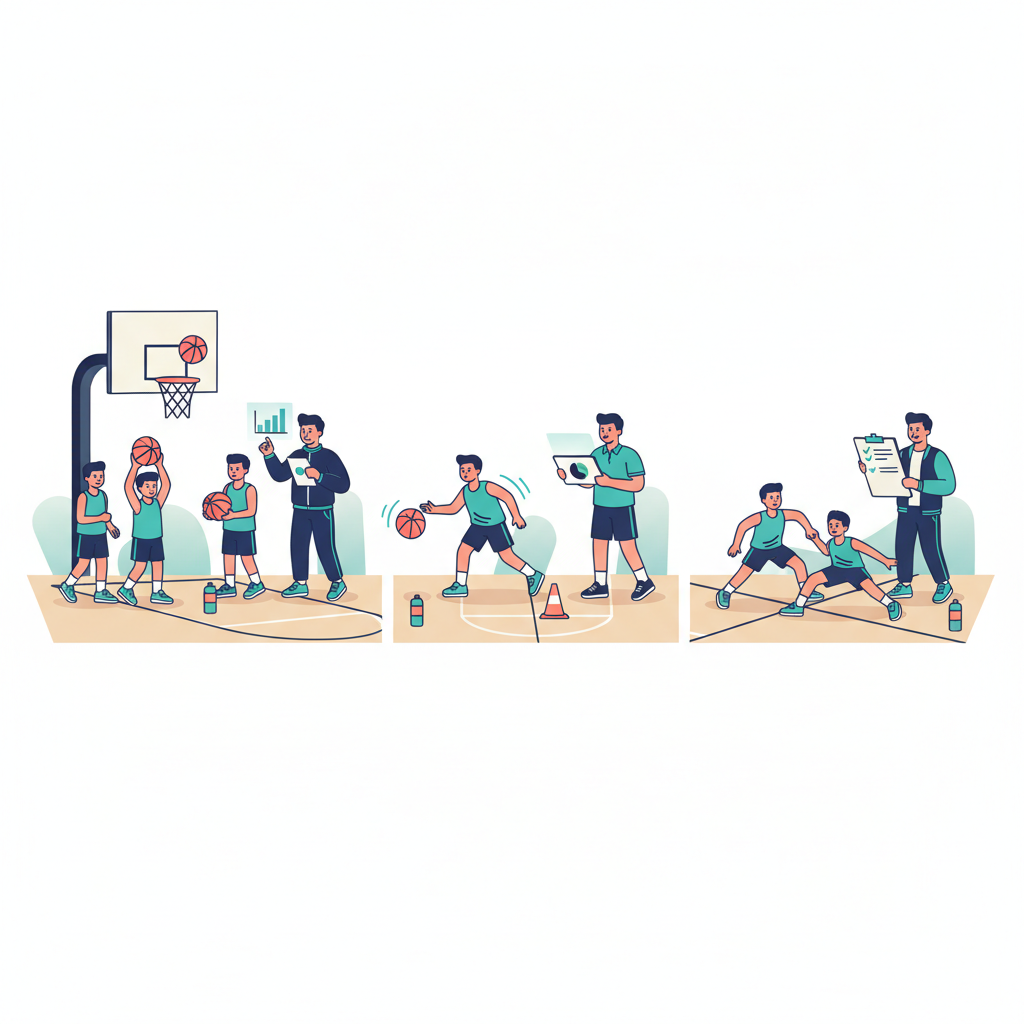
Set up one station per skill and rotate small groups through them so the gym is always busy and every player gets identical reps. The basketball tryout drills guide maps 12 evaluation drills to the scoring criteria, with a full 90-minute station plan for 40-plus players. Use cones and floor spots to define each station: spot-shooting locations, a ball-handling course, layup lines at both baskets, a defensive slide and closeout area, a rebounding box-out station, and a marked conditioning lane for suicides and the lane agility test. Reserve a court for the 3-on-3 and full scrimmages that close out the day.
How you staff those stations depends on size. At a small tryout, one coach can grade a whole skill. With a big turnout, say hundreds of players and a staff of twenty, you do the opposite: put several evaluators at each station so a large group keeps moving, and have every coach score the same drill against the shared rubric.
Some programs run it in panels, splitting evaluators across stations, while others move all coaches to one station at a time so everyone grades the same drill together, which is common for timed conditioning and the lane agility test. Either way, the goal is multiple independent scores per player, which you average for a more reliable result than any single grader could give. Keep a staffed check-in table at the entrance so you always know who has arrived and who is still expected.
Basketball Tryout Timeline: From Planning to Finalized Teams
Plan to start two to three weeks before tryout day, then move through registration, check-in, evaluation, review, and offers. Not sure which month to target? Check the typical tryout windows in the youth sports seasons calendar. Here is the full end-to-end checklist for hosting the event:
Two to three weeks before: Planning
- Lock the date and gym; reserve the facility and a backup time slot
- Decide age groups, number of teams, and roster sizes
- Build (or reuse) your evaluation form with the seven categories above
- Recruit and brief evaluators; make sure every coach agrees on what each score means
- Open online registration so you have a confirmed player count
Registration
- Collect each player's name, age or birth year, primary position, and contact info
- Assign every player a tryout number (pinnies or bib numbers) so evaluators score by number, not by name, which keeps scoring objective even with hundreds of players
- Send a confirmation with arrival time, location, and what to bring
Tryout day: Check-in
- Check players in against your registration list and hand out numbers
- Group players by age or skill and brief them on the station flow
Tryout day: Evaluation
- Run players through each station; evaluators score each rep and add notes in real time
- For multi-day tryouts, run individual skills on day one and team play on day two so a single off-day doesn't sink a player
- Run 3-on-3 and full scrimmages to see decisions under pressure
After the tryout: Review and decide
- Combine every evaluator's scores into one ranked list
- Discuss bubble players as a staff, using notes alongside the numbers
- Finalize teams or draft order
Offers: Accept, decline, and finalize
- Extend offers to selected players with a clear accept-by deadline
- Track accepts and declines, and go to your next-best player when a spot opens
- Send respectful, timely notice to players who weren't selected
- Confirm final rosters and communicate next steps (practice schedule, fees)
Adjusting the Tryout by Grade Level
Run the same structure at every level and change what you measure, not how you measure it. For 3rd-6th grade tryouts, use fewer stations, the smaller ball and lower goals your league plays with, and score layups as made-or-missed rather than by technique. Middle school and JV tryouts run the full station list as written. Varsity tryouts add difficulty inside the same stations, shooting off movement and ball-screen defense, plus measurables like lane agility times that travel across tryout days. AAU programs map the same tiers onto 9u-12u, 13u-15u, and 16u-17u. The grade-level drill adjustments and the evaluation form cut-downs by grade cover both halves in detail.
Frequently Asked Questions
How long should a basketball tryout be?
Most youth basketball tryouts run 90 minutes to two hours per session. Many programs hold two or three sessions across multiple days, focusing day one on individual skills and later days on scrimmaging, so a player's evaluation isn't decided by a single off-day. Build in time for check-in before the clock starts.
How do you staff coaches at a large tryout?
At a big tryout, don't assign one coach per skill. When hundreds of players are moving through the gym and you've got a couple dozen coaches, put multiple evaluators at each station, or move all coaches through one station at a time, and have everyone score the same drill against a shared rubric. Averaging several independent scores per player is more reliable, and far faster, than a single grader working through the whole group.
What should players bring to a basketball tryout?
Indoor court shoes, athletic clothing, water, and both a light and dark shirt or pinnie so you can split them quickly for scrimmages. Tell players to arrive early enough to check in and warm up before evaluations begin.
How do you fairly evaluate conditioning?
Use a timed test so you get an objective number instead of a guess. Suicides (baseline to free-throw line to half-court to far line and back) and the 17s drill are the most common, and the lane agility test compares change-of-direction speed. Use the times to nudge overall scores up for the fittest players and down for the slowest.
When do basketball tryouts start?
School basketball tryouts run in the opening days of the school winter sports season, right after fall sports wrap up, and most athletic departments post exact dates a few weeks ahead. AAU and travel tryouts follow the school season, ahead of the club circuit. If you are coaching at both levels, plan for two tryout windows a year and reuse the same evaluation setup for each.
What do coaches look for at basketball tryouts?
Coaches score a short list of observable skills (ball handling, shooting, finishing, defense, rebounding, and passing) plus athleticism, effort, and how a player competes in scrimmage. Effort and coachability carry more weight than most players expect: a coach can develop a raw skill set over a season, but not a player who will not sprint back on defense. The full criterion list is on the basketball tryout evaluation form page.
How many players should you keep on a basketball roster?
Most youth and school teams carry 10 to 12 players: enough to scrimmage five-on-five in practice with subs, few enough that everyone gets real minutes. At 3rd-6th grade, lean toward 10 or fewer so playing time stays meaningful. Varsity programs often carry 12 to 15 with the understanding that roles differ, and a JV squad absorbs the players who need minutes to develop.
How do I tell a player he didn't make the team?
Communicate quickly, privately, and respectfully, and keep it about the roster decision rather than the player's worth. A short, kind message with an offer to share specific feedback goes a long way, and it protects your program's reputation for next year's tryout.
Run Your Entire Basketball Tryout with Rizzler Sports
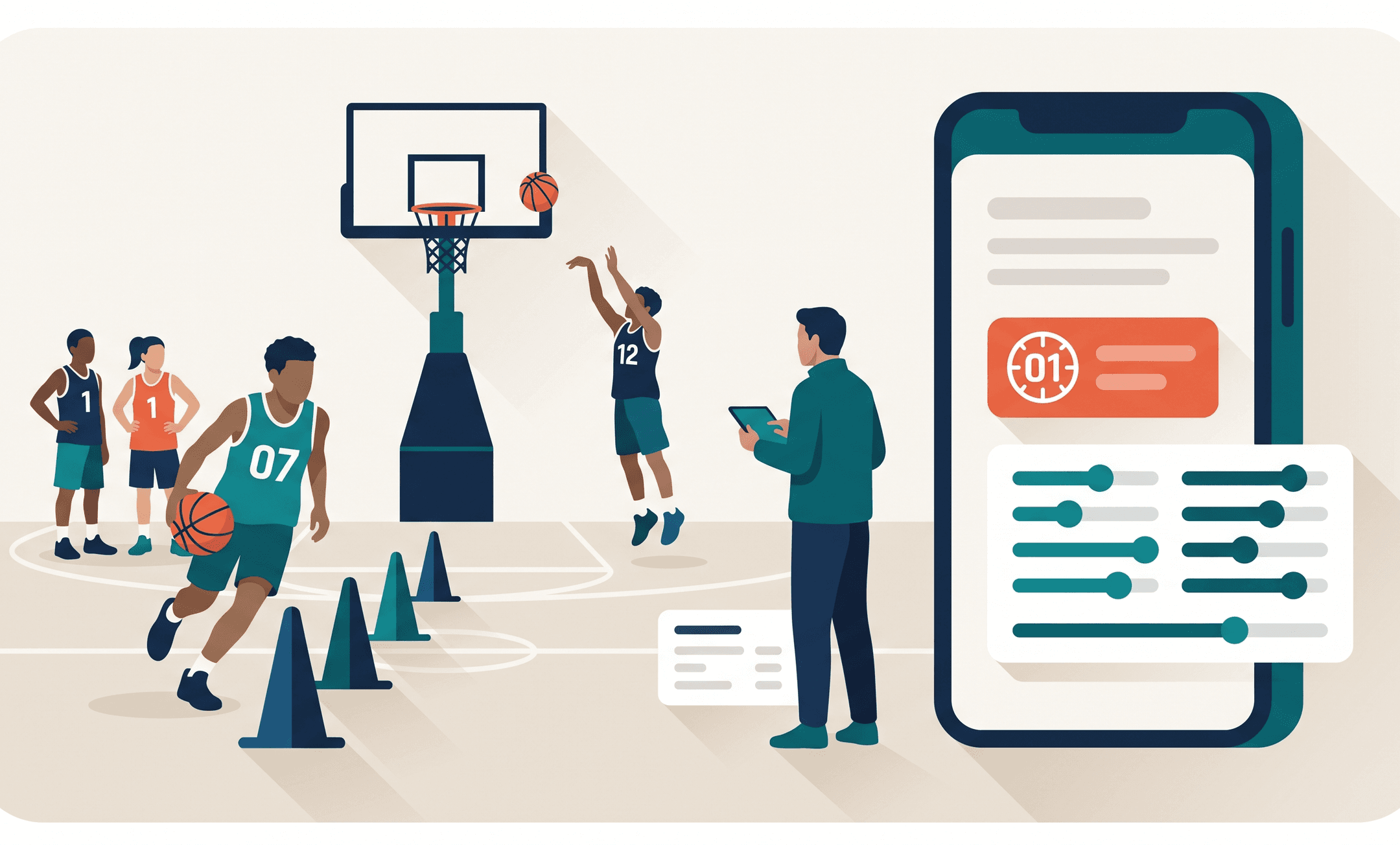
Rizzler runs the whole tryout in one system: online registration, check-in, multi-evaluator scoring from phones, automatic ranking, and offer tracking through final rosters. A tryout at scale is a logistics problem before it is a basketball problem. Hundreds of sign-ups, a check-in line out the gym door, a stack of evaluation sheets for every coach, then the follow-up: inviting selected players, tracking who accepted, and back-filling spots as players decline. Rizzler Sports handles all of it in one place, which saves coaches and administrators hours of work per tryout. Players register online, coaches score player evaluations on a phone or tablet at every station, results rank automatically, and you send and track offers without a single spreadsheet or group text. The structured Team Tryouts workflow comes with Rizzler's Club plan, built for clubs and leagues running up to 300 players, and the Coach plan includes a 15-player monthly taster to trial the workflow.
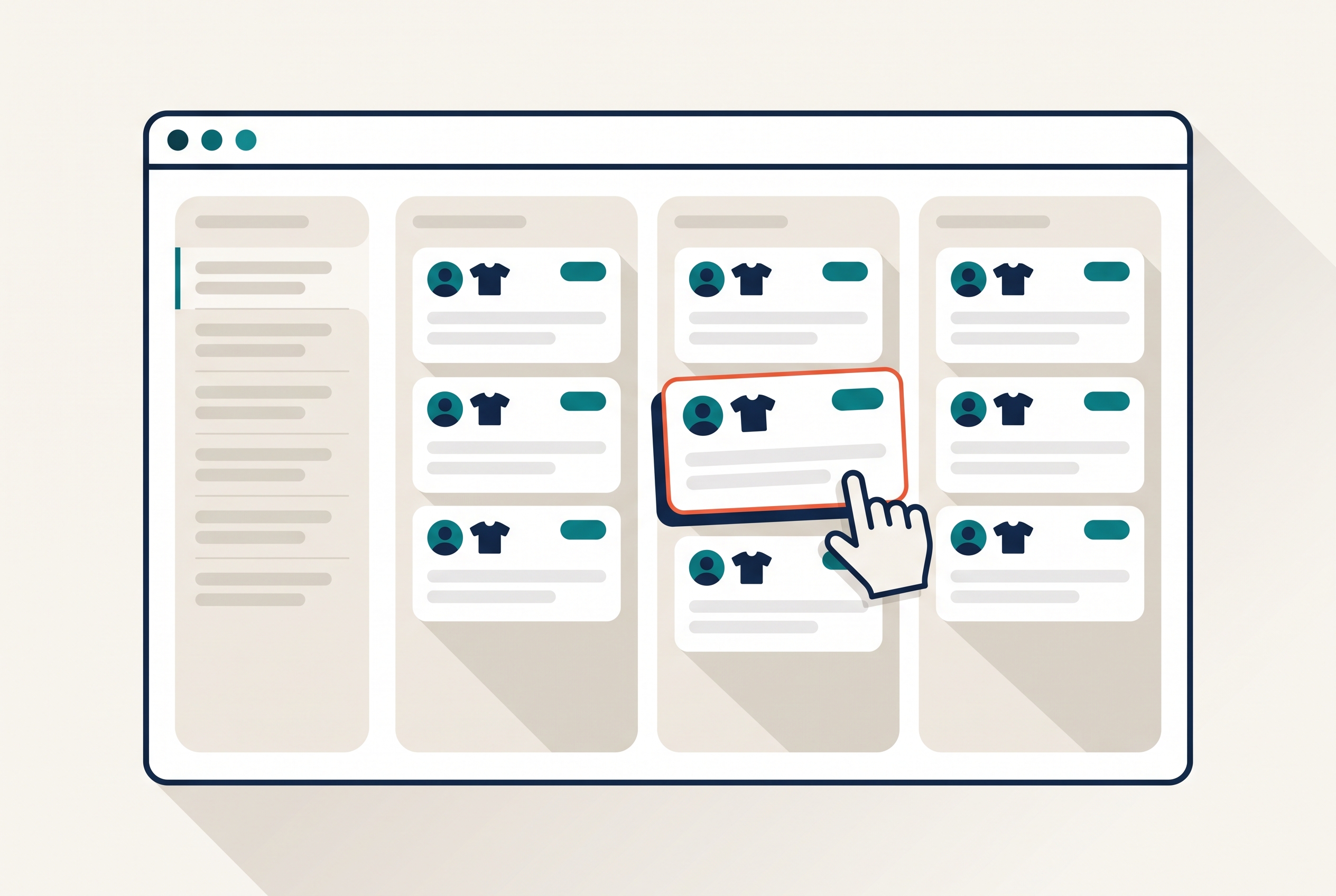
None of that tooling is sport-specific. Registration, check-in, and multi-evaluator scoring run the same way on the court as they do for any other sport, and they keep working after the tryout ends: skill assessments give you a season-long record of each player's development, and surveys and goal setting turn tryout results into individual targets once rosters are set. One honest limit: Rizzler does not run basketball game day yet, so the tryout-to-season handoff covers rosters, schedules, evaluations, and parent communication, not live game scoring.
Once the roster is set, the first week after cuts is the next deadline, and it sets the tone for the season. The free basketball practice planner builds a timed 60, 90, or 120-minute plan from curated basketball modules, filtered by grade level, with a printable coach sheet and no login required.
Setting up a basketball tryout this season? Run the whole event with Rizzler Sports basketball tryouts, from online registration and check-in through multi-evaluator scoring, offers, and final rosters.
Running a larger program, a full recreational league, a club organization, or a school district? We will set your tryout up end to end and show you how much staff time it saves.
Talk to our team
Running basketball tryouts at scale? Let's talk.
Tell us about your club, league, or school and we'll come back within one business day with a walkthrough of registration, check-in, evaluations, invites, and offers in one place.
Cut tryout admin from days to minutes
Online registration and check-in for hundreds of players
Evaluate, rank, invite, and track offers in one place
Tell us about your program
4 fields · takes 30 seconds
Lands in the same inbox as the Help button · human response only
Read Next
Rizzler Plans & Pricing: Free vs Coach vs Club
ComparisonWhat Stats Should You Track at 10U-11U Baseball?
StatsHow to Run a Baseball Tryout: A Coach's Step-by-Step Guide
LearnVolleyball Tryout Drills: A Station Plan That Scores Every Skill
VolleyballPONY Baseball Age Chart 2026: Divisions & Cutoff
RulesMiddle Blocker in Volleyball: Role, Skills, and Training
Volleyball