Learn
Youth Sports Seasons Calendar
The youth sports year runs on a predictable rhythm: most sports hold tryouts a few weeks to a few months before their core season, so fall sports try out in summer, winter sports in fall, and spring sports in winter or early spring. Club and travel programs usually run earlier and longer than school teams, and the exact months shift by region (warmer states start spring sports sooner, northern regions cut fall seasons off before the first snow). This page maps the typical tryout window, core season, shoulder season, and off-season for 20 major youth sports in the US and Canada, so you can plan your own tryout when families are actually looking and your fields, gyms, or rinks are available. Season windows below are verified for the 2026-27 year; local leagues vary, so confirm with your organization.
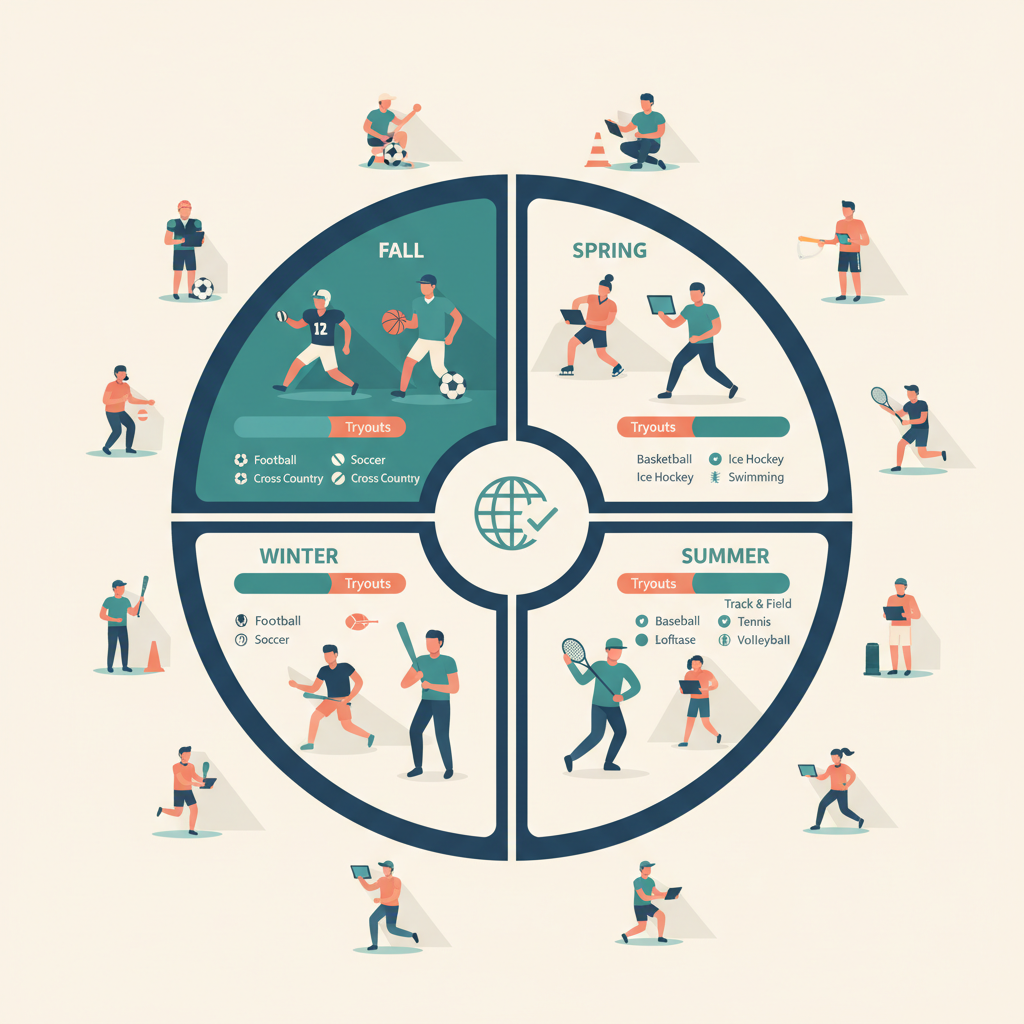
One window always has the shortest runway: fall. Soccer, football, flag football, volleyball, cross country, and field hockey all hold tryouts in late July and August, compressed into the two or three weeks before school starts. If a fall season is the next one on your calendar, midsummer is when to lock dates and facilities, open registration, brief evaluators, and build your evaluation form, so tryout day is an execution problem instead of a scramble. The same preparation applies to whichever window comes next for you; fall just gives you the least slack.
Why Timing Matters for Your Tryout
Timing matters because a tryout only works if families are looking and the next season is close enough to feel real. Hold a tryout too early and players have not started thinking about the season; too late and the best athletes have already committed to another club. The reliable rule is to run your tryout a few weeks (for recreational placement) to a few months (for competitive travel rosters) ahead of the core season, so offers land while interest is high and you still have time to organize teams, practices, and uniforms.
Two variables move every date on this page. The first is region: in most of the US and Canada, weather sets the floor. Outdoor spring sports start weeks earlier in the South and West than in the Northeast, Midwest, and across Canada, where frozen or muddy fields delay everything. The second is school versus club. School and high school teams are locked to the academic calendar and their state or provincial association (for example, a state high school athletic association in the US, or OFSAA in Ontario), while club and travel programs run their own, usually longer and earlier, calendars. The same sport can therefore have two different tryout windows in the same town.
The Master Calendar: Tryout Windows and Seasons by Sport
The table below is a typical-year guide, not a fixed schedule. In most regions the months will be close, but always check your local league, school association, or governing body for exact dates. Ranges are written as typical months and lean toward the US calendar, with US versus Canada and school versus club differences noted in the last column.
| Sport | Typical tryout window | Core season | Shoulder season | Off-season | Notes (US vs Canada, school vs club) |
|---|---|---|---|---|---|
| Baseball | Travel: Jul to Aug (next year) and Jan to Mar; rec: Feb to Mar | Spring to summer (Mar to Jul) | Fall ball (Sep to Oct) | Late fall to winter | Travel runs nearly year-round in the South; Canada season is shorter and weather-bound |
| Softball | Travel: Aug and Jan to Mar; rec: Feb to Mar | Spring to summer (Mar to Jul) | Fall ball (Sep to Oct) | Winter | High school softball is fall in some states, spring in most; travel is largely year-round in warm regions |
| Soccer (outdoor) | Club: May to Jun for fall start; rec: Aug and Jan | Fall and spring (Aug to Nov, Mar to Jun) | Winter indoor or futsal | Mid-winter and mid-summer | US club moves to an Aug 1 to Jul 31 age-group year from 2026 to 2027, per the governing body's published calendars; Canada leans on indoor through winter |
| Basketball | Club/AAU: Oct to Nov and again spring; school: Oct to Nov | Winter (Nov to Mar) school; AAU Mar to Jul | Early fall skills | Late summer | School is winter in both countries; AAU/club travel peaks spring to summer |
| Volleyball | Club: Nov to Dec; school (girls): Aug | Club Dec to Apr; school fall (Aug to Nov) | Summer camps | Late summer | Girls volleyball is usually fall in US schools; boys often spring; club season is winter to spring |
| Football (tackle) | Jul to early Aug | Fall (Aug to Nov) | Late summer camps | Winter to spring | Largely a US fall school and league sport; far smaller in Canada |
| Flag football | Spring season: Feb to Mar; fall season: Jul to Aug | Fall and spring (offered both) | Summer and winter sessions | Varies by league | Growing fast in both countries; often two short seasons per year |
| Ice hockey | Spring tryouts for next year (Mar to May); some Aug to Sep | Fall to winter (Sep to Mar) | Spring hockey leagues | Summer | Dominant in Canada with elite spring AAA tryouts; US club also tries out in spring |
| Lacrosse | Fall: Aug to Sep; spring: Jan to Feb | Spring (Feb to May, region-dependent) | Fall ball (Sep to Nov) | Summer (tournament season) | Spring start ranges from late Jan in the South to mid-Mar in the North |
| Field hockey | Aug (preseason) | Fall (Sep to Oct) | Spring club or indoor | Winter to summer | Mostly a fall school sport for girls in the US; club indoor fills winter |
| Wrestling | Oct to Nov | Winter (Nov to Mar) | Spring/summer freestyle | Late spring to summer | Winter school sport in both countries; club freestyle and folkstyle in off-season |
| Track and field | Feb to Mar (outdoor); Nov to Dec (indoor) | Spring (Mar to Jun) outdoor | Indoor (Dec to Feb) in cold regions | Summer to fall | Often no cut; "tryout" is more a sign-up; club track runs into summer |
| Swimming | Spring posting, tryouts Jun to Aug | Year-round; short course Sep to Apr, long course May to Jul | August taper or break | Most teams rest in Aug | Year-round club model in both countries; high school season varies by state |
| Tennis | School: Aug (fall) or Feb (spring); club: rolling | School fall or spring by region | Summer junior circuit | Varies | Often individual ladders rather than cut tryouts; USTA junior play runs year-round |
| Competitive cheer | Registration ~Mar; tryouts Apr to May | All-star season Nov to Apr (competitions) | Summer training and choreography | Late summer | All-star clubs run a full year; school sideline cheer follows football and basketball |
| Rugby | Winter to early spring (Jan to Mar) | Spring (Mar to May) in most US areas | Fall touch or sevens | Summer | Small but growing; high school sport in some US states and an OFSAA sport in Ontario |
| Water polo | Boys: Aug; girls: Nov to Jan (region-dependent) | Boys fall, girls winter to spring (US) | Summer club and Olympic development | Off-cycle months | Concentrated in CA and a few states; club season runs spring to summer |
| Cross country | Aug (preseason) | Fall (Aug to Nov) | Summer base training | Winter | Fall school sport in both countries; usually no cut, all who sign up run |
| Gymnastics | Rolling enrollment; team placement spring to summer | Competition season typically Dec to Apr, per USAG's published calendars | Summer skill clinics | Late summer | Club-driven and largely year-round; high school gymnastics is winter in a few states |
| Golf | School: Aug (fall) or Feb to Mar (spring) | Fall or spring by region | Summer junior tour | Winter in cold regions | School season split fall/spring by state; junior club golf runs spring to summer |
Fall Sports: Which Sports Try Out in Summer
Fall sports try out in late summer, usually July and August, and play from late August through November. Football (tackle), cross country, field hockey, and girls volleyball in most US states are the core fall school sports, joined by fall soccer and fall baseball or softball "fall ball" on the club side. Because school starts the season clock, most fall tryouts and preseason camps land in the two to three weeks before classes begin. In northern US regions and across Canada, fall outdoor seasons often have a hard finish in early to mid November to beat the first snow.
Winter Sports: Which Sports Try Out in Fall
Winter sports try out in the fall, generally October and November, and compete from November through March. Basketball, wrestling, and indoor or club volleyball are the core winter sports in both the US and Canada, along with ice hockey, whose competitive season runs roughly September to March. Indoor track and competitive cheer also fall into the winter window in many areas. School winter tryouts cluster in late October and November once fall sports wrap, while club basketball (AAU) and club volleyball hold their own tryouts in fall for a season that stretches into spring and summer.
Spring Sports: Which Sports Try Out in Winter
Spring sports try out in winter or very early spring, typically February and March, and play from March into June. Baseball, softball, outdoor track and field, spring lacrosse, tennis, rugby, and spring soccer are the core spring sports. This is the window most affected by region: southern and western programs can start in late January or February, while northern US states and Canadian provinces often push outdoor starts into March or April because of weather. Competitive travel programs frequently hold their main spring tryouts in late winter so rosters are set before the season opens.
Summer Sports and Tournament Season
Summer is less about tryouts and more about play, tournaments, and tryouts for the next year. Travel baseball and softball peak in June and July, AAU basketball and club volleyball run heavy tournament schedules from April through July, and long course competitive swimming runs May to July. Summer is also when many clubs hold tryouts for the upcoming year: travel baseball commonly tries out in late summer for the following season, and several club sports use camps and showcases to evaluate players. If your sport competes in summer, your tryout usually happens the spring or summer before.
US vs Canada: Key Differences
The biggest difference is ice hockey's dominance in Canada, where minor hockey and elite AAA programs set the youth sports calendar and hold competitive spring tryouts (often March to May) for the next season. Ringette, a sport played mostly in Canada, runs a similar fall-to-winter season with spring tryouts. Canadian school sport is organized province by province (for example, OFSAA in Ontario, whose published calendar runs championships September through June), and shorter outdoor seasons mean more indoor soccer, indoor field hockey, and gym time through the winter. US-specific sports include large-scale tackle football and, in concentrated regions, water polo. Across both countries the core principle holds: tryouts come before the season, and weather and the school calendar set the exact dates.
How to Plan Your Tryout Around the Calendar
To plan your tryout, count backward from your season's first game, then check what else is competing for the same families and facilities. A practical approach:
- Set your target window. For a recreational placement evaluation, aim two to three weeks before the season starts. For a competitive travel roster, aim one to three months ahead so you can finalize teams and gear.
- Check the local competition. Avoid scheduling against the dominant local sport's tryout dates (in many Canadian towns, that is hockey). Families committed elsewhere that weekend will not show.
- Confirm facilities early. Fields, gyms, and rinks are busiest in their own core season. Book your tryout space as soon as you pick a date.
- Open registration ahead of the window. Online registration well before tryout day gives you an accurate count and lets you communicate arrival times and what to bring.
- Leave room for a rain or weather date. Outdoor tryouts in shoulder months should always have a backup day.
- Plan the after, not just the day. Decide your offer deadline, how you will track accepts and declines, and how you will back-fill spots before the season starts.
Run Tryout Season in One Place with Rizzler Sports
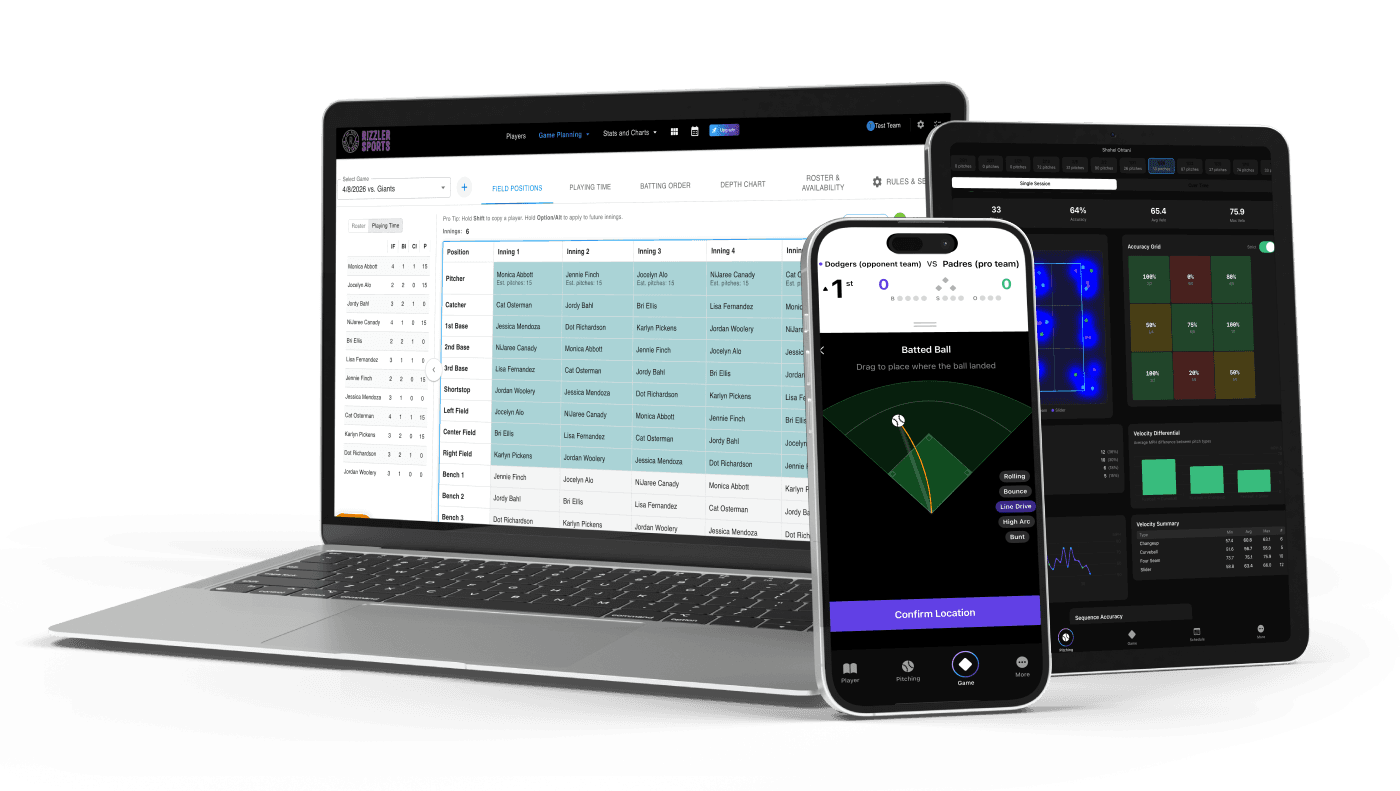
When tryout season hits, the calendar turns into a logistics crunch: registrations to collect, hundreds of players to check in, an evaluation sheet for every coach, then offers to send and accept-or-decline responses to chase, all before the season opens. Rizzler Sports handles that whole cycle for team tryouts in any sport, which saves coaches and administrators hours per tryout. Players register online, coaches score evaluations on a phone or tablet at every station, results rank automatically, and you invite selected players and track who accepts or declines without a spreadsheet or group text. Whatever season you are heading into, the workflow is the same and the time saved adds up across every event you run.
Running a larger program, a multi-sport club, a league, or a school district that tries out across several seasons a year? We will set you up end to end and show you how much staff time it saves.
Talk to our team
Want to spend more time coaching and less time with paperwork? Let's talk.
Tell us about your team and we'll show you how to plan games, set lineups, run the schedule, and develop players in one place, so you spend the season coaching instead of chasing admin.
Less admin, more coaching
Plan games, set lineups, and track the season in one place
Keep every family in the loop automatically
Tell us about your program
4 fields · takes 30 seconds
Lands in the same inbox as the Help button · human response only
Frequently Asked Questions
When should I hold tryouts for my sport?
Hold tryouts before your core season: a few weeks ahead for recreational placement, and one to three months ahead for competitive travel teams. Work backward from your first game, then confirm the date does not clash with the dominant local sport's tryouts or with a busy facility. The master table above gives the typical tryout window for each sport.
Why do season dates vary so much by region?
Weather and the school calendar drive the variation. Outdoor spring sports start weeks earlier in the warm South and West than in the colder Northeast, Midwest, and across Canada, where frozen or muddy conditions delay starts and shorten fall seasons. School teams are also tied to their state or provincial association's calendar, while club programs set their own.
How is the youth sports calendar different in Canada?
Ice hockey dominates the Canadian youth calendar, with minor hockey and elite AAA programs holding competitive spring tryouts for the next season. Ringette is a popular Canadian winter sport, school sport is run province by province (for example OFSAA in Ontario), and shorter outdoor seasons push more soccer and field hockey indoors through the winter.
What is the difference between school and club season timing?
School teams follow the academic year and their athletic association, so seasons are shorter and tryouts cluster near the start of each school season. Club and travel programs run longer, earlier calendars and often try out months before their season, sometimes during the prior season, to lock in rosters. The same sport can have two different tryout windows in one town.
Which sports do not really hold cut-based tryouts?
Cross country, track and field, and many youth swimming and tennis programs are typically participation-based rather than cut-based, so the "tryout" is closer to a sign-up or a placement evaluation. You still benefit from organized registration and evaluation to seed athletes into groups, heats, or levels, even when no one is cut.
Read Next
On-Base Percentage (OBP): Definition, Formula & Youth Benchmarks
StatsRizzler Reps for Soccer: Assigned Drills, Streaks, and At-Home Training
SoccerLittle League Draft Preparation with Rizzler
For LeaguesBest Baseball Player Evaluation Tools in 2026
LearnHow to Coach Youth Basketball: A Practical Guide
Learn6-1 Volleyball Rotation: What It Means and How to Run It
Volleyball