
Stats
Strikeouts (K): Batting
Strikeouts (K) measure how often a batter strikes out. On this page, strikeout rate is calculated as Strikeouts ÷ At-Bats (K/AB). A player who strikes out in 25% of at-bats strikes out roughly once every four trips to the plate. At the youth level, strikeout rate is one of the most useful stats for identifying plate discipline issues, but it needs to be interpreted carefully because high strikeout rates are often a developmental phase, not a permanent flaw.
The Formula
Strikeout Rate (K%) = Strikeouts ÷ At-Bats
Example: A player with 12 strikeouts in 50 at-bats:
K% = 12 ÷ 50 = .240 (24%)
A note on conventions: this page uses strikeouts per at-bat (K/AB). Many sources, including MLB stat references, calculate strikeout rate per plate appearance (K/PA), which produces a lower number for the same player, so benchmarks shift depending on which convention a source uses. Pick one convention and stick with it when comparing players.
What Strikeout Rate Tells You
Plate discipline and pitch recognition. A batter who strikes out frequently is either swinging at pitches outside the zone, not recognizing pitches early enough, or both. At younger ages (10U-11U), this is normal development: the pitching is getting faster and the strike zone concept is still being learned. At 13U+, a persistently high K rate suggests mechanical or approach issues that need coaching attention.
Contact ability. Some hitters trade strikeouts for power: they swing hard, miss more, but hit the ball harder when they connect. This tradeoff is acceptable at higher levels. At the youth level, consistently putting the ball in play is more important than swinging for the fences.
Development trajectory. Track K rate across a season. If it's declining (fewer strikeouts over time), the player is improving their pitch recognition and approach. If it's steady or increasing, it's time for a conversation and some cage work.
Youth Strikeout Rate Benchmarks
The ranges below use K/AB and reflect what coaches commonly see at each level, not published league data.
| Level | Low (good) | Average | High (concern) |
|---|---|---|---|
| 10U Rec | Below 15% | 15-25% | 30%+ |
| 12U Competitive | Below 15% | 15-22% | 28%+ |
| 14U Travel | Below 18% | 18-25% | 30%+ |
At 10U, a 25% strikeout rate is normal. At 14U travel, the same rate suggests the batter is getting exposed by better pitching and needs work on their approach.
Strikeouts and Quality At-Bats
A strikeout isn't automatically a "bad" at-bat. In the quality at-bat (QAB) framework, an at-bat can still be a QAB if the batter fought through a long count (8+ pitches), even if it ended in a strikeout. This is one reason QAB is a better development measure than strikeout rate alone: it rewards the process, not just the outcome.
How to Coach a High-K Hitter
Don't just tell them to "stop striking out." That's not actionable.
Break it down. Are they striking out looking (called third strike) or swinging (whiffing)? Looking strikeouts suggest a timing or aggressiveness issue. Swinging strikeouts suggest pitch recognition or mechanics.
Focus on pitch recognition. Can they identify balls from strikes before the ball reaches the plate? Front-toss drills with intentionally mixed locations help.
Simplify the approach. "See the ball up, swing. See the ball down, take." An overly complicated approach at the plate leads to hesitation and late swings.
Track QAB, not just K rate. If a player's QAB percentage is improving even though their K rate is still high, they're on the right track: they're competing better in at-bats. Using stats without overcoaching
Frequently Asked Questions
Is a high strikeout rate always bad?
No. Some power hitters strike out more because they swing harder. The question is whether the player is making hard contact when they do connect. At 13U+, a player with a 25% K rate but a high SLG is making a reasonable tradeoff. At 10U, focus on reducing strikeouts and making contact.
How does Rizzler track strikeouts?
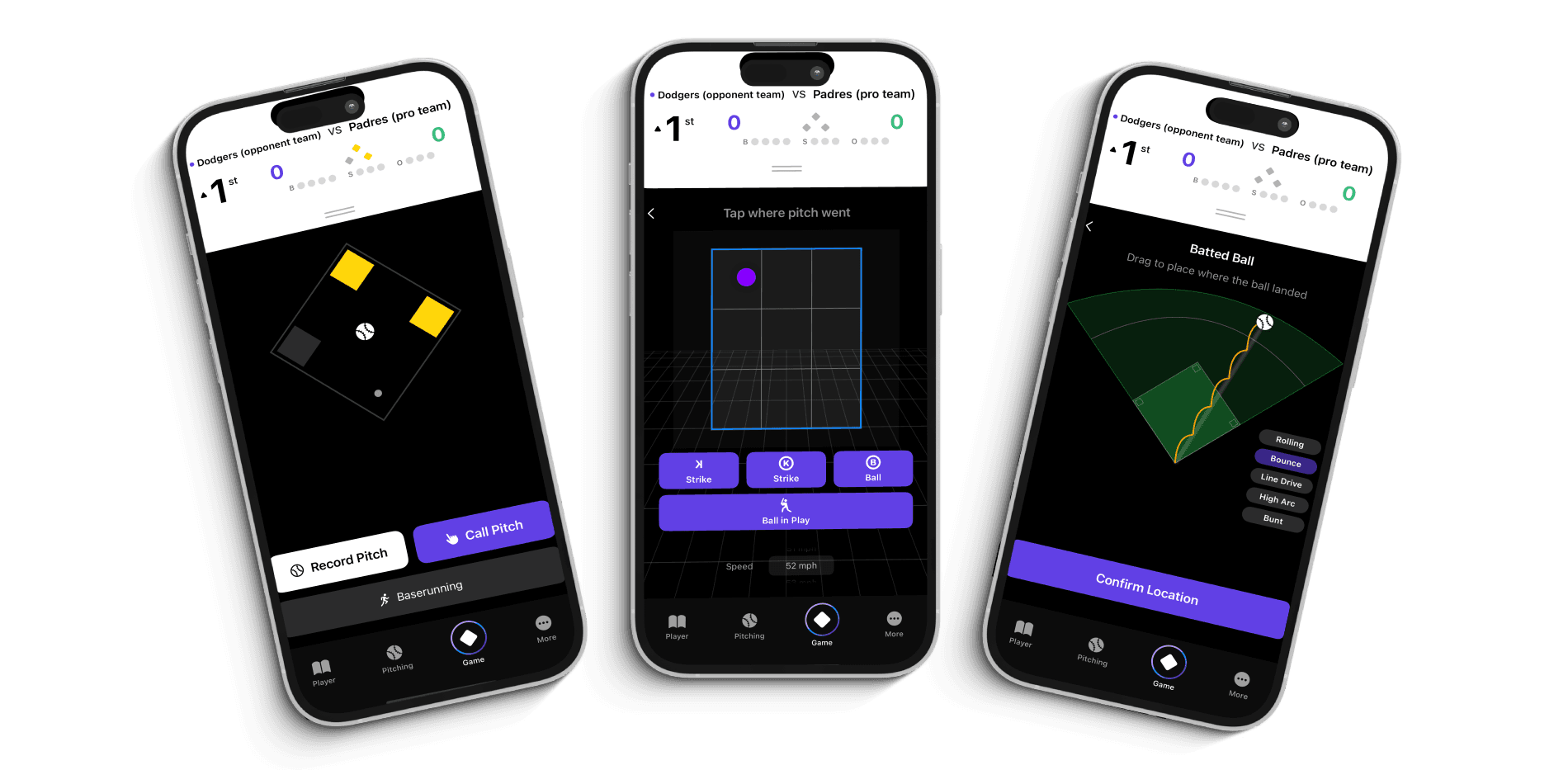
Score games in Rizzler on any plan, and strikeouts are recorded automatically. K rate calculates across the season. The AI Batting Order, available on the Coach and Club plans, considers K rate when placing hitters: high-K players may be placed in spots where strikeouts are less costly.
Should I share strikeout data with my players?
Carefully. Frame it positively: "You struck out 4 times this week, but 2 of them were 7+ pitch at-bats. That's competitive." Don't use K rate to embarrass or pressure a young player.
Track strikeouts, QAB, and every other batting stat automatically while you score.
Coaching development across a club or league? Our team can help.
Talk to our team
Want to spend more time coaching and less time with paperwork? Let's talk.
Tell us about your team and we'll show you how to plan games, set lineups, run the schedule, and develop players in one place, so you spend the season coaching instead of chasing admin.
Less admin, more coaching
Plan games, set lineups, and track the season in one place
Keep every family in the loop automatically
Tell us about your program
4 fields · takes 30 seconds
Lands in the same inbox as the Help button · human response only
Read Next
Are My Team's Stats Private in Rizzler?
FAQPlayer Development: Track Every Player Across the Season
FeaturesVolleyball Passing Drills: 8 Drills That Build Real Platforms
VolleyballHow to Coach T-Ball: A First-Year Coach's Guide
LearnSurveys: Player Goals & Parent Feedback for Coaches
FeaturesRizzler Plans Compared: Free vs Coach vs Club
FAQ