
Stats
Slugging Percentage (SLG)
Slugging Percentage (SLG) measures a batter's power by weighting extra-base hits more heavily than singles. Formula: Total Bases ÷ At-Bats. A .400 SLG means the batter averages 0.4 total bases per at-bat. Unlike batting average, SLG distinguishes between a single and a home run: a player who hits mostly doubles and triples will have a higher SLG than one who hits only singles, even with the same batting average.
The Formula
SLG = Total Bases ÷ At-Bats
Total Bases calculation:
- Single = 1 base
- Double = 2 bases
- Triple = 3 bases
- Home Run = 4 bases
Example: A player with 25 singles, 8 doubles, 2 triples, and 1 home run in 100 at-bats:
Total Bases = (25 × 1) + (8 × 2) + (2 × 3) + (1 × 4) = 25 + 16 + 6 + 4 = 51
SLG = 51 ÷ 100 = .510
What SLG Tells You (and What It Doesn't)
It tells you about power. A player with high SLG hits the ball hard and drives it for extra bases. At 13U and above, SLG starts to meaningfully differentiate between contact hitters (high AVG, low SLG) and power hitters (moderate AVG, high SLG).
It doesn't tell you about plate discipline. SLG doesn't account for walks or hit-by-pitches. A player who never walks but hits doubles has high SLG but limited on-base ability. That's why OPS (which combines OBP and SLG) is a better overall offensive measure.
It's noisy at younger ages. At 10U, most extra-base hits happen because of outfield errors, not genuine power. A "triple" that involves two overthrows isn't a power indicator. SLG becomes more meaningful at 12U+ when players start consistently hitting balls to the outfield on the fly.
What Is a Good Slugging Percentage?
In MLB, league-average SLG typically runs around .400-.420. The working scale:
| MLB SLG | What It Means |
|---|---|
| Below .350 | Below average; little power production |
| .350-.450 | Roughly league average |
| .450-.550 | Good power; solid middle-of-the-order bat |
| .550+ | Elite; typically among the league leaders |
Youth SLG Benchmarks
Youth numbers vary more than MLB because errors inflate extra-base hits. These are approximate ranges coaches commonly see, not published league data.
| Level | Below Average | Average | Above Average | Elite |
|---|---|---|---|---|
| 10U Rec | Below .250 | .250-.400 | .400-.550 | .550+ |
| 12U Competitive | Below .300 | .300-.450 | .450-.600 | .600+ |
| 14U Travel | Below .300 | .300-.450 | .450-.600 | .600+ |
When to Start Tracking SLG
SLG becomes useful when players start generating genuine extra-base hits, usually around 11U-12U for competitive players and 13U-14U for rec players. Before that, focus on contact rate, OBP, and quality at-bats. See what to track at 10U-11U for younger teams.
How Rizzler Uses SLG
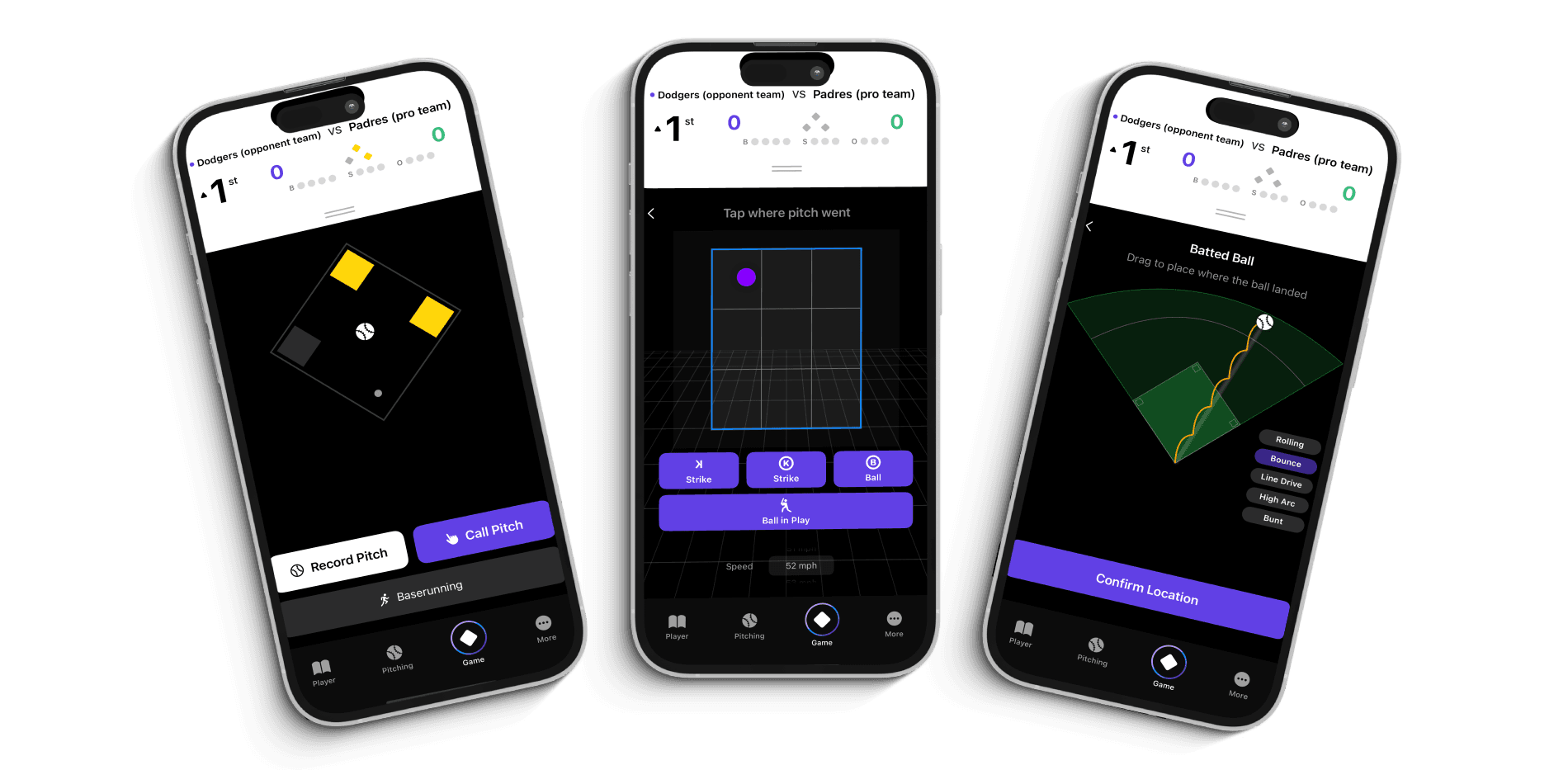
Rizzler's AI Batting Order, available on the Coach and Club plans, uses SLG alongside OBP to place hitters optimally. High-SLG players are valued in the 3-5 spots where driving in runners matters most. The AI balances SLG with OBP using OPS as the combined metric.
Frequently Asked Questions
What does SLG mean in baseball?
SLG is the abbreviation for slugging percentage: total bases divided by at-bats. It measures power by counting a double as 2, a triple as 3, and a home run as 4, where batting average counts every hit as 1.
What is a good slugging percentage?
In MLB, around .400-.420 is league average, .450-.550 is a good power hitter, and .550+ is elite. In youth baseball, treat anything over .450 at 12U+ as above average and remember that errors inflate the number at younger ages.
What's the difference between batting average and slugging?
Batting average treats all hits equally: a single and a home run both count as one hit. SLG weights them differently, so a home run is worth four times a single. SLG rewards power.
Can SLG be higher than 1.000?
Yes. If a player hit a home run in every at-bat, their SLG would be 4.000. In practice, a youth season SLG over .800 is exceptional.
Is SLG useful for a 9-year-old?
Not really. Most 9U "extra-base hits" are the result of fielding mistakes, not genuine power. Focus on contact quality and plate discipline at younger ages.
Score your games in Rizzler and SLG, OBP, and OPS calculate automatically for every player.
Tracking power development across a club or league? Our team can help.
Talk to our team
Want to spend more time coaching and less time with paperwork? Let's talk.
Tell us about your team and we'll show you how to plan games, set lineups, run the schedule, and develop players in one place, so you spend the season coaching instead of chasing admin.
Less admin, more coaching
Plan games, set lineups, and track the season in one place
Keep every family in the loop automatically
Tell us about your program
4 fields · takes 30 seconds
Lands in the same inbox as the Help button · human response only