
Stats
Quality At-Bat (QAB)
A quality at-bat (QAB) is any plate appearance that meets at least one of the defined criteria for a productive at-bat, regardless of whether the batter gets a hit. A hard line drive caught by the shortstop is a QAB. A 9-pitch walk is a QAB. A first-pitch popup is not. QAB measures the process and competitiveness of an at-bat, not just the outcome. That makes it one of the most useful stats for coaching youth hitters, and one of the most underused. For putting the stat into practice, see the quality at bat coaching system: how to track QAB and set team goals.
QAB Criteria
An at-bat counts as a quality at-bat if it meets any one of these criteria:
| # | Criterion | Why It Counts |
|---|---|---|
| 1 | Hit | Any hit is a productive at-bat |
| 2 | Walk (BB) | Reached base by being disciplined at the plate |
| 3 | Hit by Pitch (HBP) | Reached base, so it counts |
| 4 | Sacrifice bunt or sacrifice fly | Advanced a runner or scored a run at the cost of an out |
| 5 | Productive out: moved a runner from 2nd to 3rd, or scored a runner from 3rd | The out had a purpose |
| 6 | Hard-hit ball: line drive or hard ground ball, regardless of result | The batter hit the ball hard; the defense just happened to make the play |
| 7 | 8+ pitch at-bat | Battled, worked the count, made the pitcher throw a lot of pitches |
| 8 | At-bat that raised the pitcher's pitch count by 4+ after falling behind 0-2 | Fought back from a bad count and made the pitcher work |
Some teams add additional criteria. Some simplify to 6 criteria. The exact list matters less than the philosophy: reward competitive at-bats, not just hits.
QAB Formula
QAB% = Quality At-Bats ÷ Total Plate Appearances
Example: A player has 40 plate appearances in a month. Of those, 22 meet at least one QAB criterion:
QAB% = 22 ÷ 40 = 55%
Why QAB Is Better Than Batting Average for Coaching
Batting average punishes bad luck. A screaming line drive caught by the second baseman counts the same as a weak grounder to the pitcher: both are outs, both are 0-for-1. But one was a great at-bat and the other wasn't.
QAB captures the difference. The line drive is a QAB (hard-hit ball). The weak grounder is not.
Over a 15-game youth season, batting average is heavily influenced by randomness, meaning where the ball happens to land. QAB is influenced by the batter's approach, discipline, and effort, the things the player can control and the coach can develop.
This reframes the conversation with players. Instead of "you went 0-for-3," it's "you had 2 quality at-bats today: a hard line drive and a 7-pitch walk. Keep doing that and the hits will come."
Youth QAB Benchmarks
These are targets coaches commonly set for their teams, not published league averages.
| Level | Below Average | Average | Above Average | Strong |
|---|---|---|---|---|
| 10U Rec | Below 35% | 35-45% | 45-55% | 55%+ |
| 12U Competitive | Below 40% | 40-50% | 50-60% | 60%+ |
| 14U Travel | Below 45% | 45-55% | 55-65% | 65%+ |
How to Track QAB
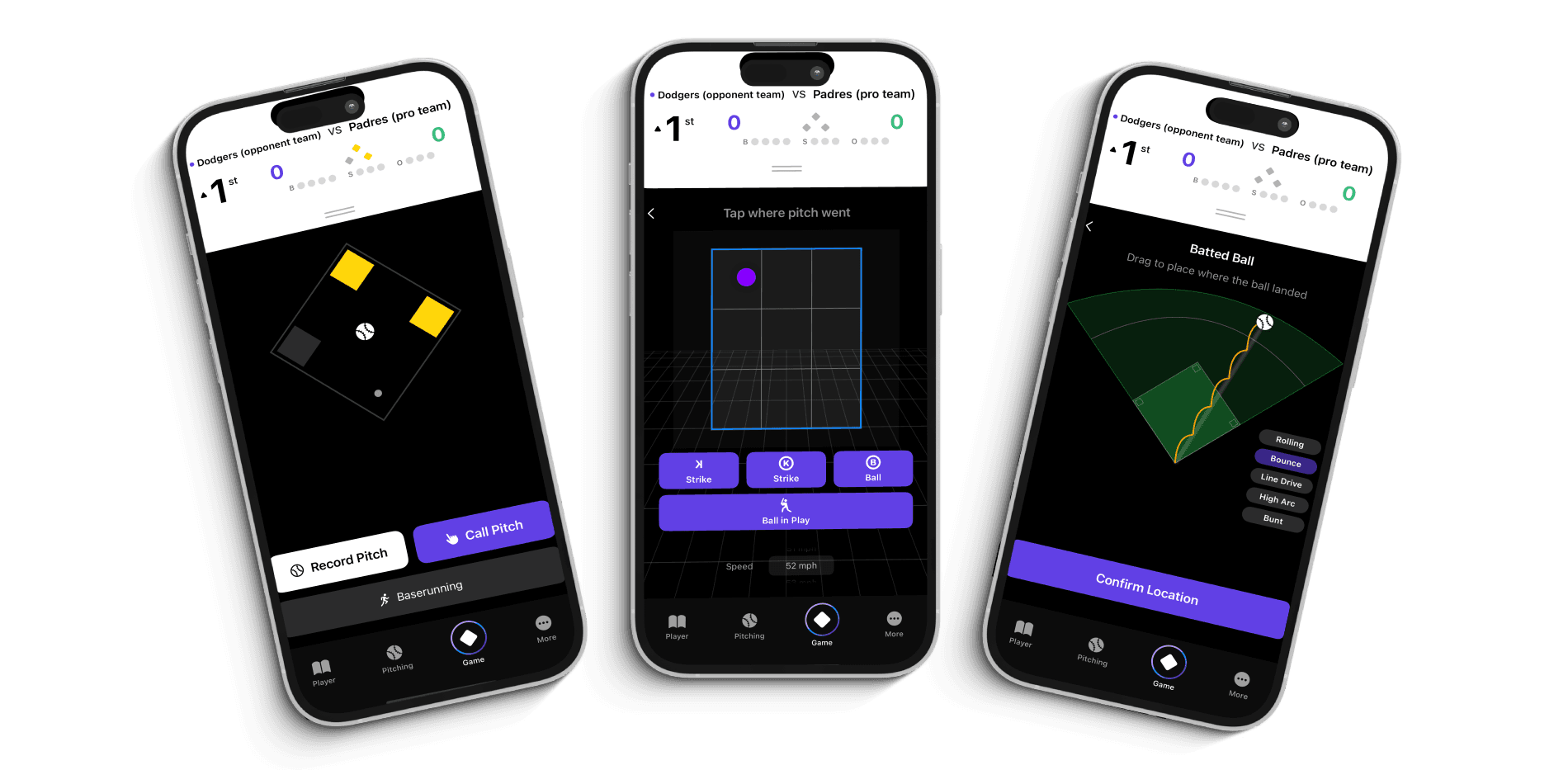
During games: As each batter completes their at-bat, mark whether it met any QAB criterion. In Rizzler, you can track QAB as part of in-game scoring, noting the at-bat result and whether it qualified.
After games: Review QAB percentages for each player. Look for trends. Is a player's QAB percentage improving even if their batting average is flat? That's a sign they're developing the right habits.
In evaluations: QAB percentage is a valuable input for player evaluations. Pair it with OBP and strikeout rate for a complete picture of offensive development.
Frequently Asked Questions
What does QAB stand for in baseball?
QAB stands for Quality At-Bat: any plate appearance that meets at least one productive-at-bat criterion (hit, walk, hard-hit ball, 8+ pitch battle, productive out, and so on), regardless of the outcome. QAB% is quality at-bats divided by total plate appearances, and 50%+ is a common team goal.
Do most teams track QAB?
At the travel level (12U+), more teams are adopting QAB. At the rec level, it's less common but equally valuable. Any coach can start tracking it; it only takes a moment per at-bat to note whether it was a QAB.
Can a strikeout be a QAB?
Yes, if the at-bat lasted 8+ pitches or if the batter fought back from 0-2 and drove the pitch count up by 4+. A 10-pitch strikeout is a quality at-bat because the batter made the pitcher work.
What's the relationship between QAB and OBP?
They overlap but aren't the same. Every walk (part of OBP) is a QAB. But QABs also include hard-hit outs, productive outs, and long at-bats that don't affect OBP. A player can have a moderate OBP but a high QAB%, meaning they're doing a lot right at the plate even when they're making outs.
How do I explain QAB to parents?
"A quality at-bat means your kid competed. They hit the ball hard, worked the count, or moved a runner. A hit is great, but a hard line drive that gets caught is still a good at-bat. QAB tracks whether your kid is doing the right things at the plate." For something you can send to families directly, share our QAB explainer for parents and players.
QAB changes how you think about offense. Start tracking it the next time you score a game.
Rolling QAB out across a club or league? Our team can help.
Talk to our team
Want to spend more time coaching and less time with paperwork? Let's talk.
Tell us about your team and we'll show you how to plan games, set lineups, run the schedule, and develop players in one place, so you spend the season coaching instead of chasing admin.
Less admin, more coaching
Plan games, set lineups, and track the season in one place
Keep every family in the loop automatically
Tell us about your program
4 fields · takes 30 seconds
Lands in the same inbox as the Help button · human response only
Read Next
On-Base Percentage (OBP): Definition, Formula & Youth Benchmarks
StatsPONY Baseball Age Chart 2026: Divisions & Cutoff
RulesRizzler for Little League Head Coaches
For CoachesRizzler Plans & Pricing: Free vs Coach vs Club
ComparisonBest Baseball Player Evaluation Tools in 2026
LearnBaseball Position Chart: Printable Fielding Rotation (Free)
Resources