
Stats
The Coach's Guide to Quality At-Bats
A quality at-bat system is a coaching framework: you define your team's criteria for a productive plate appearance, track every at-bat against that list during games, and set team QAB goals, so players are measured on approach instead of batting average luck. If you just need the stat itself, start with the quality at-bat definition and criteria; this guide is about running QAB as a system.
Here's why it's worth the effort. Your third baseman just ripped a line drive right at the shortstop. She's 0-for-2. Her dad in the bleachers is shaking his head. But you saw something different: a compact swing, hard contact, good pitch selection. That was a great at-bat that happened to result in an out. Batting average says she failed. Quality at-bat says she competed.
This guide covers the whole system: setting your criteria list, how to track QAB in games, using it in evaluations, building a lineup around it, and communicating it to players and parents who've never heard of it.
Setting Your Team's QAB Criteria List
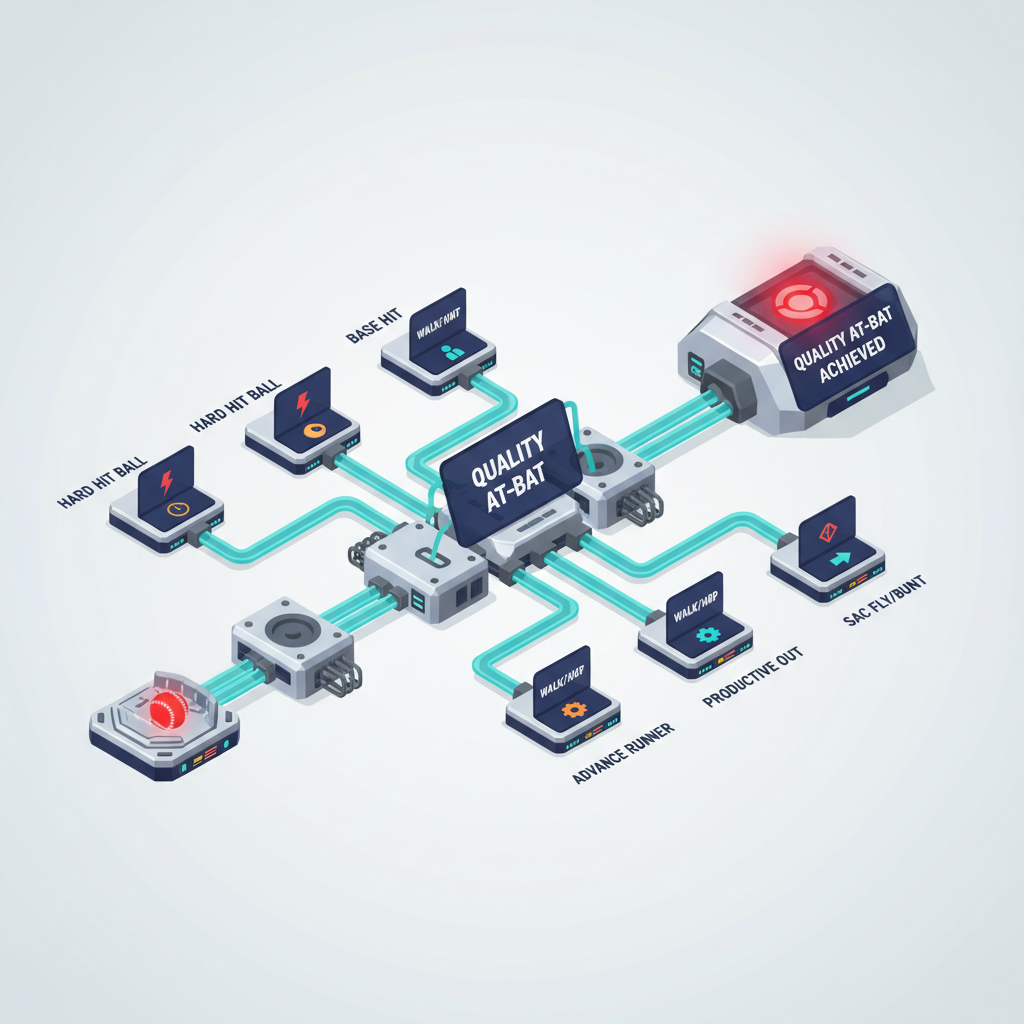
The first step in the system is deciding what your team counts. An at-bat is a QAB if it meets any one of your criteria. The full list and definitions are on the quality at-bat definition page, but here's the practical version most teams start from:
Results that are obviously good: A hit. A walk. A hit-by-pitch. A sacrifice that moves a runner.
Process that was good, even if the result wasn't: A hard-hit ball that the defense caught. A long at-bat (8+ pitches) that made the pitcher work. A productive out that advanced a runner. Fighting back from an 0-2 count and driving the pitch count up.
The key insight: QAB tracks what the batter controls. A batter can't control where the ball lands after contact. They can control whether they swing at good pitches, hit the ball hard, and compete in tough counts. QAB measures those controllable actions.
Why Coach With QAB Instead of Batting Average
We're not saying batting average is useless. We're saying it's incomplete, and at the youth level, its incompleteness causes real coaching problems.
Problem 1: Batting average rewards luck. A soft grounder through a hole in the infield is a hit. A screaming line drive right at the center fielder is an out. Over a full MLB season (600+ at-bats), luck evens out. Over a 15-game rec season (45 at-bats), it doesn't. Youth batting averages are noisy, volatile, and unreliable.
Problem 2: Batting average punishes good at-bats. A player who hits .220 but has a .500 QAB percentage is doing almost everything right at the plate. If you bench them because of their batting average, you're coaching against the data.
Problem 3: Batting average creates anxiety. A 12-year-old who's worried about "going 0-for" will swing at bad pitches to avoid a strikeout. That's the opposite of a quality approach. QAB frees players to focus on the process ("hit the ball hard, take good swings, work the count") because even an 0-for-3 day can include 2-3 quality at-bats.
Problem 4: Batting average doesn't capture walks. OBP fixes this, but QAB goes further: it also captures hard outs, productive outs, and competitive long at-bats. It's the most complete single measure of offensive approach.
How to Track QAB During Games
There are two ways to track QAB during games:
Method 1: Real-Time Tracking (Recommended)
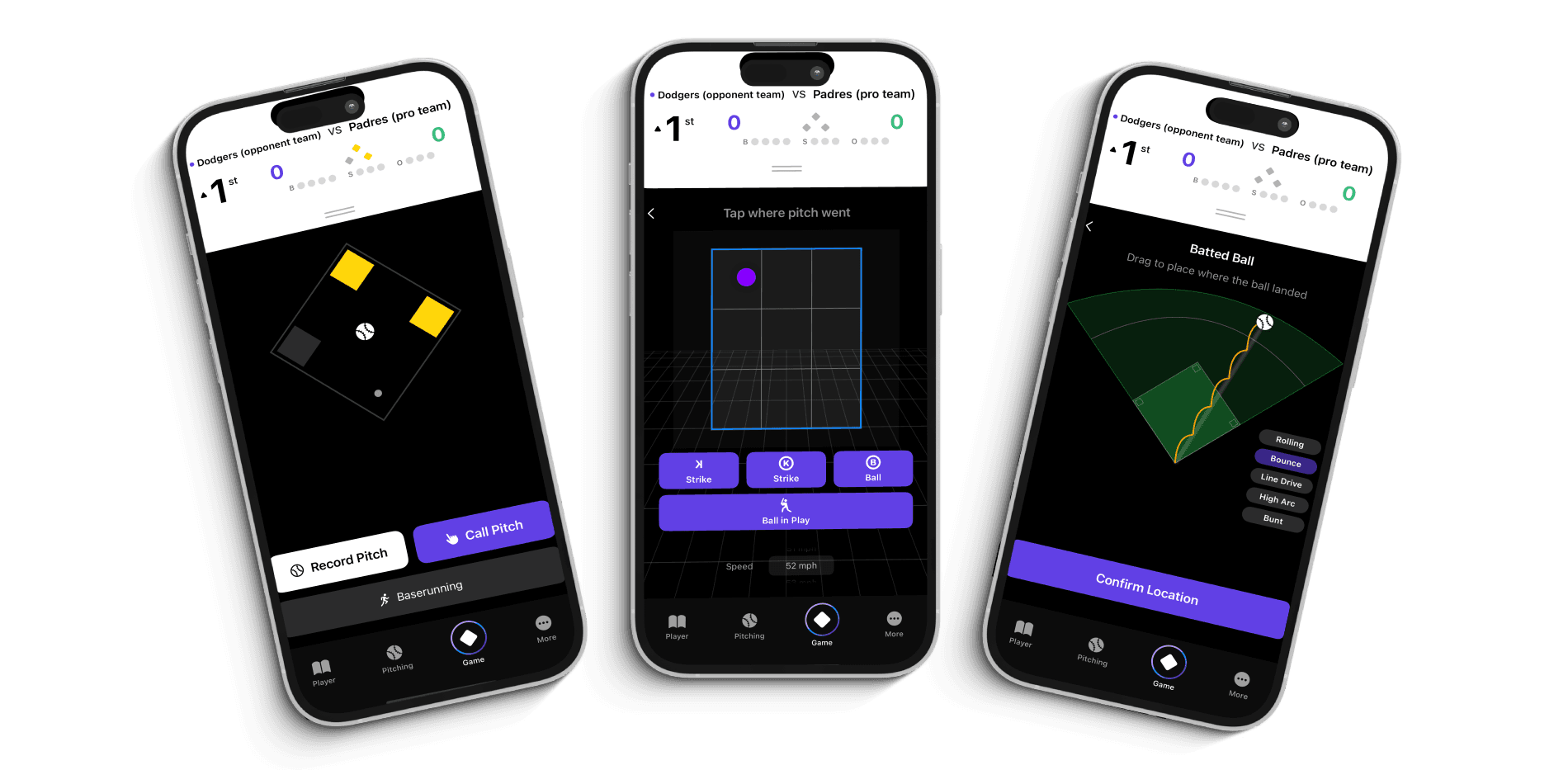
Have a coach or scorer mark each at-bat as QAB or non-QAB immediately after it happens. In Rizzler's scoring feature, this is a quick entry per at-bat. The benefit: you have the data instantly and don't rely on post-game memory.
Method 2: Post-Game Review
After the game, review the scoring data and apply the QAB criteria retroactively. This works but is less accurate; you might not remember whether that groundout in the third inning was hard-hit or routine.
What it looks like in practice:
| PA | Result | QAB? | Why |
|---|---|---|---|
| 1 | Flyout to center | ✅ | Hard-hit ball (line drive) |
| 2 | Walk (6 pitches) | ✅ | Walk, reached base |
| 3 | Groundout to short | ❌ | Weak contact, first pitch |
| 4 | Strikeout (9 pitches) | ✅ | 8+ pitch at-bat |
This player is 0-for-3 with a walk. Batting average for the game: .000. QAB: 3 out of 4 (75%). Very different story.
Using QAB in Player Evaluations
QAB is one of the most valuable inputs for player evaluations because it captures approach and competitiveness, the things that predict future development better than current batting average.
A player with a declining batting average but an improving QAB percentage is usually on the right track. The hits will come as their skills catch up to their approach.
A player with a high batting average but a low QAB percentage might be getting lucky: soft singles, slow rollers, balls that found holes. Their offensive ceiling is limited until their approach improves.
In mid-season and end-of-season evaluations, compare QAB trends alongside OBP, strikeout rate, and OPS for the fullest picture.
QAB and Lineup Construction
If you're building lineups around QAB philosophy, players with consistently high QAB percentages should bat higher in the order; they're the players who compete in every at-bat and create opportunities for the team. If you use Rizzler's AI Batting Order, available on the Coach and Club plans, your QAB records live alongside the stats the AI reads when it generates lineups.
Talking to Players About QAB
At 10U-11U: Keep it simple. "I don't care if you got a hit. I care if you battled up there. That line drive you hit that got caught? That was awesome. Keep doing that." Don't use the term "QAB"; use the concepts.
At 12U: Introduce the framework. "We track something called quality at-bats. A hit is a QAB. A walk is a QAB. A hard-hit ball that gets caught is a QAB. A long at-bat where you battled is a QAB. Your job is to have as many quality at-bats as possible."
At 13U+: Share the numbers. "Your QAB is 58% this month, up from 48% last month. That means you're competing in more at-bats. The batting average will follow."
Talking to Parents About QAB
Parents understand batting average because it's the stat they grew up with. QAB requires a brief explanation, but once they get it, it changes how they watch games. For something shareable, send families our QAB explainer written for parents and players.
The elevator pitch: "We track quality at-bats, which measures whether your kid is competing at the plate, not just whether they got lucky. A hard line drive that gets caught is a quality at-bat. A walk is a quality at-bat. We care about the process because the process produces results over time."
When a parent complains about batting average: "I hear you, .180 looks low. But her QAB percentage is 55%, which means she's having quality at-bats in more than half her trips. The hard contact is there. The walks are there. With more reps, the average will catch up to the approach."
Frequently Asked Questions
What's a good QAB percentage goal for a team?
50%+ for the team is a strong target at 12U and above. This means at least half of all plate appearances are competitive. Below 40% is a sign that the team's plate approach needs work.
Can I track QAB without Rizzler?
Yes. Use a notebook or a simple spreadsheet. For each at-bat, mark QAB or non-QAB. Calculate the percentage after each game. The process matters more than the tool.
How is QAB different from OBP?
OBP counts hits, walks, and HBPs. QAB counts those too, but also counts hard-hit outs, productive outs, and long at-bats. OBP measures results. QAB measures approach. A player can have a low OBP but a high QAB% if they're hitting the ball hard but getting unlucky.
Do MLB teams track QAB?
Many do, though they call it various things and often use more sophisticated versions. The concept of valuing at-bat quality over outcomes is fundamental to modern offensive coaching at every level.
QAB changes how you coach offense. Track it in your next game and watch the conversations with players change.
Bringing QAB to a whole club or league? Our team can help.
Talk to our team
Want to spend more time coaching and less time with paperwork? Let's talk.
Tell us about your team and we'll show you how to plan games, set lineups, run the schedule, and develop players in one place, so you spend the season coaching instead of chasing admin.
Less admin, more coaching
Plan games, set lineups, and track the season in one place
Keep every family in the loop automatically
Tell us about your program
4 fields · takes 30 seconds
Lands in the same inbox as the Help button · human response only
Read Next
Rizzler Sports FAQ: Frequently Asked Questions
FAQThe Libero in Volleyball: Meaning, Rules, and the Jersey
VolleyballLittle League Minimum Play Rules: Every Player Must Play
RulesHow to Run a Soccer Tryout: A Coach's Step-by-Step Guide
LearnPitch Count Rules Compared: Every Youth Baseball League
RulesStrikeouts (K): Batting Stat Definition & Youth Context
Stats