
Stats
On-Base Percentage (OBP)
On-Base Percentage (OBP) measures how often a batter reaches base safely, including hits, walks, and hit-by-pitches. Formula: (Hits + Walks + HBP) ÷ (At-Bats + Walks + HBP + Sacrifice Flies). A .400 OBP means the batter reaches base 40% of the time. OBP is widely considered more valuable than batting average because it counts all the ways a player gets on base, not just hits.
The Formula
OBP = (H + BB + HBP) ÷ (AB + BB + HBP + SF)
Where:
- H = Hits
- BB = Walks (base on balls)
- HBP = Hit by pitch
- AB = At-bats
- SF = Sacrifice flies
Example: A player with 30 hits, 15 walks, 2 HBPs in 100 at-bats and 3 sacrifice flies:
OBP = (30 + 15 + 2) ÷ (100 + 15 + 2 + 3) = 47 ÷ 120 = .392
Why OBP Matters More Than Batting Average
Batting average only counts hits. A player who walks 3 times in a game reached base 3 times, yet batting average gives them zero credit. OBP counts every time a batter reaches base, which is what actually leads to scoring runs.
At the youth level, this distinction matters even more:
Walks are a skill at younger ages. At 10U-12U, many pitchers struggle with control. A batter who can take a walk, who doesn't swing at ball four, is demonstrating plate discipline. That discipline is a better predictor of long-term offensive development than batting average.
Batting average is noisier. A soft grounder that gets through the infield is a hit. A line drive right at the shortstop is an out. Over a 15-game rec season, batting average is heavily influenced by luck. OBP is more stable because it captures the walks and HBPs that aren't subject to fielding randomness.
OBP feeds run scoring. Runs require baserunners. The team with higher OBP generally scores more runs. This is why Rizzler's AI Batting Order weighs OBP heavily for leadoff and top-of-the-order spots.
Youth OBP Benchmarks
These are approximate ranges coaches commonly see, not published league data. Your league and competition level will vary.
| Level | Below Average | Average | Above Average | Elite |
|---|---|---|---|---|
| 10U Rec | Below .300 | .300-.400 | .400-.500 | .500+ |
| 12U Competitive | Below .320 | .320-.400 | .400-.475 | .475+ |
| 14U Travel | Below .300 | .300-.380 | .380-.450 | .450+ |
OBP and Quality At-Bats
OBP and Quality At-Bats (QAB) reinforce each other. A walk is both a successful OBP event and a QAB. An 8-pitch at-bat that ends in a flyout doesn't help OBP but counts as a QAB. Together, they give you a more complete picture of a batter's offensive contribution than any single stat alone. The Coach's Guide to Quality At-Bats goes deeper.
How Rizzler Uses OBP
Rizzler's AI Batting Order, available on the Coach and Club plans, uses OBP as a primary input for lineup construction. High-OBP players are placed in the top third of the order where getting on base is most valuable. The AI also considers OPS (which includes OBP) for a combined view of offensive value.
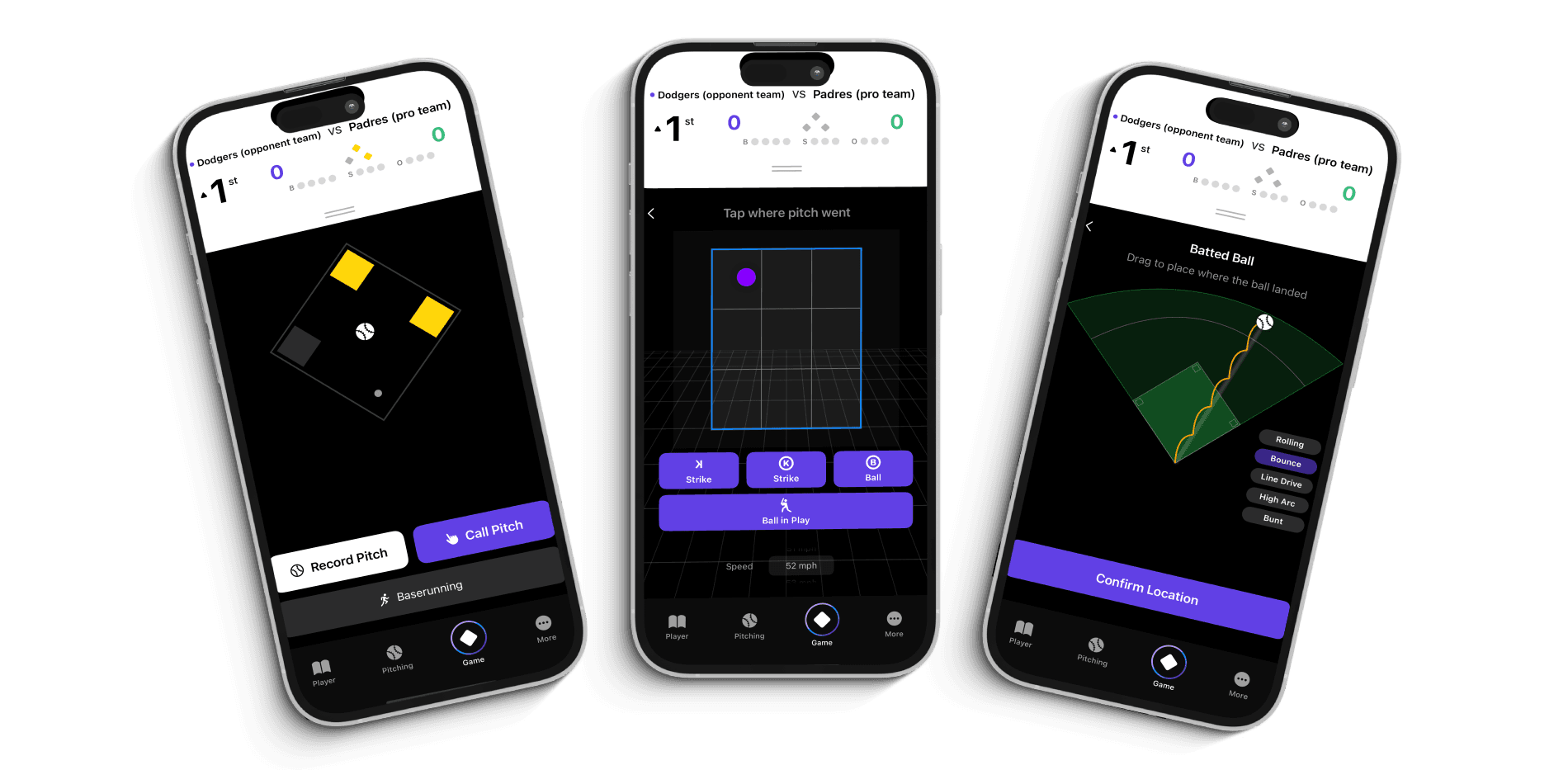
Score games in Rizzler on any plan and OBP calculates automatically for every player. On Coach and Club, you can also import stats from GameChanger or a CSV file.
Frequently Asked Questions
What is a good OBP in baseball?
In MLB, league-average OBP sits around .310-.320. A .360 OBP is very good, and .400+ is elite, typically top-10-in-the-league territory. In youth ball, OBP runs much higher because of walks and errors; treat .450+ at 12U as strong rather than comparing against MLB numbers.
How many plate appearances do I need for OBP to be meaningful?
At least 30 plate appearances for a rough indicator, 50+ for a reliable number. Over a 15-game season with 3 plate appearances per game, most players reach 45, which is borderline. This is why single-stat analysis at the youth level should be supplemented with evaluation rubrics and observation.
Can a player have a higher OBP than batting average?
Always. OBP includes walks and HBPs, so it's always equal to or greater than batting average. If a player has a much higher OBP than AVG, they walk a lot, which is a good thing.
Should I teach my players about OBP?
At 12U and above, yes, in simple terms. "Getting on base helps the team score, and a walk is just as good as a hit for that." At younger ages, focus on effort and process rather than numbers. Using stats without overcoaching
OBP calculates itself when you score games in Rizzler, on every plan.
Want help putting OBP to work across a club or league? Our team can help.
Talk to our team
Want to spend more time coaching and less time with paperwork? Let's talk.
Tell us about your team and we'll show you how to plan games, set lineups, run the schedule, and develop players in one place, so you spend the season coaching instead of chasing admin.
Less admin, more coaching
Plan games, set lineups, and track the season in one place
Keep every family in the loop automatically
Tell us about your program
4 fields · takes 30 seconds
Lands in the same inbox as the Help button · human response only
Read Next
Can I Use Rizzler with GameChanger?
FAQRizzler Sports Product Overview: Web App, iOS App & Free Tools
BlogWhat Baseball Stats Should You Track at 13U-14U?
StatsRizzler for Travel Ball Assistant Coaches
For CoachesHow to Run a Wrestling Tryout: A Coach's Step-by-Step Guide
LearnBaseball Practice Plans: 8U, 12U, 14U, and High School Sessions
Learn