
Stats
Batting Average (AVG)
Batting Average (AVG) measures how often a batter gets a hit. It's calculated by dividing hits by at-bats. A .300 batting average means a player gets a hit in 30% of their at-bats. It's the most widely known baseball statistic and the first one most youth coaches learn, but it doesn't tell the whole story.
Formula
Batting Average = Hits ÷ At-Bats
Example: A player with 24 hits in 80 at-bats has a .300 batting average (24 ÷ 80 = .300).
What counts as a hit: Singles, doubles, triples, and home runs.
What counts as an at-bat: Any plate appearance except walks (BB), hit-by-pitches (HBP), sacrifices (SAC), and catcher's interference.
What's a Good Batting Average?
The classic benchmark is .300: in MLB, hitting .300 has always marked a very good hitter, and league-wide batting average in recent seasons has hovered around .240-.250, so even .270 is comfortably above average. A .400 season hasn't happened in MLB since Ted Williams hit .406 in 1941. Youth baseball runs much higher than MLB at every age, so the same numbers mean different things on a 12U field, which is what the table below is for.
What's a Good Batting Average at Each Age?
These are ranges coaches commonly see in competitive youth ball, not published league averages. Youth batting averages vary widely by league competitiveness, pitching quality, and sample size, so treat them as directional targets.
| Age Group | Below Average | Average | Good | Excellent |
|---|---|---|---|---|
| 8U-9U | Below .250 | .250-.350 | .350-.450 | .450+ |
| 10U-11U | Below .250 | .250-.325 | .325-.400 | .400+ |
| 12U | Below .225 | .225-.300 | .300-.375 | .375+ |
| 13U-14U | Below .225 | .225-.300 | .300-.350 | .350+ |
| 15U-18U | Below .200 | .200-.275 | .275-.350 | .350+ |
Batting averages trend downward as players face better pitching at older ages. A .400 average at 9U is common. A .400 average at 14U is outstanding. Context matters more than the number itself.
When Batting Average Matters
It's a useful snapshot. Batting average tells you how consistently a player puts the ball in play and reaches base via hits. Over a full season (50+ at-bats), it's a reasonable indicator of a player's ability to make contact and find gaps.
It's easy to understand. Parents, players, and coaches all know what batting average means. That makes it useful for communication and motivation.
When Batting Average Doesn't Tell the Full Story
It ignores walks. A player who walks 30% of the time and bats .250 is more valuable than a player who never walks and bats .275. That's why On-Base Percentage (OBP) is often a better measure of offensive contribution.
It ignores power. A .300 average from singles is not the same as a .300 average that includes doubles and home runs. Slugging Percentage (SLG) captures this difference.
Small sample sizes make it unreliable. In youth baseball, a player might have 25-40 at-bats in a season. At that sample size, one hot week can move an average by 100 points. Don't make major coaching decisions based on batting average from a short season.
It can discourage good plate discipline. A young hitter who takes a walk instead of swinging at a bad pitch just helped the team, but their batting average didn't change. If a coach overemphasizes batting average, players may swing at bad pitches to avoid "wasting" an at-bat. At the youth level, that's the wrong incentive.
Batting Average vs. OBP vs. OPS
| Stat | What It Measures | Formula | Best For |
|---|---|---|---|
| AVG | Hit rate | H ÷ AB | Basic contact ability |
| OBP | Total times reaching base | (H + BB + HBP) ÷ (AB + BB + HBP + SF) | Overall offensive contribution |
| OPS | Reaching base + power combined | OBP + SLG | Comprehensive offensive value |
For youth baseball coaches, OBP is often more useful than AVG because it rewards good plate discipline, something that matters enormously at the developmental level. More on quality at-bats
How Rizzler Tracks Batting Average
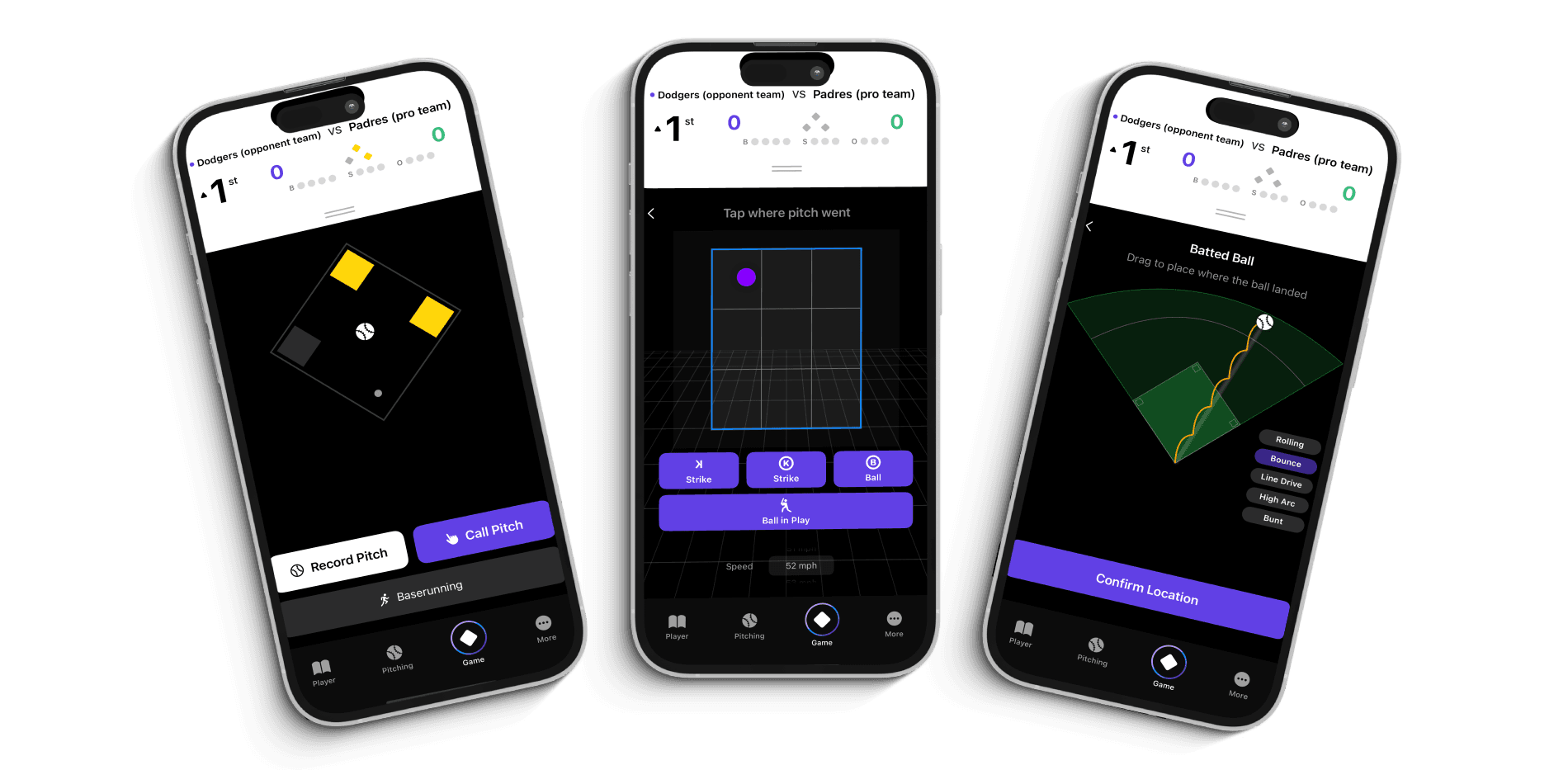
Rizzler calculates batting average automatically when you score games on any plan. On the Coach and Club plans, you can also import stats from GameChanger or a CSV file. You can see each player's AVG in their player profile, in game-by-game breakdowns, and in the AI Stats Analysis dashboard (Coach and Club plans). The AI also uses batting average as one of many inputs when generating AI Batting Orders.
Frequently Asked Questions
At what age should coaches start tracking batting average?
Most coaches start tracking around 9U-10U, when players are seeing kid-pitch for the first time. Before that, in coach-pitch leagues, batting averages tend to be very high and less meaningful.
Should I share batting averages with players?
It depends on the age and maturity of the player. For younger players (10U and under), focus on effort and process rather than stats. For older players (13U+), batting average can be a useful benchmark, but always pair it with context.
Why is my kid's batting average different in GameChanger vs. Rizzler?
Check whether both systems are counting the same games and using the same definition of at-bats. Scoring inconsistencies (e.g., a reached-on-error scored differently) can cause small differences. GameChanger vs Rizzler stats
See batting average, OBP, and every other stat on this page calculated automatically each time you score.
Running stats across a whole club or league? Our team can help.
Talk to our team
Want to spend more time coaching and less time with paperwork? Let's talk.
Tell us about your team and we'll show you how to plan games, set lineups, run the schedule, and develop players in one place, so you spend the season coaching instead of chasing admin.
Less admin, more coaching
Plan games, set lineups, and track the season in one place
Keep every family in the loop automatically
Tell us about your program
4 fields · takes 30 seconds
Lands in the same inbox as the Help button · human response only
Read Next
Volleyball Practice Plans: Ready-to-Run Sessions by Focus
VolleyballVolleyball Serve Receive: Patterns by Rotation and System
VolleyballSports Team Management App: Your Whole Season in One Place
FeaturesLittle League Pitching Rules: Complete Guide for Coaches
RulesRizzler Sports Features: Every Coaching Tool in One Place
FeaturesLearn: Youth Sports Coaching Guides
Learn