
Rules
Little League Pitching Rules
Little League pitching rules allow one mound visit per pitcher per inning in the Major Division (a second visit to the same pitcher in the same inning means the pitcher must be removed from the mound), 8 warmup pitches or 1 minute between innings, and, in Majors and below, no return to the mound once a pitcher is removed. This page covers the general pitching rules beyond pitch count limits and rest days: warmup pitches, mound visits, pitcher removal and re-entry, balk rules, intentional walks, hit batters, and pitch type restrictions by division.
How Many Warmup Pitches Between Innings?
A pitcher is allowed a maximum of 8 warmup pitches, or 1 minute of warmup time, whichever comes first. The same limit applies between innings and when a new pitcher enters the game. Warmup pitches do not count toward the daily pitch count.
Balk Rules
In Majors and below, runners may not leave their base until the pitch reaches the batter. There are no leadoffs, so pitchers aren't holding runners on and balks are not called at these levels.
Balk rules apply beginning at the Intermediate (50/70) division and continue through Juniors and Seniors, where leadoffs are allowed. Umpires at these levels often warn a young pitcher before calling a balk. Common balk situations include:
- Pitcher starts the motion and does not deliver the pitch
- Pitcher throws to an unoccupied base without stepping toward it
- Pitcher fakes a throw to first base
Coaches moving players up from Majors should teach stretch mechanics early, because the balk rule will be new to those pitchers.
How Many Mound Visits Are Allowed?
Rule 8.06 sets two clocks at once, per inning and per game, and they differ by division:
| Division | Visits before removal (same inning) | Visits before removal (same game) |
|---|---|---|
| Major Division | 1 (second visit removes the pitcher) | 2 (third visit removes the pitcher) |
| Minor Division | 2 (third visit removes the pitcher) | 3 (fourth visit removes the pitcher) |
Two details catch coaches off guard. First, a time-out granted to talk to ANY defensive player is charged as a visit to the pitcher, so a quick word with your shortstop costs the same as a trip to the mound. Second, removal under 8.06 is removal as pitcher only: the player may stay in the game at another position, subject to the catcher-to-pitcher rule.
Can a Removed Pitcher Return to the Mound?
In Minors, Majors, and below: no. Regulation VI(b) is absolute, and a pitcher removed from the mound cannot return as a pitcher in that game, even if they stayed in at shortstop the whole time.
In Intermediate (50-70), Junior, and Senior League: a pitcher who remains in the game on defense at another position may return to pitch once in the remainder of the game, one return per game. A pitcher substituted out of the game entirely cannot return to pitch in any division. Their pitch count continues from the earlier appearance, and rest days are based on the day's total.
Intentional Walks
In Little League, intentional walks can be issued by announcement: the coach or pitcher can tell the umpire they want to intentionally walk the batter. No pitches need to be thrown. This speeds up the game and avoids wild pitches during intentional walk attempts.
Hit Batters
Little League's national pitching regulations do not automatically remove a pitcher after a set number of hit batters. However, some local leagues and tournaments adopt a safety rule that removes a pitcher who hits three batters in the same game. Check your local league rules and any tournament ground rules so you know which standard applies.
Pitch Type Restrictions
Little League does not officially ban any specific pitch types (curveballs, sliders, etc.) at any division level. However, Little League strongly recommends that coaches limit breaking pitches for players under 14 and focus on fastball and changeup development.
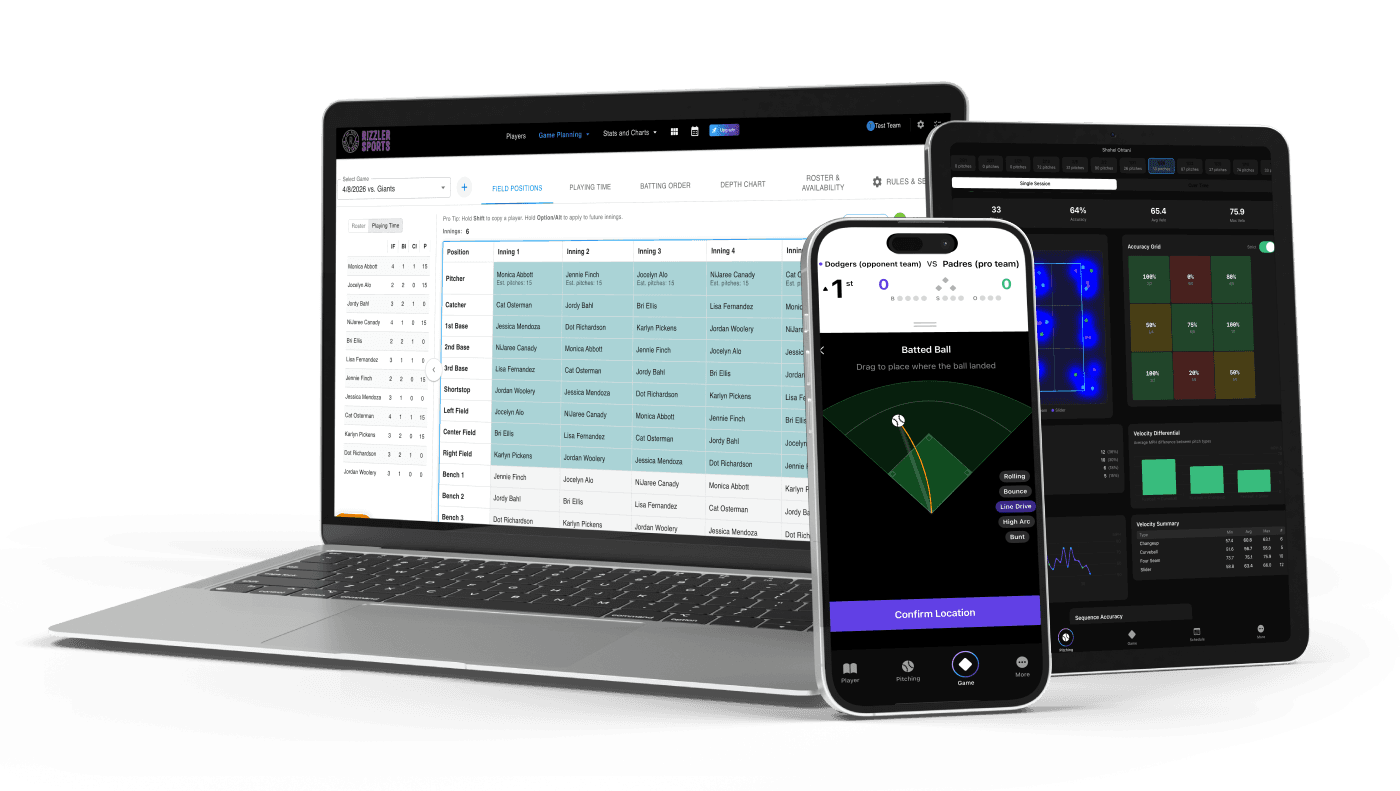
At the younger divisions (8U-10U), most coaches and leagues discourage curveballs entirely. Rizzler's pitch charting tracks pitch type so you can monitor what your pitchers are throwing in practice and in games.
Frequently Asked Questions
How many mound visits are allowed in Little League?
In the Major Division: one visit per pitcher per inning (the second removes the pitcher) and two per game (the third removes the pitcher). In the Minor Division: two per inning and three per game before removal. A time-out to talk to any defensive player counts as a visit to the pitcher.
Can a pitcher return to the mound after being removed?
In Majors and below, no: once removed from the mound, a player cannot return as pitcher that game. In Intermediate (50-70), Junior, and Senior League, a pitcher who stayed in the game at another defensive position may return to the mound once per game. Their pitch count continues from the previous appearance, and rest day requirements are based on total daily pitches.
Are there any rules about pitching speed in Little League?
No. There are no speed limits in Little League. However, age-appropriate development should guide coaching decisions. See the pitching stats hub for typical velocities by age group.
Can a pitcher pitch in consecutive games?
Yes, if they have met the rest day requirements from their previous appearance. A pitcher who threw 15 pitches yesterday (0 rest days required) can pitch again today. One more limit applies: no player may pitch on three consecutive days, regardless of pitch counts.
What is the Pitch Smart pitching safety program?
Pitch Smart is a joint program from Major League Baseball and USA Baseball. It recommends age-appropriate pitch limits, emphasis on fastball-changeup development before breaking pitches, and avoiding pitching through fatigue. These are recommendations, not Little League rules, but following them protects your players.
Want mound visits, pitch counts, and eligibility all tracked while you coach?
Standardizing pitching rules across a league? Our team can help.
Talk to our team
Want to spend more time coaching and less time with paperwork? Let's talk.
Tell us about your team and we'll show you how to plan games, set lineups, run the schedule, and develop players in one place, so you spend the season coaching instead of chasing admin.
Less admin, more coaching
Plan games, set lineups, and track the season in one place
Keep every family in the loop automatically
Tell us about your program
4 fields · takes 30 seconds
Lands in the same inbox as the Help button · human response only
Read Next
Baseball Position Chart: Printable Fielding Rotation (Free)
ResourcesPlaying Time Fairness Across Your Little League
For LeaguesHow to Run a Little League Evaluation Day with Rizzler
For LeaguesPrintable Softball Lineup Card with DP/FLEX (Free PDF + Excel)
ResourcesHow to Build and Manage a Football Roster
BlogBaseball Spray Chart: How to Read One, Use One, and Print One
Learn