
Stats
What Stats to Track at 12U
At 12U, baseball starts to look like real baseball. Most 12U players are still on the 46-foot pitching distance with 60-foot bases (or 50/70 if their league plays the Intermediate division), but the pitching is faster, the competition is sharper, and stats start to be meaningful enough to inform coaching decisions. This is the age where tracking the right stats, and ignoring the wrong ones, shapes player development.
Here's what to focus on, what to track lightly, and what to skip at 12U. And if you coach 12U softball, nearly all of this applies to you too: the core stats (OBP, QAB, strike percentage, pitch count) matter for the same reasons, even though pitching distances and rest rules differ.
Track These Closely
On-Base Percentage (OBP)
At 12U, OBP is more important than batting average. A player who walks regularly is demonstrating plate discipline, the single most valuable offensive skill at this age. Players who chase bad pitches at 12U carry that habit into 13U and 14U where the pitching punishes it.
12U target: .350+ OBP is solid. .400+ is strong.
Quality At-Bat Percentage (QAB%)
This is the age to introduce quality at-bats as a team philosophy. Hard contact, walks, productive outs, and long at-bats all count. QAB reframes offensive success around the process, which is what you can coach. Full QAB guide →
12U target: 45%+ QAB is solid. 55%+ is strong.
Strike Percentage (Pitching)
Strike percentage is the most important development stat for 12U pitchers. A pitcher who throws 60%+ strikes at 12U is in excellent shape. Below 50% means they walk too many batters and the team can't compete.
12U target: as a rule of thumb, many coaches treat 57%+ as solid and 63%+ as strong. These are working targets, not published averages.
Pitch Count
Mandatory at all ages. Track every pitch. Follow the rest day rules. At 12U (Little League), the daily limit is 85 pitches with tiered rest days. Pitch count details →
Track These Lightly
Batting Average (AVG)
Track it because players and parents expect it, but don't use it as your primary offensive measure. Batting average over a 15-20 game season is too variable to be reliable. Use it alongside OBP and QAB, not instead of them.
Strikeout Rate
Strikeout rate is useful for identifying hitters who need plate approach work. At 12U, many coaches use roughly 28% as the point where a K rate is worth addressing, though the right threshold depends on your level of play. Either way, don't overreact to a few bad games; look at the trend.
ERA
ERA starts to be directionally useful at 12U because the defense is better and scoring is more consistent. Use it alongside strike percentage for a fuller pitching picture, but don't put too much weight on it.
Don't Worry About (Yet)
OPS / Slugging Percentage
OPS and SLG become meaningful at 13U+ when players generate genuine power. At 12U field distances (46/60 or 50/70), most extra-base hits are still contact-driven, not power-driven. Focus on OBP, not SLG.
Exit Velocity
Useful for travel ball evaluation at 13U+. At 12U, the physical maturation gap between early and late developers is too wide. A kid who hasn't hit his growth spurt yet might have a low exit velo but excellent mechanics.
Advanced Fielding Metrics
Fielding percentage and errors are fine to track at 12U. Anything beyond that isn't worth the effort.
The 12U Stat Dashboard
If you could only see 5 numbers for each player on your team, these are the ones that matter most at 12U:
| Stat | What It Tells You |
|---|---|
| OBP | Reaching base, the most important offensive skill |
| QAB% | Competing at the plate, process over outcomes |
| K rate | Plate discipline, contact vs. strikeouts |
| Strike % (pitchers) | Command, the key pitching development metric |
| Pitch count (pitchers) | Workload and arm safety |
Frequently Asked Questions
What is a good ERA for 12U baseball?
For competitive 12U (calculated on a 6-inning game), below 2.50 is strong, 2.50-4.50 is average, and 5.00+ is a concern. Treat ERA as directional at this age: defense and scorekeeping still vary a lot, so read it alongside strike percentage. Full ERA breakdown →
What is a good strike percentage for 12U baseball?
Many coaches treat 57%+ as solid and 63%+ as strong at 12U. Between 50-57% is developing, and below 50% usually means too many walks to compete. These are working targets, not published averages. Strike percentage explained →
What stats are most important to track in youth softball?
The same core set: OBP, QAB percentage, strike percentage, and pitch counts. Softball's pitching distances and rest rules differ from baseball, so follow your league's pitching regulations, but the coaching logic is identical: reward reaching base and competitive at-bats, and prioritize command for pitchers.
Should I share stats with 12-year-olds?
Selectively. Share QAB percentage (it rewards effort and process). Share strike percentage with pitchers (it's actionable). Be cautious with batting average and ERA, which can be discouraging. Using stats without overcoaching →
Is 12U too young for sabermetrics?
Yes. Stick to the basics: OBP, QAB, strike percentage, pitch count. Save OPS, wOBA, and exit velo for 13U+.
What's the biggest mistake coaches make with stats at 12U?
Over-indexing on batting average. A coach who benches a kid hitting .180 but ignores their .420 OBP and 60% QAB is making a data-driven mistake with the wrong data.
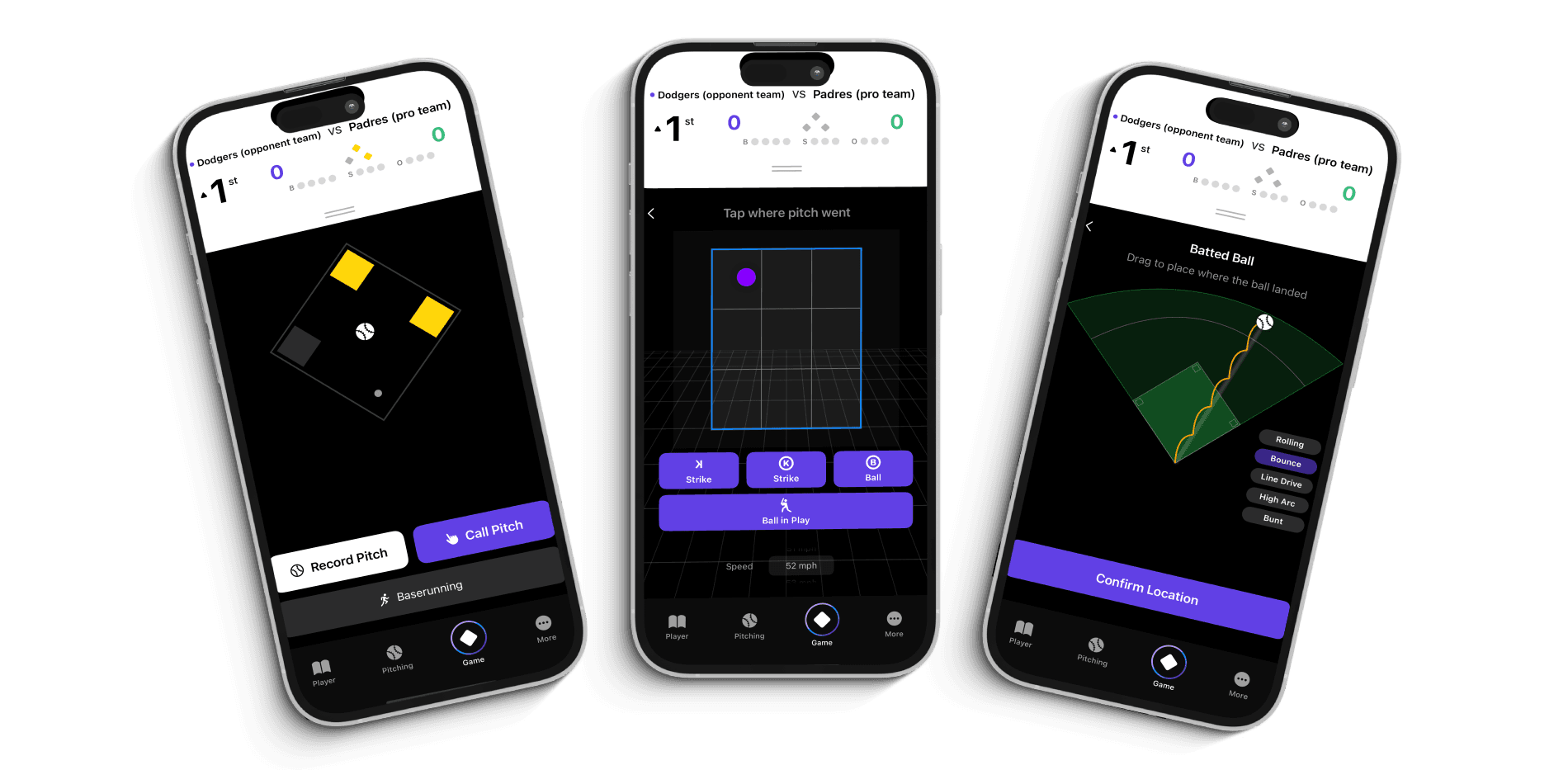
Score games in Rizzler and the 12U dashboard above builds itself: OBP, QAB percentage, strike percentage, and pitch counts are all tracked automatically. Basic stats, scoring, and pitch counting are included on every plan, and the free plan covers one team.
Want deeper pitching analytics or AI stats analysis for a competitive 12U team? Those come with Coach and Club, and we can walk you through what fits.
Talk to our team
Want to spend more time coaching and less time with paperwork? Let's talk.
Tell us about your team and we'll show you how to plan games, set lineups, run the schedule, and develop players in one place, so you spend the season coaching instead of chasing admin.
Less admin, more coaching
Plan games, set lineups, and track the season in one place
Keep every family in the loop automatically
Tell us about your program
4 fields · takes 30 seconds
Lands in the same inbox as the Help button · human response only
Read Next
How to Plan a Youth Baseball Tournament Weekend
LearnHow to Build a Batting Order for 13U-14U Baseball
LearnBest Baseball Tryout Management Tools in 2026
LearnVolleyball Conditioning Drills: Court-Specific Work That Transfers
Volleyball8U Baseball Practice Plan: A Complete 60-Minute Coach-Pitch Practice
LearnComparison Guides
Comparison