

Stats
Errors (E)
An error (E) is a fielding mistake that allows a batter to reach base or a runner to advance when, in the scorer's judgment, the play should have been made with ordinary effort. Errors are part of calculating fielding percentage and are used to determine earned vs. unearned runs for ERA. At the youth level, errors are the most common event in a baseball game, and the stat that causes the most misunderstanding between coaches, parents, and players.
How Errors Are Scored
An error is charged when a fielder fails to make a play that an average fielder at that position would have made. Common error types:
| Error Type | Example |
|---|---|
| Fielding error | Shortstop boots a routine grounder |
| Throwing error | Third baseman's throw sails over the first baseman's head |
| Dropped catch | Outfielder drops a routine fly ball |
| Missed tag | Catcher drops the ball while tagging a runner at the plate |
| Wild throw on a steal | Catcher overthrows second base on a steal attempt |
What's NOT an error: A ball that's too difficult for an average fielder to handle. A hard-hit ball that gets through the infield isn't an error even if the fielder touched it, as long as ordinary effort wouldn't have completed the play. The call depends on the scorer's judgment, which at the youth level is often a parent volunteer. Expect inconsistency.
Errors in Youth Baseball: The Reality
Youth baseball has a lot of errors. That's not a crisis. It's development.
Nobody publishes official error rates for youth baseball, but in our experience across youth games:
10U: Teams commit something like 4-8 errors per game. A "clean" game might have 2-3.
12U: 2-5 errors per game is common. Competition level matters hugely.
14U Travel: 1-3 errors per game is typical. Errors are fewer but more consequential.
At 10U, an error on a routine grounder at shortstop is normal development. The kid's hands aren't quick enough yet, or the hop was bad, or they rushed the throw. They'll get better with repetition.
At 14U travel, the same error might indicate a fundamental issue with mechanics, focus, or conditioning.
Context matters more than the number.
How to Coach Through Errors
Errors are emotional. A kid who makes an error in front of their team, the crowd, and their parents feels it. How you respond shapes whether they recover or carry it into the next play.
In the moment: Short memory. "Shake it off, you'll get the next one." Don't ignore it, but don't dwell on it.
After the game: Address patterns, not individual errors. "You rushed two throws today. Let's work on setting your feet before you throw." That's actionable. "You made 3 errors" is not.
Over the season: Track error patterns, not error counts. Does the player make most of their errors on backhand plays? On throws? On high-pressure situations? That tells you what to work on in practice.
Never use errors to shame. Publishing error counts or comparing players by errors is destructive, especially at younger ages. Errors are a learning tool, not a ranking tool. Using stats without overcoaching →
Errors and Other Stats
Errors and ERA: Runs that score because of errors are classified as unearned and don't count toward the pitcher's ERA. At the youth level, the earned vs. unearned distinction is often scored inconsistently, which makes ERA unreliable, especially below 12U.
Errors and fielding percentage: Every error lowers a player's fielding percentage. But remember: fielding percentage doesn't capture range. A player who gets to difficult balls will make more errors than one who doesn't move.
Frequently Asked Questions
How many errors per game is normal for 10U?
In our experience, 4-8 per team is typical at 10U rec. Don't panic. Focus on the fundamentals (catching, throwing to a target, moving feet before throwing) and the error count will drop naturally with repetition and maturation.
Should I track individual error counts for my players?
Track them privately for coaching purposes (to identify patterns), but don't publish rankings or share individual error counts with the team. Using stats without overcoaching →
Does Rizzler track errors?
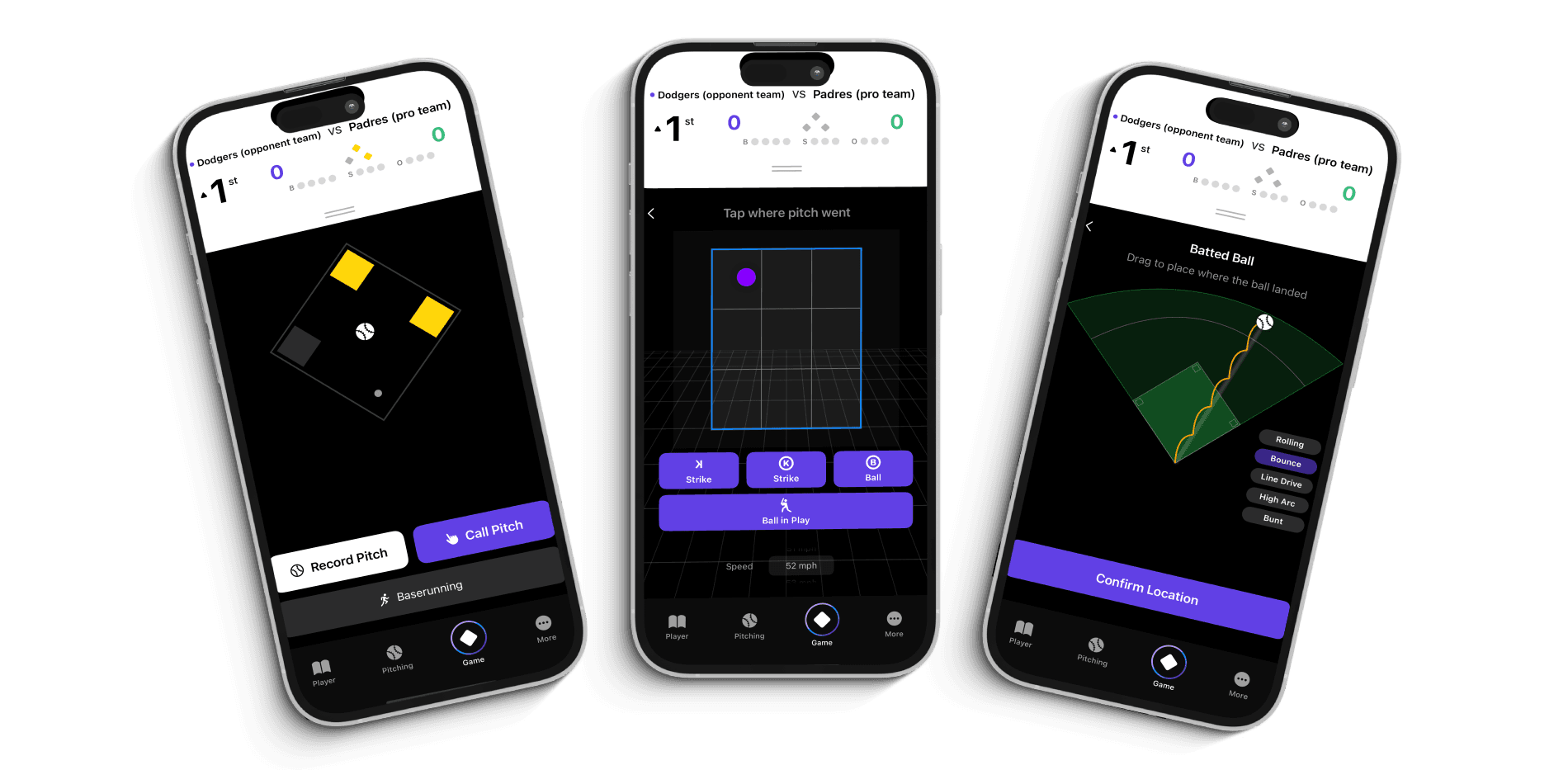
Yes. When you score games in Rizzler, errors are recorded per player and per position. The data feeds into fielding percentage calculations and is available in player evaluations for context.
Score games in Rizzler and errors are recorded automatically per player and per position, with fielding percentage calculated for you. Basic stats and scoring are included on every plan, and the free plan covers one team.
Coaching multiple teams or running a club and want defensive stats tracked the same way across all of them? We can help you set that up.
Talk to our team
Want to spend more time coaching and less time with paperwork? Let's talk.
Tell us about your team and we'll show you how to plan games, set lineups, run the schedule, and develop players in one place, so you spend the season coaching instead of chasing admin.
Less admin, more coaching
Plan games, set lineups, and track the season in one place
Keep every family in the loop automatically
Tell us about your program
4 fields · takes 30 seconds
Lands in the same inbox as the Help button · human response only
Read Next
Rizzler Plans & Pricing: Free vs Coach vs Club
ComparisonSoccer Practice Schedule Template: Session Plan by Age Group
SoccerRizzler vs TeamSnap: The Team App That Also Coaches
ComparisonHow to Make a Team Schedule (Step by Step)
LearnWhat Rules Does Rizzler Check Automatically?
FAQBest Baseball Lineup Generators in 2026
Learn