
Stats
What Stats Should You Track at 10U-11U?
At 10U-11U, stats should support player development, not create pressure. Track enough to identify trends, plan lineups, and measure improvement. Skip anything that turns a game into a spreadsheet exercise. The goal at this age is helping kids get better, not building a sabermetrics database.
Here's what matters, what doesn't, and why.
Stats Worth Tracking at 10U-11U
Batting
| Stat | Why It Matters at This Age |
|---|---|
| Batting Average (AVG) | Simple, widely understood. Good for tracking whether a player is making consistent contact. Don't obsess over it. |
| On-Base Percentage (OBP) | Better than AVG because it rewards walks. At 10U-11U, learning to take a walk is a huge development milestone. Celebrate it. |
| Strikeouts (K) | Track this to spot players who need help with pitch recognition or swing mechanics, not to shame them. A kid striking out a lot at 10U is normal. |
| Walks (BB) | A high walk rate at this age usually means good plate discipline, which is exactly what you want to develop. |
The stat that matters most at 10U-11U batting: OBP. A player who reaches base (by any means) is helping the team. Walks are as valuable as singles at this level. If you track one offensive stat, make it OBP.
Pitching
| Stat | Why It Matters at This Age |
|---|---|
| Pitch Count | Non-negotiable. Track every pitch, every game, every pitcher. This is an arm safety requirement, not an optional stat. |
| Strike Percentage | What percentage of pitches are strikes? At 10U, getting 50%+ strikes is solid. This tells you more about a pitcher's development than ERA. |
| First-Pitch Strike % | Getting ahead in the count is the single best predictor of pitcher success at every level. Start tracking this habit early. |
| Walks (BB) | Walks dominate 10U-11U games. A pitcher who can throw strikes wins games. Track walks to measure improvement over the season. |
The stat that matters most at 10U-11U pitching: Strike percentage. It tells you whether a pitcher is developing command. ERA at this age is heavily influenced by fielding errors and doesn't reflect the pitcher's actual performance.
Fielding
| Stat | Why It Matters at This Age |
|---|---|
| Errors (E) | Track to spot players who need extra fielding practice at specific positions. Don't use errors as a judgment; use them as a coaching signal. |
| Playing time by position | Track where each player has played across the season. This ensures balanced development and fair rotation. Playing time tracking → |
The stat that matters most at 10U-11U fielding: Playing time by position. At this age, every kid should be experiencing multiple positions. Track it to make sure you're actually rotating, not just intending to.
Stats to Skip at 10U-11U
| Stat | Why to Skip It |
|---|---|
| ERA (Earned Run Average) | Most runs at 10U are unearned (errors, passed balls, walks). ERA doesn't reflect pitching quality at this age. |
| Slugging (SLG) | Extra-base hits are rare at 10U. The sample is too small to be meaningful. |
| WHIP | Same problem as ERA: walks and errors dominate, making WHIP misleading. |
| Advanced sabermetrics | WAR, wOBA, wRC+ all require large sample sizes and assume a level of consistency that 10U-11U players don't have yet. Save them for 14U+. |
| Pitch velocity | At 10U-11U, velocity isn't the focus. Accuracy and mechanics matter more. Measuring velocity can create a "throw harder" incentive that leads to bad mechanics and arm injuries. |
How to Use Stats at This Age
Do: Use Stats to Identify Development Areas
If a player's strikeout rate spikes mid-season, that's a signal to work on pitch recognition in practice. If a pitcher's walk rate is climbing, that's a mechanics or confidence issue to address. Stats are diagnostic tools at this age, not report cards.
Do: Track Trends, Not Single Games
A player who goes 0-3 on Saturday didn't become a bad hitter. A pitcher who walks 5 kids in an inning might have just had a bad day. Look at stats across 5-10 games to see real patterns.
Don't: Publish Individual Stats Publicly
At 10U-11U, most experts recommend keeping individual stats between coaches and (selectively) parents. Public stats can create unhealthy comparison and pressure. Team stats (wins, team batting average, team ERA) are fine to share.
Don't: Let Stats Drive Playing Time Decisions Alone
The kid batting .190 at 10U might be the best hitter on the team by 14U. Development at this age is wildly uneven. Use stats as one input alongside effort, improvement, attitude, and the fact that every kid deserves a chance to develop.
Tracking Stats in Rizzler at 10U-11U
Rizzler makes stat tracking easy without making it a burden:
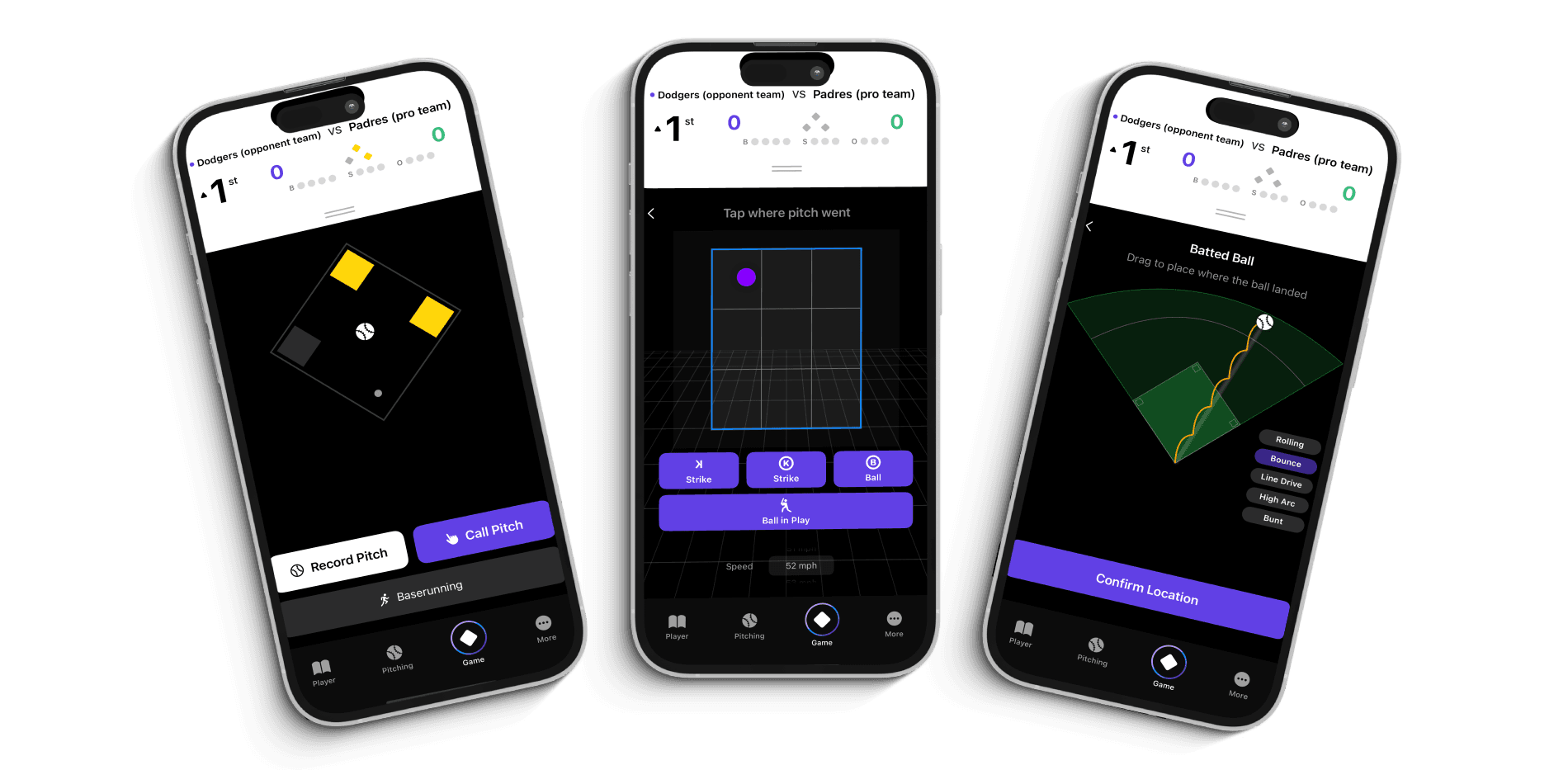
- Score games in the app and batting stats are calculated automatically. No manual data entry.
- Pitch counts track in real time during games with rest-day alerts built in.
- Playing time is tracked by position across every game in the season.
- AI Stats Analysis (Coach and Club plans) identifies trends and flags development areas automatically, so you don't have to stare at a spreadsheet.
If your parents are scoring in GameChanger, you can import those stats into Rizzler on the Coach and Club plans and let the AI work with both data sources.
Frequently Asked Questions
Should 10U-11U coaches even bother with stats?
Yes, but selectively. Pitch counts are mandatory for safety. OBP, strike percentage, and playing time tracking are valuable for development planning. Skip everything else until the players are older and the sample sizes are larger.
When should I start tracking more advanced stats?
12U is a natural inflection point. Players are facing better pitching, games are more competitive, and sample sizes start to become meaningful. What to track at 12U →
How do I talk to parents about their kid's stats?
Focus on improvement over time, not absolute numbers. "Their strikeout rate dropped from 40% in April to 25% in June" is more useful than "they're batting .240."
Everything worth tracking at 10U-11U (pitch counts, OBP, strike percentage, playing time by position) is recorded automatically when you score games in Rizzler. Pitch counting is included on every plan, and the free plan covers one team.
Coaching more than one team, or setting stat standards for a whole league? We can help you set that up.
Talk to our team
Want to spend more time coaching and less time with paperwork? Let's talk.
Tell us about your team and we'll show you how to plan games, set lineups, run the schedule, and develop players in one place, so you spend the season coaching instead of chasing admin.
Less admin, more coaching
Plan games, set lineups, and track the season in one place
Keep every family in the loop automatically
Tell us about your program
4 fields · takes 30 seconds
Lands in the same inbox as the Help button · human response only
Read Next
Running Travel Baseball Tryouts with Rizzler
BlogTournament Planning for Youth Baseball: Plan Your Whole Weekend
FeaturesAre My Team's Stats Private in Rizzler?
FAQTryout Evaluation Form: Free Template and How to Use It
LearnHow to Build a Batting Order for 9U-10U Baseball
LearnHow to Run a Volleyball Tryout: A Coach's Step-by-Step Guide
Learn