
Features
Track Playing Time So You Can Prove It's Fair
Rizzler automatically tracks every player's playing time by position across every game in the season. You can see how many innings each kid has played, which positions they've covered, and whether the distribution is balanced, without keeping a separate spreadsheet. When a parent asks why their child sat out the fourth inning, you've got data, not a vague "I try to rotate everyone."
Why Playing Time Tracking Matters
It's one of the most common sources of conflict between coaches and parents in youth baseball. A parent believes their kid isn't getting enough time. The coach believes they're rotating fairly. Neither can prove it, because nobody's actually tracking it.
At the rec level, fair playing time isn't just a nice idea. Many leagues require minimum play: every kid must play a certain number of innings per game or per season. Violating minimum play rules can result in game forfeits and coaching suspensions.
At the travel level, playing time is distributed based on performance, but coaches still need to demonstrate that the system is fair and that development opportunities are balanced across the roster.
Rizzler tracks it all automatically. No extra work. Every time you execute a game plan, the playing time data is recorded.
What Rizzler Tracks
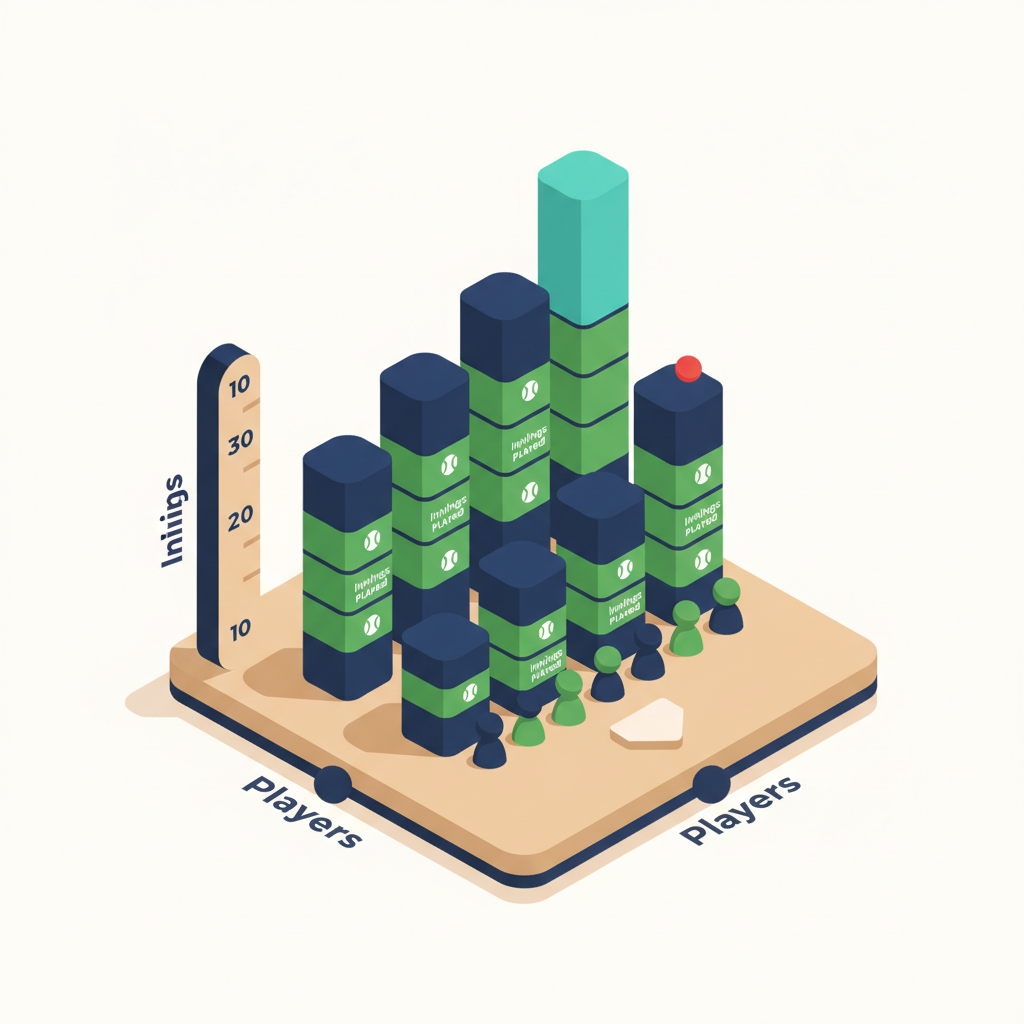
Innings played per game. How many of the game's 6 innings did each player play in the field?
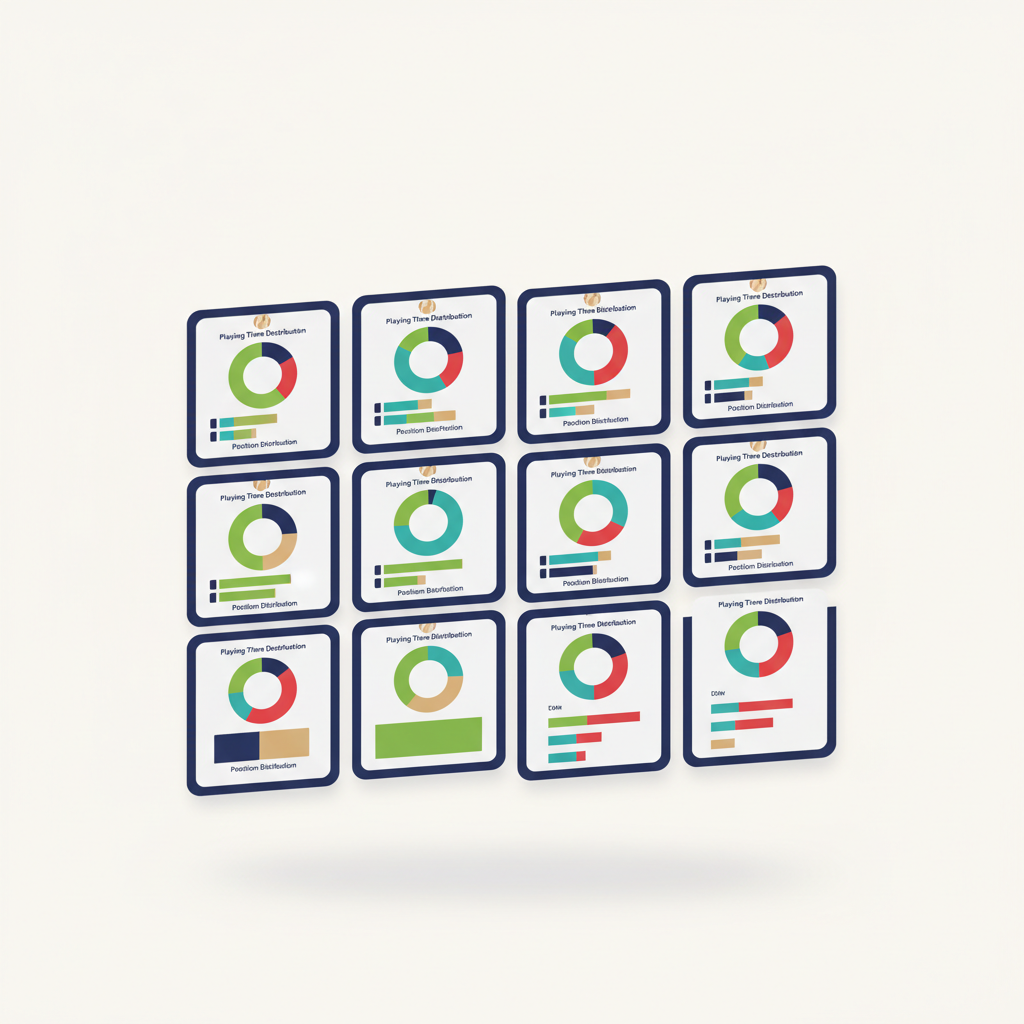
Position distribution. Which positions has each player covered, and how many innings at each? Over a full season, you can see if a kid has been stuck at second base every game or if they've genuinely rotated through multiple positions.
Batting order position history. Where in the batting order has each player been across games? This catches the pattern where the same kid bats ninth every week.
Cumulative season view. The full picture across 15, 20, 30 games. Total innings, position breakdown, and fairness indicators that flag imbalances.
Team-wide comparison. See all 12-15 players side by side. Who's played the most? The least? Who's been pigeonholed at one position?
How It Works
There's no extra step. Playing time tracking is built into the game planning flow, and innings are recorded from the game plans you execute.
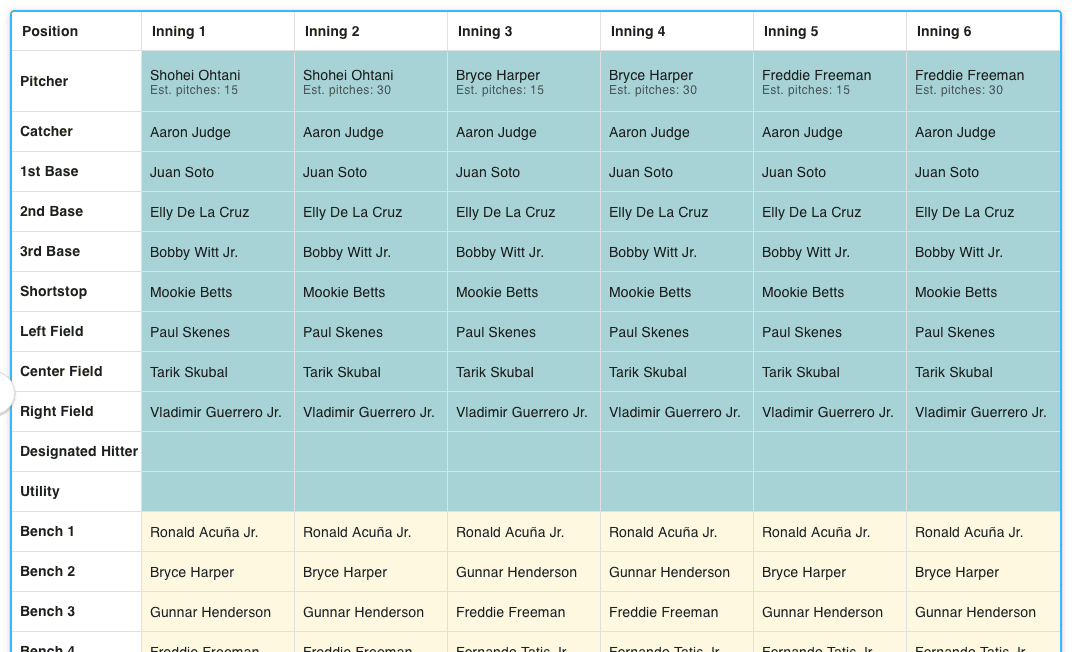
- Build your game plan. Assign players to positions for each inning.
- Play the game. Make adjustments as needed via the iOS app.
- After the game, Rizzler saves the actual playing time. If you made mid-game changes, those are reflected in the data, not just the original plan.
Over the course of a season, the data accumulates into a complete picture.
Who Benefits
Rec league coaches use it to keep rotations fair and stay compliant with minimum play rules. When a parent has a concern, pull up the season view and show them the numbers.
Little League coaches use it alongside rule compliance to make sure no kid falls through the cracks. The playing time data also feeds player evaluations, so you can assess a player in context of how much time they've had at each position.
Travel coaches use it to balance development with competition. Even on a travel team where playing time isn't equal, coaches need to ensure that bench players get meaningful innings and that development opportunities are distributed intentionally.
League administrators use it to monitor fairness across every team in the league. On the Club plan, the Organization Dashboard rolls the same data up league-wide. If one coach is consistently benching the same kids, the data surfaces it.
Club directors use it to hold coaches accountable. When parents complain about playing time, the club can pull data instead of relying on the coach's account.
Playing Time Tracking + AI Fielding
When you use AI Fielding Positions to generate your defensive rotation, the AI uses playing time history as an input. If a player has been underrepresented at a certain position, the AI naturally corrects for it. Over a season, this produces a more balanced distribution than most coaches achieve manually.
Frequently Asked Questions
Does playing time tracking require extra work during games?
No. It's automatic. When you build a game plan and make adjustments during the game, the playing time data is recorded. There's nothing additional to do.
Is playing time tracking on the Free plan?
Playing time tracking is available on every plan, in the web app and the coach iOS app. Innings are recorded automatically from the game plans you execute. Compare plans →
Can parents see the playing time data?
That's your choice. Playing time data is private to the coaching staff by default. You can share specific views with parents if you choose to, but it's not published automatically.
Does it track batting order fairness too?
Yes. Rizzler tracks which batting order position each player has occupied across games, so you can see if the same kid always bats last.
How does it handle mid-game changes?
If you sub a player in or out during the game via the iOS app, the actual playing time reflects the change, not just the original plan. Accuracy matters when the data is used to answer parent questions.
Playing time tracking is automatic in Rizzler. See also: How to Balance Playing Time →
Ready to answer the playing time question with data instead of memory?
Talk to our team
Want to spend more time coaching and less time with paperwork? Let's talk.
Tell us about your team and we'll show you how to plan games, set lineups, run the schedule, and develop players in one place, so you spend the season coaching instead of chasing admin.
Less admin, more coaching
Plan games, set lineups, and track the season in one place
Keep every family in the loop automatically
Tell us about your program
4 fields · takes 30 seconds
Lands in the same inbox as the Help button · human response only
Read Next
Rizzler for Travel Clubs, Select Teams & Baseball Facilities
BlogHow to Run a Rugby Tryout: A Coach's Step-by-Step Guide
LearnHow to Build a Batting Order for 11U-12U Baseball
LearnUSSSA Age Chart 2026: Baseball & Fastpitch Cutoffs
RulesGameChanger Alternatives: 7 Options Compared for 2026
ComparisonRunning Travel Baseball Tryouts with Rizzler
Blog