The Defensive Specialist (DS): The Back-Row Pro Without the Jersey
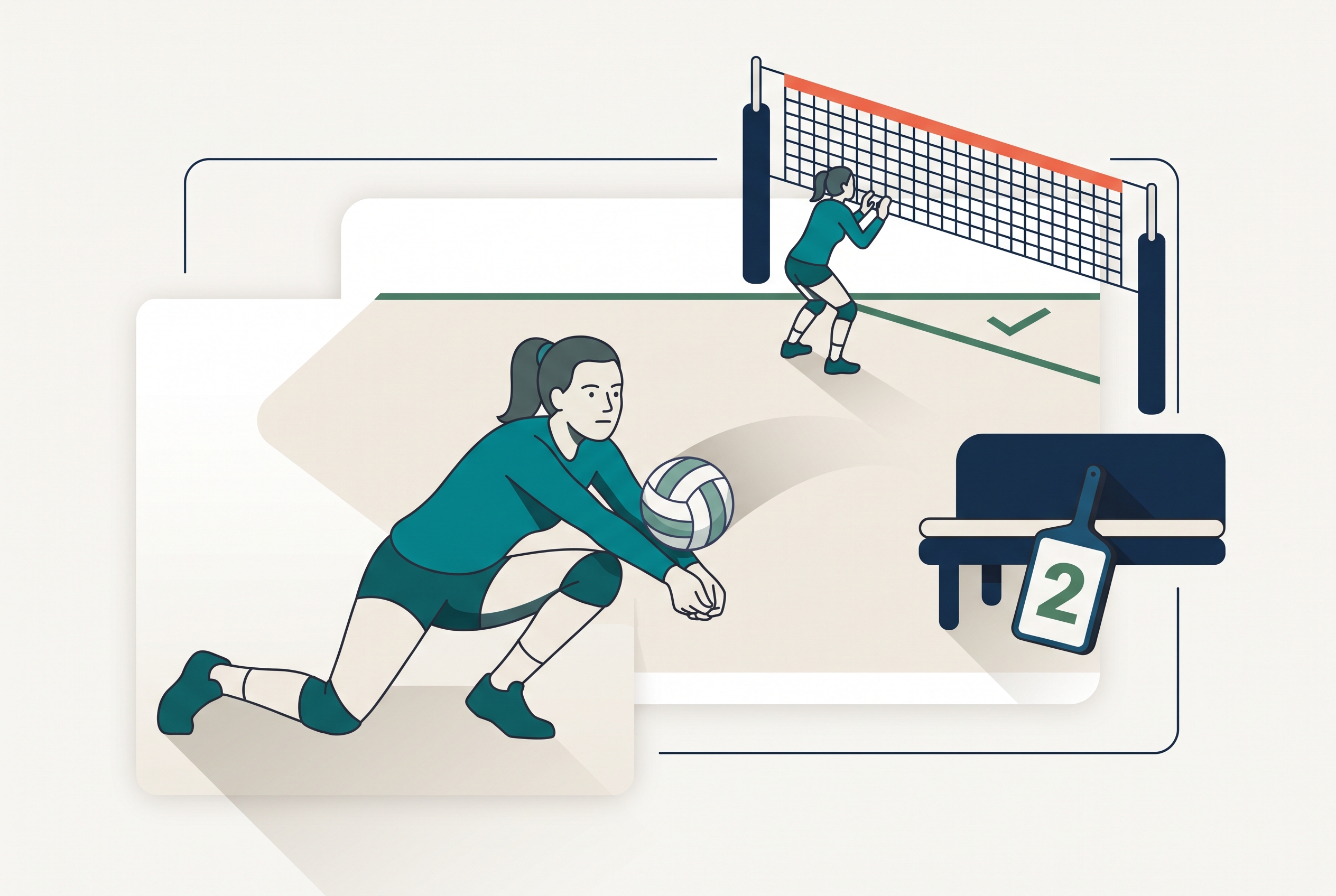
A defensive specialist (DS) is a back-row player who enters through the normal substitution system to pass, dig, and serve in place of a weaker back-row player, usually a hitter. She wears a regular jersey, counts against the team's substitution limit, and carries none of the libero's special restrictions, because she is a role, not a rulebook position. Every serious roster carries at least one, and the DS job is one of the most reliable ways for a ball-control player to earn court time on a team full of taller hitters. Here is how the role works, how it differs from the libero, and how to win it.
What Does DS Mean in Volleyball, and What Does the DS Do?
The pattern is consistent across levels: a front-row attacker (most often the opposite or a weaker-passing outside hitter) rotates to the back row, and the coach substitutes the DS in for her three back-row rotations. The DS passes in serve receive, digs in defense, frequently serves (a tough serve is half the reason she is on the floor), and leaves when her spot rotates back to the net. Then the wheel comes around and she does it again.
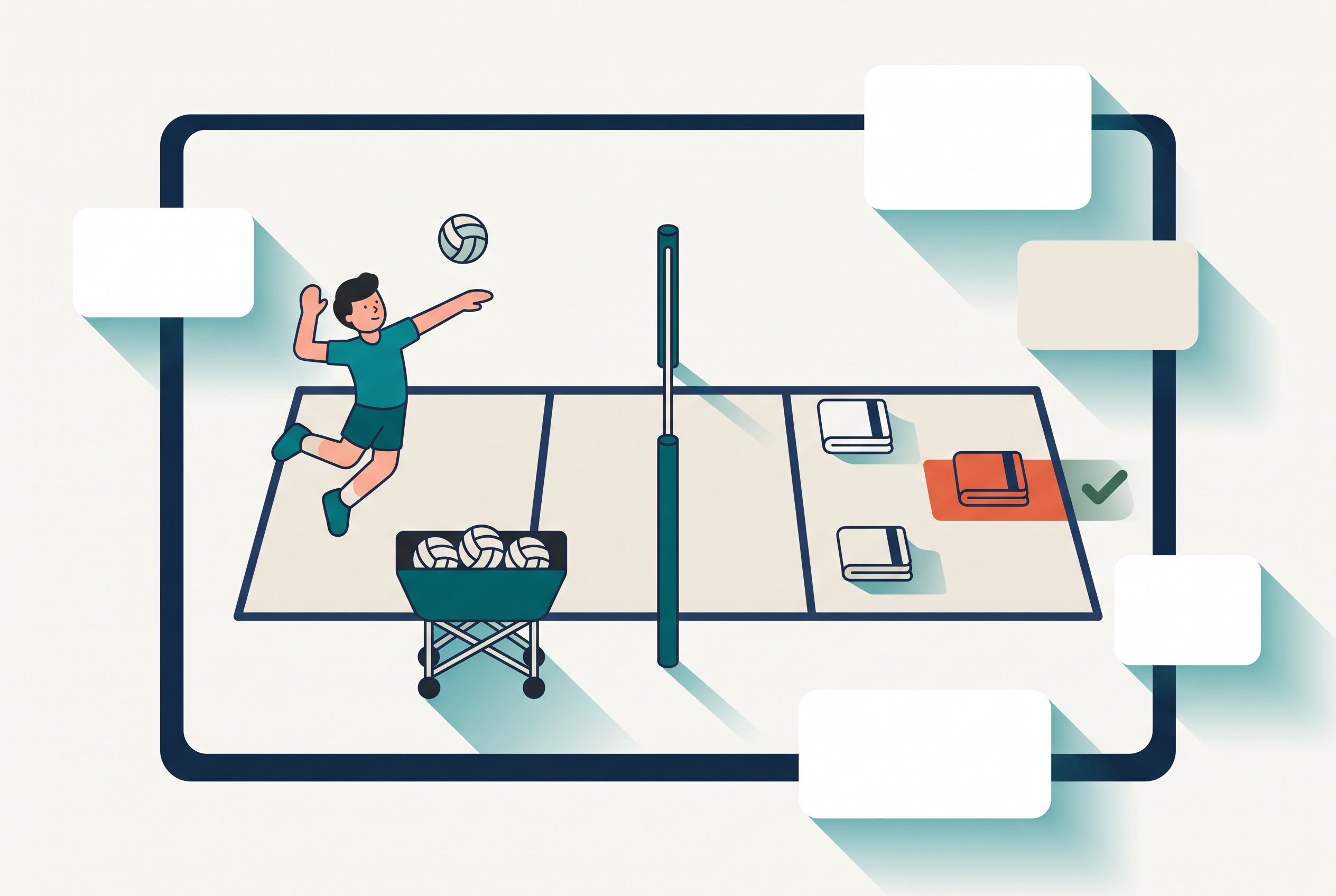
Because the swap runs through the standard substitution count, the DS role is shaped by the rule set you play under. High school (NFHS) allows 18 substitutions per set, which makes DS-for-hitter swaps nearly free; USAV club allows 12; college women's play allows 15. Under all of them the same pairing rule applies: a player who subs in for a teammate may only re-enter in that same spot, which is why a DS "belongs" to one hitter for the whole set. Those mechanics live inside the broader rotation rules, and they are why coaches script the swap before the match rather than improvising it.
DS vs. Libero: The Comparison Everyone Asks About
Both are back-row defenders; the machinery is completely different.
Libero
Defensive specialist
Jersey
Contrasting color, required
Regular team jersey
Entry
Replacements, unlimited, no whistle needed
Normal substitutions, counted against the limit
Restrictions
No blocking, no attacking above net height, setting restriction in front of the attack line
None; she is a regular player
Court time
Back row only, nearly every rally
The three back-row rotations of the player she covers
Per set
Usually one designated libero on court
As many DSs as your sub count affords
The practical difference for coaches: the libero is a free replacement the rules give you once; the DS is how you buy additional back-row upgrades with substitutions. Most competitive lineups use both at the same time, the libero covering a middle blocker and a DS covering the opposite. The full rulebook treatment of the libero side, including governing-body differences, is in the libero guide.
Player development
Track development all season, not just on tryout day
Score skills through the season, watch the trend lines move, and send parents a progress report they actually open.
When a DS Changes a Match
Three situations make the DS swap obviously worth its substitutions. Serve receive under pressure: when an opposing server finds your weakest passer, the DS removes the target, and the serving run usually dies with the swap. The service line: a DS with a reliable aggressive serve turns three rotations a set into scoring opportunities, and some coaches value the role as a serving specialist first. And score protection: at 22-22, a coach who trusts her back row plays looser everywhere else, which is the kind of value that never appears on a stat sheet but decides close sets.
The cost side is real too: every DS swap spends two substitutions (in and out), so a coach running two DS pairings burns 12 subs a set doing nothing else under USAV rules. Planning the substitution budget alongside the rotation is exactly the kind of before-the-match work the volleyball Game Manager's Rotation Plan and Playing Time tabs exist for, and the Depth Chart tab has a DS group precisely because the role deserves named players, not "whoever is next on the bench."
How a Player Earns the DS Job
The job description is narrow and the standard inside it is high: pass at a 2.2-plus average on the 3-2-1 scale against real serving, dig with a short memory, serve a ball coaches trust at 23-23, and stay warm on the bench through the front-row rotations. Communication carries extra weight because the DS enters mid-set into a defense already in rhythm; the player who calls seams loudly from her first rally holds the job over a quieter, slightly better digger.
For players, the honest pitch is court time: teams carry more hitters than back-row spots, and the DS lane is how a 5'4" competitor with elite ball control starts every match. The training plan is the defensive canon, daily: the defense drills progression, serve-receive reps against targeting, and short-serve chase work. Coaches can score candidates directly in Rizzler's volleyball player evaluation template, where the Floor Defense category (digging, hustle and pursuit) plus Passing scores make the libero-versus-DS-versus-bench decision a numbers conversation instead of a depth-chart guess.
For players
The DS spot goes to the player who trained on the days off. Be that player.
Rizzler Reps is the training tracker for volleyball players: log every drill in seconds, build a streak, and watch your numbers climb all season.
Volleyball drill library
Log reps in 10 seconds
Daily streaks
Weekly progress
Lifetime stats
Works solo, no team needed
iPhone app · free to download and start recording your own reps
Frequently Asked Questions
What is a defensive specialist in volleyball?
A back-row player substituted in, through the normal substitution system, to pass, dig, and serve in place of a weaker back-row player. She wears a regular jersey, counts against the substitution limit, and has no special restrictions.
What is the difference between a DS and a libero?
The libero enters through unlimited replacements that cost nothing, wears a contrasting jersey, and cannot block or attack above net height. The DS enters through counted substitutions, wears a normal jersey, and can do anything any player can. Most competitive teams use both simultaneously.
Can a DS serve in volleyball?
Yes, and serving is a core part of the role: the DS takes the serving turn of the player she replaced, with no libero-style one-slot restriction. Many coaches choose their DS as much for a tough, reliable serve as for digging.
How many rotations does a DS play?
Typically three: the back-row rotations of the hitter she covers. She subs in when that player rotates off the net and subs out when the spot returns to the front row, then repeats the cycle as the wheel comes around.
Is DS a good position in volleyball?
For ball-control players, it is one of the most dependable routes to real court time: every roster needs back-row reliability, and height is irrelevant to the job. Strong DSs also sit first in line for the libero jersey when it opens up.
Do you need a DS if you already have a libero?
At competitive levels, usually yes. The libero can cover only one player at a time, typically a middle. A DS upgrades a second back-row spot, most often the opposite's, and adds a serving specialist, at the price of substitutions rather than a replacement.
What does DS stand for in volleyball?
DS stands for defensive specialist: a back-row player subbed in through the normal substitution system to pass, dig, and serve in place of a weaker back-row player. She wears the regular team jersey, which is the quickest way to tell her from the libero on the court.
What does L/DS mean on a volleyball roster?
L/DS marks a libero/defensive specialist, a player listed for either back-row job. College and club rosters use it because the same skill set (platform, speed, a trusted serve) fills both roles, and the coach decides set by set whether she wears the libero jersey or enters as a DS.
Talk to our team
Want to spend more time coaching and less time with paperwork? Let's talk.
Tell us about your team and we'll show you how to plan games, set lineups, run the schedule, and develop players in one place, so you spend the season coaching instead of chasing admin.
Less admin, more coaching
Plan games, set lineups, and track the season in one place
Keep every family in the loop automatically
Tell us about your program
4 fields · takes 30 seconds
Lands in the same inbox as the Help button · human response only