
Volleyball
Serving Drills That Build Aim First and Nerve Second
Serving is the one skill in volleyball a player controls completely: no pass to depend on, no set to chase, just a toss, a contact, and a decision about where. That is why serving drills should train aim and nerve, in that order, rather than raw power. A youth team that serves 92 percent in with intention beats a team that serves 78 percent with heat, every season. The seven drills below build placement first, then pressure, then game context, each with setup, steps, cues, mistakes, and age fit. Serving's mirror image, receiving these serves, has its own drill guide.
First, the Mechanics Standard
Every drill below assumes one repeatable serve, and for most youth players that should be a standing float: a low, spin-free toss barely above the reach of the tossing hand, a firm open-hand contact through the middle of the ball, and a frozen follow-through toward the target. No spin is the goal; a floater wobbles unpredictably precisely because it does not rotate. Toss errors cause most serve errors, so when a server struggles in any drill here, fix the toss before touching anything else. Beginners earn their way back to the endline through the earned-steps progression in the beginner guide; this page assumes endline serving.
Drill 1: Zone Battleship
Purpose. Convert serving from a clearing exercise into an aiming one.
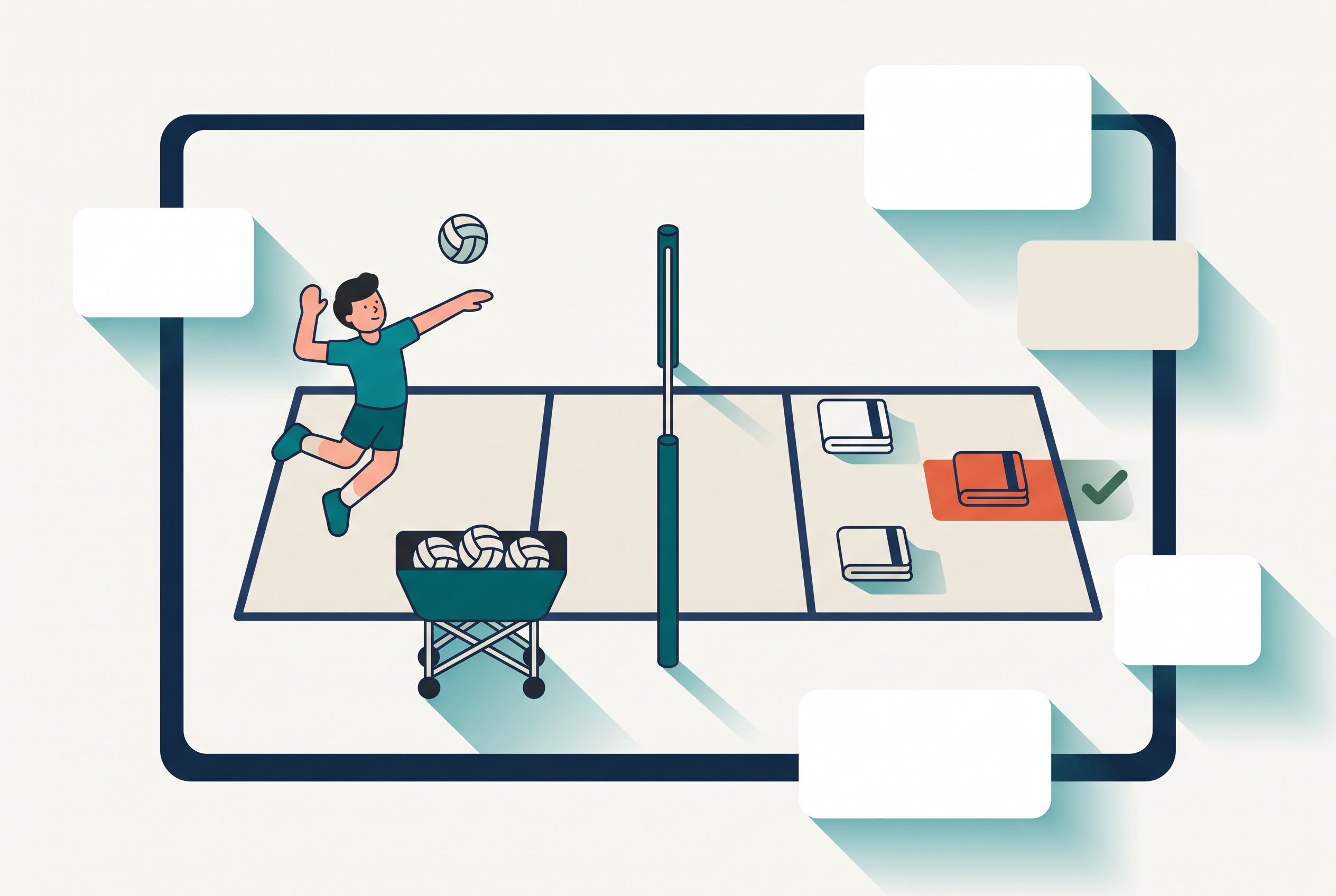
Setup. Six towels laid out on the far court, one per zone (the same zone numbers your team learns in the rotation rules). Two teams of servers at the endline.
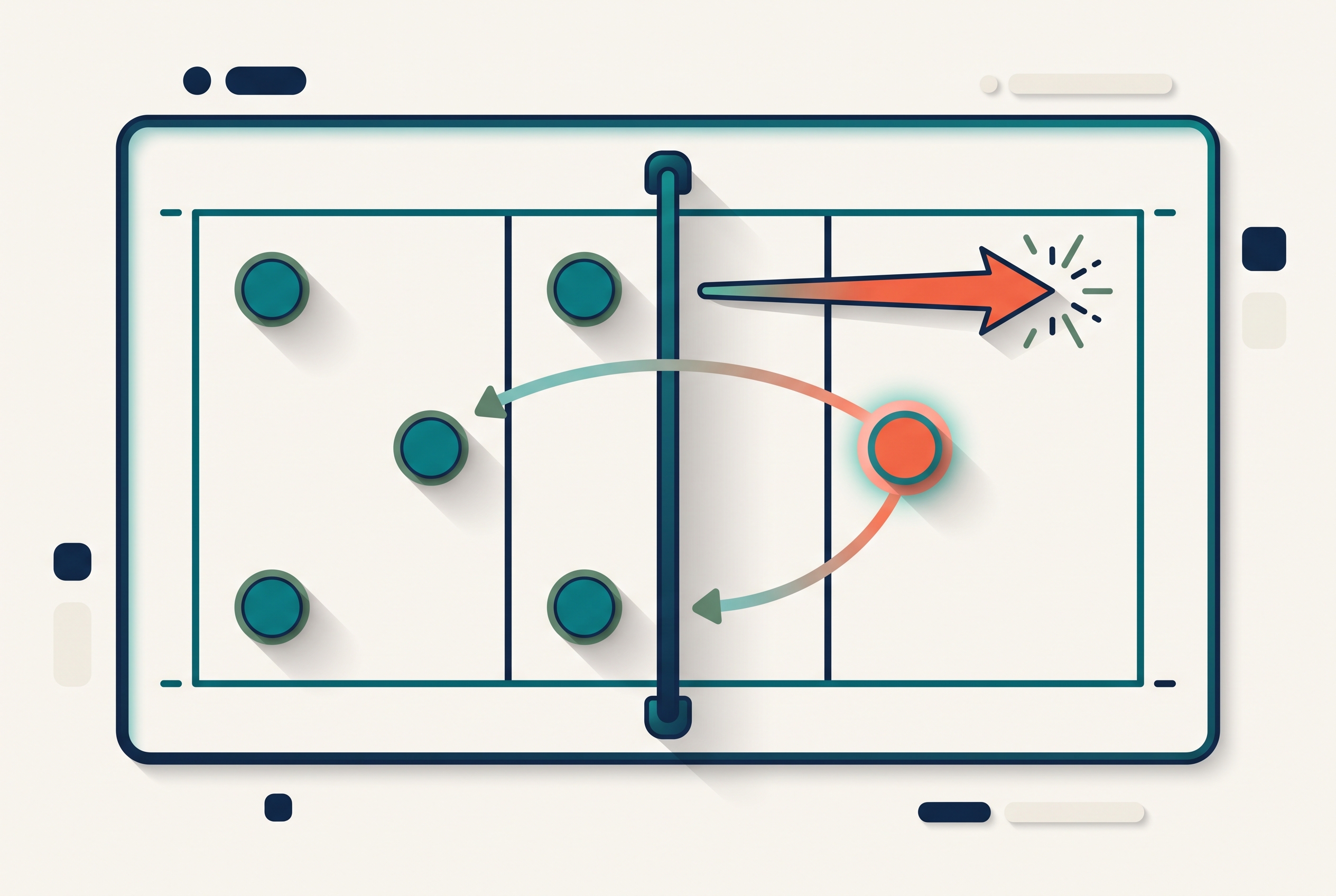
Zone Battleship
Steps. Servers alternate. Each calls a zone before contact; hitting the called towel sinks it for their team. First team to sink four wins; a serve into the net gives the other team a free sink.
Coaching cues. "Call it, then commit": the pre-contact call is the drill. Servers who will not call a zone are telling you they steer, not aim.
Common mistakes. Letting players call zone 6 every time (it is the biggest, safest target). Rule: no repeating your previous call.
Progressions. Shrink towels to half-fold; require the winning sink to be a seam zone (1 or 5).
Age fit. Every age from the first endline serve; the game framing makes it the drill young teams request.
Drill 2: Short-Deep Ladder
Purpose. Build the two serves that break youth serve receive: the short ball inside the attack line and the deep ball into the last two meters.
Setup. Far court divided into a short band (net to attack line) and a deep band (last two meters), marked with tape or noodles. Servers with ball carts.
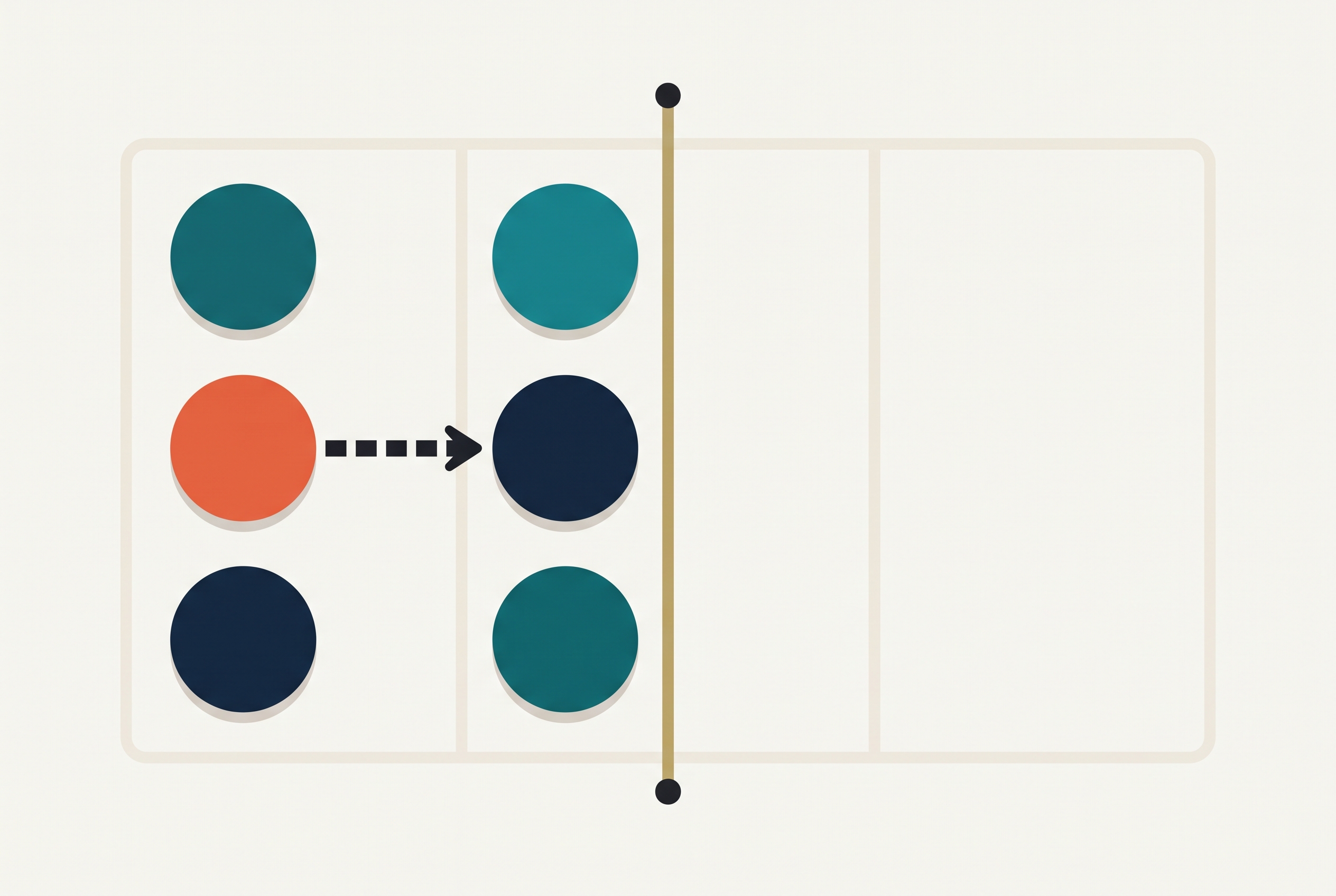
Short-Deep Ladder
Steps. Each server climbs a ladder: land one short, then one deep, then short again, five rungs total. A miss repeats the rung, not the ladder. First to the top serves the pressure round (drill 4) with a teammate's lap on the line, which they enjoy more than they should.
Coaching cues. Same toss, same arm speed, different contact: short serves take contact slightly under the ball with a shorter finish. If opponents can read short from the toss, the short serve is decoration.
Common mistakes. Servers slowing their arm for short serves (readable) and aiming deep by adding topspin (turns the floater into a predictable spin serve).
Age fit. 13U and up; younger servers should still be consolidating one reliable deep float.
Drill 3: Consistency Clusters
Purpose. Repeatability, the unglamorous engine of serve scoring.
Setup. Any number of servers, any court. Steps. Clusters of five: five serves in a row to the same called zone. Three of five to the zone scores the cluster; four clusters scores the session. Chart cluster percentage weekly next to each name. Cues. Identical pre-serve routine every rep: same breath, same bounce, same toss height. The routine is the skill being trained; the outcome chart just proves it. Mistakes. Rushing reps cart-to-hand; enforce the full routine or the drill trains hurrying. Age fit. All ages, and the single best serving homework, a wall or an empty court and twenty-five serves logged in Rizzler Reps.
Consistency Clusters
Drill 4: Pressure Serving
Purpose. Recreate the heart rate of serving at 23-24, which no relaxed rep ever touches.
Setup. Whole team, end of practice, one server on the line at a time.
Pressure Serving
Steps. Coach announces the scenario: "Down 23-24, serve to stay alive." The server gets one serve. In means the team is safe; a miss costs the group something small and shared (a sideline shuffle, resetting the next drill's score). Rotate so every player serves under the scenario weekly.
Coaching cues. "Routine, target, trust": under pressure, players abandon their routine first. The routine is the anchor; watching whether it survives is how you learn who your 23-24 server actually is, which is worth knowing before you fill in slot I on the lineup sheet.
Common mistakes. Making the consequence humiliating rather than shared; the drill teaches composure, not fear. And running it only for your best servers: the point is discovering the fourth-best one.
Age fit. 12U and up, with consequences scaled to fun rather than dread at the younger end.
Drill 5: Serve vs Receive
Purpose. The truest serving drill possible: live serves against a live receive trio, scored honestly on both sides.
Setup. Three passers and a target on one side (borrowed straight from the serve receive drill set), servers rotating through on the other, a scorer with the 3-2-1 chart.
Volleyball · Serving
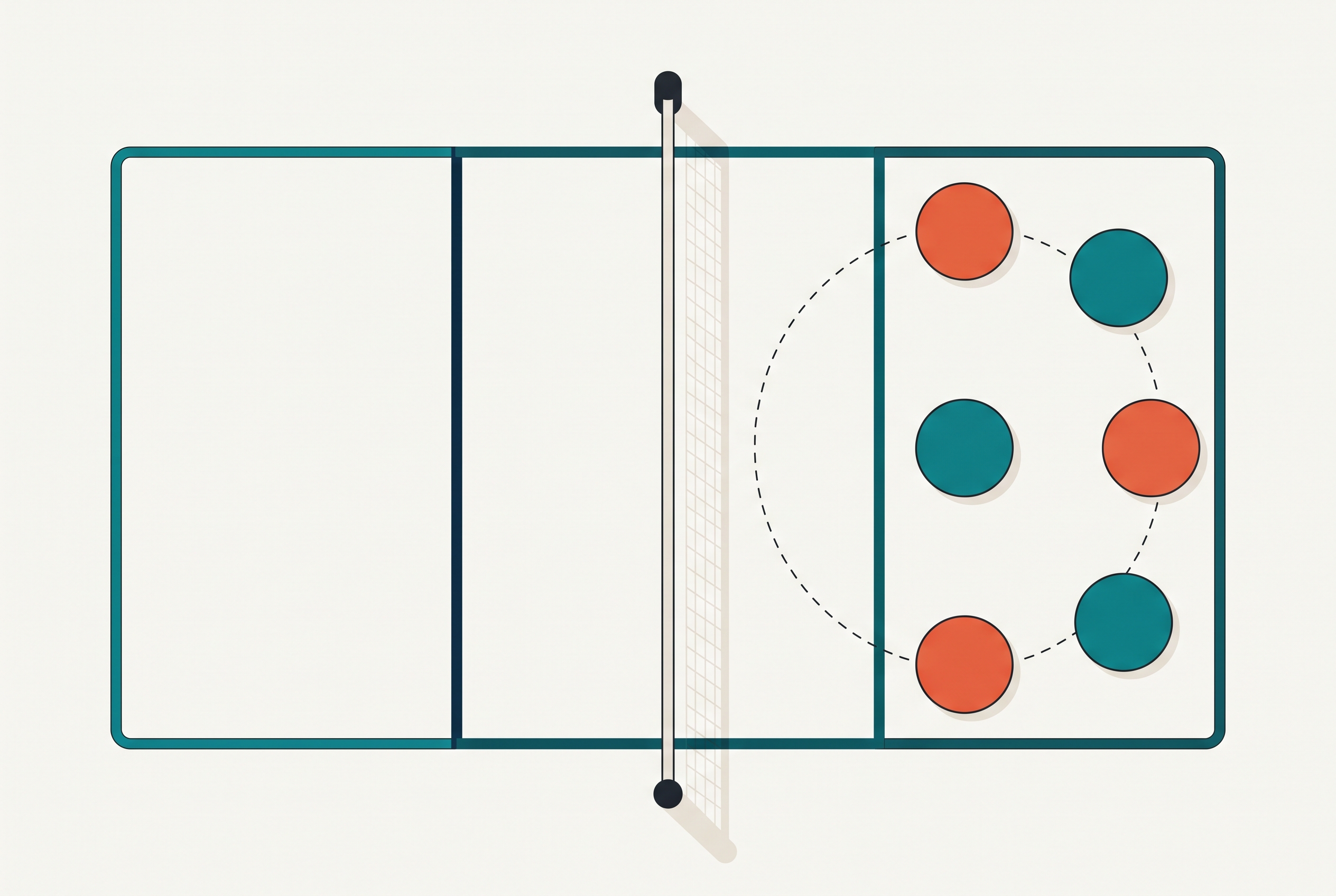
Serve vs Receive
Servers serve into a three-passer unit that passes to a target at the net; the target returns the ball to the cart, servers rotate.
0:00 / 1:36
Steps. Ten-serve rounds. Servers score the inverse of the pass chart: a forced 1-pass or ace earns the serving side 2, a 2-pass earns 1, a 3-pass earns 0, and a missed serve costs 2. Passers keep their own average simultaneously, so one round trains both units and produces two charts.
Coaching cues. Serve at seams and at the weakest passer deliberately; targeting a scouting decision, not an insult, is a skill your servers need by their first club tournament.
Common mistakes. Servers protecting their miss count by floating soft middles; the minus-2 for a miss is balanced by 0 for a soft 3-pass, so bravery pays inside the scoring.
Age fit. Middle school and up with live serves; 12U with the servers at the attack line.
Drills 6 and 7: Volume With a Reason
Around the world. Each server must land one serve in each of the six zones, in order, before practice ends; misses simply repeat the zone. Low ceremony, high volume, and a private ladder every player can climb at their own pace. Track total completion time weekly.
Serve-and-sprint base. Serve, then immediately sprint to defensive base position and play an imaginary first ball (or a real free ball from a coach). This stitches serving to the transition your team must make every rally, and quietly doubles as conditioning, the honest kind that uses volleyball movements.
Turning Charts Into Lineups
The drills above generate numbers: cluster percentages, battleship accuracy, serve-vs-receive scores. Use them. Your service order should put high-percentage pressure servers where they serve most often, and your rotation plan decides exactly that. Inside Rizzler, serving lives in the same loop as every other skill: the volleyball evaluation template scores consistency, placement, and power separately (with serve velocity as an optional measured metric), Reps assignments carry the home serving homework, and the Game Manager's Serve Order tab holds the order your charts justified. Aim, chart, assign, and the serving week runs itself.
Frequently Asked Questions
What are the best volleyball serving drills?
Zone battleship for aim, the short-deep ladder for tactical placement, consistency clusters for repeatability, pressure serving for nerve, and serve vs receive for live context. Together they train the three things serving is: a target, a routine, and composure.
How do you practice serving accuracy?
Give every serve a called target and a consequence: towels in zones, banded short-deep areas, and charted five-serve clusters to the same spot. Accuracy grows from calling targets out loud far more than from raw volume.
How many serves should players hit per practice?
Twenty-five to forty intentional serves beats a hundred casual ones. Two ten-minute blocks from this page deliver that comfortably, and a daily twenty-five at home, logged through Rizzler Reps, is the fastest serving improvement most players ever experience.
How do you make serving practice fun?
Score everything and share the stakes: battleship sinks, ladder races, and pressure scenarios with light team consequences. Serving is solitary by nature; the drills that stick are the ones that make it social.
Should young players learn jump serves?
Not until the standing float is above roughly 90 percent in with real placement, usually well into high school. The float earns more points at every youth level, and the jump serve's error cost outweighs its highlight value until mechanics fully mature.
Talk to our team
Want to see how to develop players all season long? Let's talk.
Tell us about your team and we'll show you how season-long skill tracking becomes the progress report a parent opens, while players keep building between practices with Rizzler Reps.
Track skills all season, not just on tryout day
Turn evaluations into reports parents actually open
Players build habits between practices with Rizzler Reps
Tell us about your program
4 fields · takes 30 seconds
Lands in the same inbox as the Help button · human response only
Read Next
Volleyball Setting Drills: Technique Work + Setter Training
Volleyball6-1 Volleyball Rotation: What It Means and How to Run It
VolleyballLittle League Rest Day Requirements: Pitch Count Rest Rules
Rules6-2 Volleyball Rotation: All 6 Rotations Explained
Volleyball6-3 Volleyball Rotation: The Youth Development System
VolleyballLittle League Draft Preparation with Rizzler
For Leagues