
Volleyball
The 6-1 Volleyball Rotation: One Setter, Six Attackers, Some Naming Confusion
A 6-1 volleyball rotation is a system with one setter who runs the offense through all six rotations while every player on the court, the setter included, is treated as an attacker. If that sounds nearly identical to a 5-1, you have spotted the truth most articles dance around: the 6-1 and the 5-1 describe the same rotation wheel. The names differ in what they count, and in one real tactical emphasis, the setter as a genuine attacking threat. This guide untangles the name, shows the wheel, and covers the version of the question coaches actually face: what changes when your one setter is also one of your best attackers.
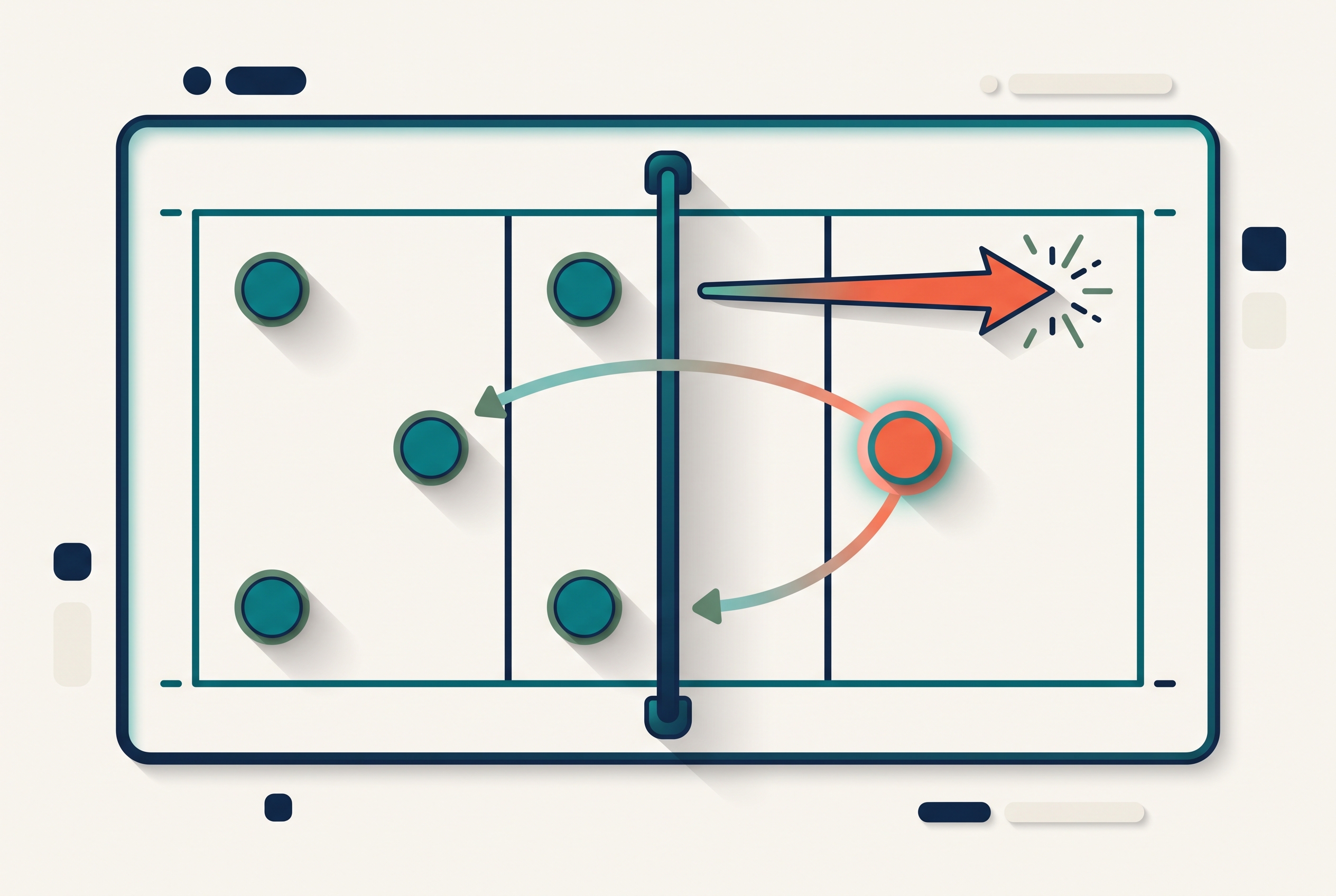
5-1 rotations — One setter sets in all six rotations; opposite hits right side.
Rotation 1
Rotation 2
Rotation 3
Rotation 4
Rotation 5
Rotation 6
Build this with your roster — free →
No login required
What "6-1" Actually Means
System names count attackers first, setters second. A 6-2 has two setters who both hit when they rotate to the front row, so all six players attack: six attackers, two setters. Apply the same counting to a one-setter team where the setter also attacks from the front row, and you get 6-1: six attackers, one setter.
A 5-1 counts the same lineup pessimistically: five attackers plus a setter who mostly sets. Same six players, same rotation wheel, same overlap obligations, same substitution pattern. The rotation mechanics do not change with the name. What changes is the job description of the setter during her three front-row rotations, and that difference, while real, is tactical rather than structural.
So when a tournament program or an opposing coach says "they run a 6-1," expect a 5-1 wheel: one setter, an opposite diagonal from her, two outsides, two middles, setter penetrating from the back row in three rotations and setting at the net in the other three.
The Wheel, Briefly
Because the structure is a 5-1, the full rotation-by-rotation walkthrough lives in the 5-1 guide, and the viewer above draws all six rotations with legal alignments. The shape in one paragraph: the setter sets from the right-side target area in every rotation. For the three rotations she is back row, she hides in serve receive and releases to the target at contact, leaving three front-row hitters. For the three rotations she is front row, she sets from the net, attacks second balls when the pass allows, and blocks on the right side, leaving two conventional hitters plus herself.
Serve receive in the back-row-setter rotations follows the standard three-passer pattern with the setter hidden; the exact stacks, and the overlap traps that come with them, are charted in the 5-1 serve-receive guide.
The Real Tactical Content: The Setter as Attacker
Calling your system a 6-1 is a statement about your setter. Teams adopt the label when the setter is a legitimate offensive weapon, and leaning into that changes three things in practice.
The dump becomes a planned play, not an escape. A front-row setter may legally attack the second ball above net height. Setters who jump-set every delivery keep their attack and their set identical until the last instant, which freezes the opposing middle. If your setter scores on dumps once or twice a set, defenses start committing a blocker to her, and your middles inherit single blocks all night.
Right-side attacking on out-of-system balls. When the pass pulls the setter off the net, a right-side attack by the setter off a teammate's second contact is part of the design, not a scramble. This is where "six attackers" stops being philosophy: in her front-row rotations the setter runs approach patterns in practice like any hitter, and the team's out-of-system plan assigns her a lane.
Blocking responsibility is coached, not hidden. A 5-1 with a small setter often concedes the right-side block in her front-row rotations. A team committed to the 6-1 framing recruits or develops a setter who holds the block seam, because she will be at the net for half the match. If your setter cannot block, that is an argument for the 6-2, which keeps a hitter at the net in every rotation, or for the substitution-based 5-2 split.
6-1 vs the Other Systems
| Question | 6-1 / 5-1 | 6-2 | 4-2 |
|---|---|---|---|
| Setters on the roster | 1 | 2 | 2 |
| Who sets when setter is front row | She does, from the net | The other setter, from the back row | She does, from the net |
| Front-row hitters in setter rotations | 2 (plus an attacking setter) | 3 | 2 |
| Setter must penetrate from back row | Yes, three rotations | Yes, alternating | Never |
| Best for | One clearly best setter | Two capable setters | Beginners |
The honest decision rule from the rotations hub applies unchanged: run one setter (call it 5-1 or 6-1 as you like) when one setter is clearly your best, because a consistent ball beats an extra hitter. Call it a 6-1, and coach it like one, when that setter can also score.
Putting It on Paper
The lineup sheet does not care what you call the system. You submit six numbers in service order like any team; write the setter where you want her front-row rotations to fall, with the opposite three slots away, diagonal from her. Build it in the free rotation generator as a 5-1, check the alignments, and print the rotation sheet for the bench; the wheel is identical. Inside Rizzler, the volleyball Game Manager's Rotation Plan tab does the same job against your actual roster, alongside serve order and playing-time tracking, so the "6-1" on your whiteboard and the plan your assistant runs from the bench are the same document.
Frequently Asked Questions
What is a 6-1 rotation in volleyball?
A one-setter system where the setter runs the offense through all six rotations and is counted as an attacker too: six attackers, one setter. The rotation wheel, overlap rules, and lineup are identical to a 5-1; the name signals a setter who genuinely attacks from the front row.
Is a 6-1 the same as a 5-1 in volleyball?
Structurally, yes: same wheel, same alignments, same lineup slots. The names count differently. A 5-1 counts five hitters plus a setter; a 6-1 counts the setter as a sixth attacker because she hits second balls and swings right side in her front-row rotations.
When should a team run a 6-1?
When one setter is clearly the team's best and she can score: a reliable dump, a right-side swing on out-of-system balls, and enough block to hold the seam. If she sets brilliantly but cannot attack or block, run the same wheel as a conventional 5-1, or keep three hitters at the net with a 6-2.
Can the setter attack in a 6-1?
In her three front-row rotations, fully: she may attack the second ball above net height, including jump-set dumps. In her three back-row rotations she is bound by back-row attack rules like anyone else, so dumps must come from behind the attack line or below net height.
How many substitutions does a 6-1 use?
None beyond your normal bench moves; the setter plays all six rotations. That makes it the cheapest system on substitutions, versus two per cycle for a 5-2 platoon, and it is why one-setter systems dominate at levels with tight substitution limits.
Talk to our team
Want to spend more time coaching and less time with paperwork? Let's talk.
Tell us about your team and we'll show you how to plan games, set lineups, run the schedule, and develop players in one place, so you spend the season coaching instead of chasing admin.
Less admin, more coaching
Plan games, set lineups, and track the season in one place
Keep every family in the loop automatically
Tell us about your program
4 fields · takes 30 seconds
Lands in the same inbox as the Help button · human response only
Read Next
Football Tryout Evaluation Form: What to Score (Free Template)
LearnCoaching Philosophy: Examples and How to Write Yours
LearnHow to Use Stats Without Overcoaching Youth Players
StatsBaseball Pitching Chart: Free Printable PDF + Excel Tracker
ResourcesLittle League Age Eligibility: League Age Determination
RulesYouth Sports Seasons Calendar: Tryout Windows and Season Timing (US and Canada)
Learn