
Volleyball
The 5-1 Volleyball Rotation, Explained Rotation by Rotation
The 5-1 volleyball rotation is a system with one setter and five attackers: the setter sets from every rotation, playing back row for three rotations and front row for the other three. It is the system most varsity and higher-level club teams run because one setter means one offensive identity. Below you will find all six rotations charted with a real lineup, the overlap traps that get teams whistled, and how the libero fits in.
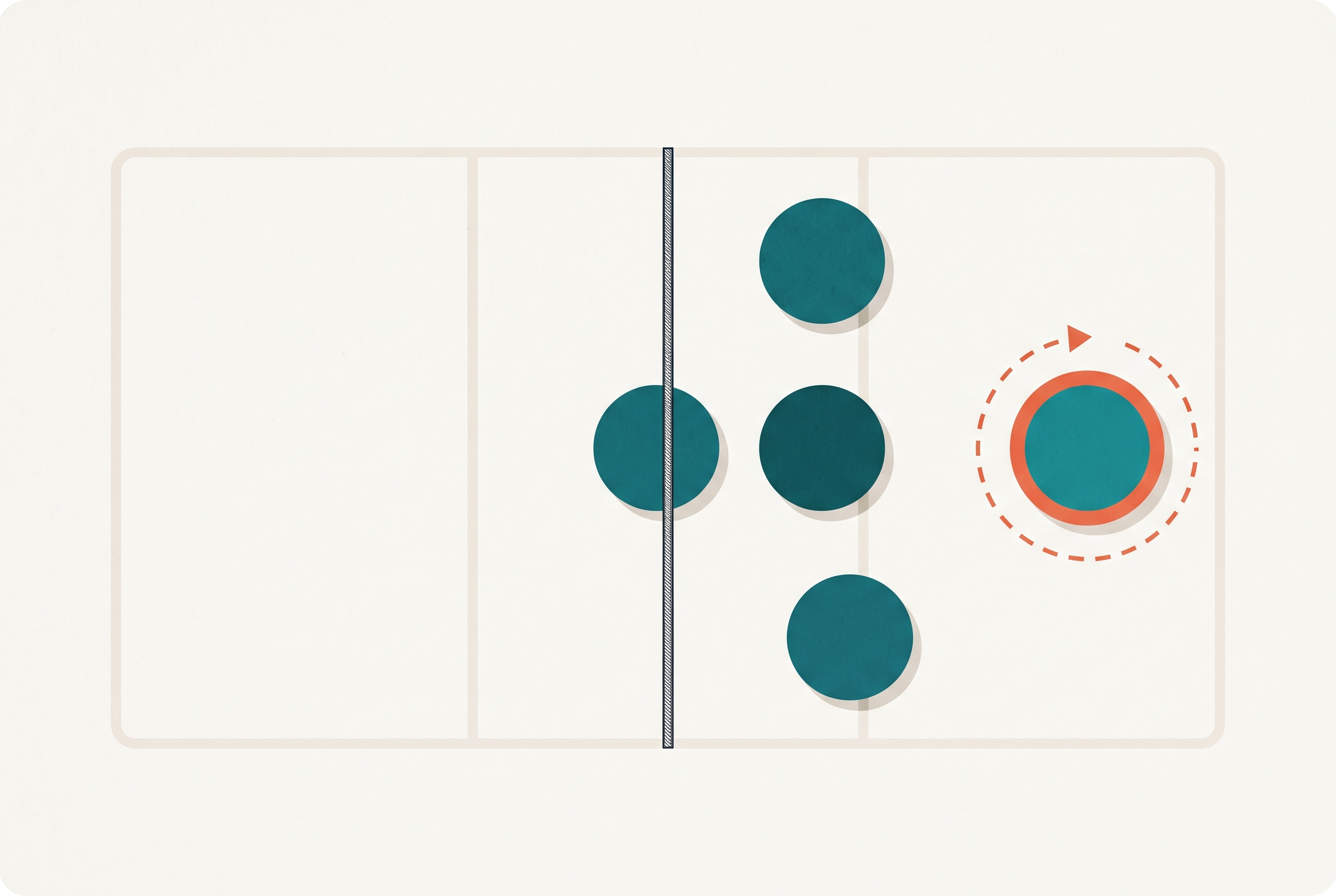
5-1 rotations — One setter sets in all six rotations; opposite hits right side.
Rotation 1
Rotation 2
Rotation 3
Rotation 4
Rotation 5
Rotation 6
Build this with your roster — free →
No login required
What Is a 5-1 Volleyball Rotation?
A 5-1 means five hitters and one setter. The same setter runs the offense in all six rotations, unlike a 6-2 where two setters split the job. The name describes the roster math: 5 attackers plus 1 setter equals the six players on the court.
The trade is well understood by coaches. For three rotations your setter is back row and you attack with three front-row hitters. For the other three rotations the setter is front row and you attack with only two. In exchange, every ball all match is delivered by the same hands, which is why hitters tend to love a 5-1 and why setters develop fastest in it.
The standard positions in a 5-1 are the setter (S), two outside hitters (OH1 and OH2), two middle blockers (MB1 and MB2), the opposite (OPP) across from the setter, and usually a libero (L) who swaps in for the back-row middle.
The Lineup That Makes a 5-1 Work
Every 5-1 is built on one rule: players who share a job stand three rotation spots apart, which keeps them in opposite rows. The setter is opposite the OPP, the two outsides are opposite each other, and the two middles are opposite each other. Break that spacing and the whole system collapses into overlap problems.
Here is a worked starting lineup for a team we will call the Ridgeview Hawks, entered in service order:
| Service order slot | Player | Number | Role |
|---|---|---|---|
| I (starts zone 1) | Maya | 7 | Setter |
| II (starts zone 2) | Jordan | 12 | Outside 1 |
| III (starts zone 3) | Priya | 4 | Middle 2 |
| IV (starts zone 4) | Tess | 9 | Opposite |
| V (starts zone 5) | Kayla | 3 | Outside 2 |
| VI (starts zone 6) | Dre | 15 | Middle 1 |
Alina (#2) is the libero and swaps for whichever middle is in the back row. With this lineup Maya serves first, and the team gets its three-hitter rotations out of the way early.
All 6 Rotations of the 5-1, Diagrammed (Setter Position in Each)
Coaches name rotations by where the setter stands. Rotation 1 means the setter is in zone 1, and each side-out moves everyone one spot clockwise. Zones run 1 (right back, the server) through 6 (middle back), with 2, 3, and 4 across the front from right to left.
| Rotation | Setter is in | Front row (zones 4, 3, 2) | Back row (zones 5, 6, 1) | Front-row hitters |
|---|---|---|---|---|
| 1 | Zone 1 (back) | Tess, Priya, Jordan | Kayla, Dre (Alina), Maya | 3 |
| 2 | Zone 6 (back) | Kayla, Tess, Priya | Dre (Alina), Maya, Jordan | 3 |
| 3 | Zone 5 (back) | Dre, Kayla, Tess | Maya, Jordan, Priya (Alina) | 3 |
| 4 | Zone 4 (front) | Maya, Dre, Kayla | Jordan, Priya (Alina), Tess | 2 |
| 5 | Zone 3 (front) | Jordan, Maya, Dre | Priya (Alina), Tess, Kayla | 2 |
| 6 | Zone 2 (front) | Priya, Jordan, Maya | Tess, Kayla, Dre (Alina) | 2 |
Alina in parentheses marks where the libero has replaced the back-row middle. Notice the pattern: rotations 1 through 3 are your three-hitter rotations because the setter is back row, and rotations 4 through 6 are your two-hitter rotations. Good 5-1 teams score in bunches early in the wheel and defend their front-row-setter rotations.
One label warning: some programs call their first outside OH1 and some swap the labels. The labels do not matter. The three-apart spacing between paired players is what matters.
Where Teams Get Whistled: Overlap in the 5-1
Every alignment call in volleyball comes down to seven simple comparisons at the moment of serve, and none of them are diagonal. Each front-row player only needs part of one foot closer to the net than the back-row player directly behind them, and each side player needs a foot closer to their sideline than the middle player of their own row. That is the entire rule.
The 5-1 gets teams in trouble in the back-row-setter rotations, because the setter is creeping toward the net to release while everyone else spreads out to pass:
- Rotation 1: Maya hides near the right corner behind Jordan. Jordan must keep a foot in front of her, and Maya must stay right of the middle-back passer.
- Rotation 2: Maya stacks tight behind Priya at the attack line. She must stay behind Priya and between the two players beside her in the back row until contact.
- Rotation 3: the setter run. Maya starts far left behind Dre and sprints to the target after the serve. She has to stay left of Jordan and behind Dre, and this is the rotation most youth teams get called in.
Most fixes are six to twelve inches, not three feet. If your team keeps getting whistled, the problem is almost always one player drifting a half step, not a broken lineup. Our overlap rule guide walks through all seven checks with examples.
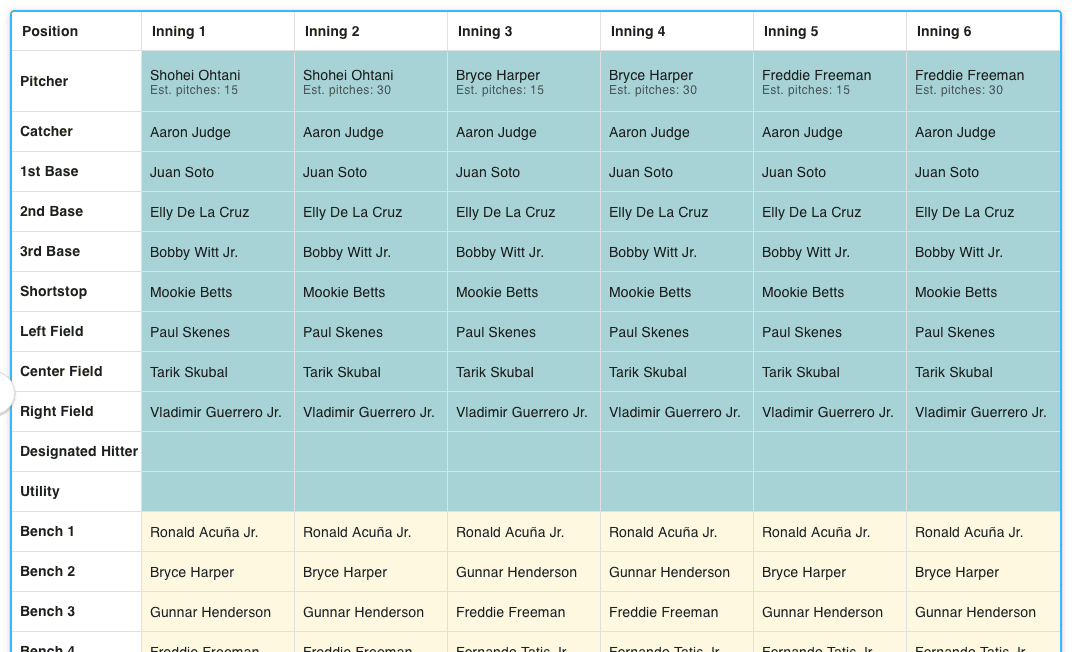
How the Libero Fits a 5-1: The Diagram With Libero
The libero replaces whichever middle rotates to the back row, so in practice your two middles split the job of being replaced. The swap happens while the ball is dead, does not count as a substitution, and the libero must respect the overlap position of the player she replaced. Under high school and USAV rules the libero may also serve, but only in one rotation slot per set, and that slot locks the first time she serves.
The common youth mistake is forgetting the middle has to come back in when her spot reaches the front row. Print a rotation sheet with the libero pairing marked and the confusion mostly disappears.
5-1 or 6-2: Which Should Your Team Run?
Run a 5-1 when you have one setter clearly better than the rest, which is why it dominates varsity and 16U+ club. Run a 6-2 when you have two comparable setters or you want three front-row hitters at all times, which fits many 14U and JV teams. Younger teams learning positions are usually better served by a 4-2, where the setter is already at the net and nobody has to learn penetration timing yet.
A practical age guide from the coaching world: everybody sets at 10U, three setters in a 6-3 or a simple 4-2 at 12U to 14U, a 6-2 as setters start to penetrate from the back row, and a 5-1 around 16U and varsity when one setter earns the job.
Print It and Teach It
Players learn rotations standing on a court, not reading a chart, but the chart is what keeps the bench honest on game day. Build your lineup once in the free rotation generator, check it for overlap, and print a rotation sheet for the whole match. The same plan should feed your practice: rotation problems show up in structured practice blocks, not in the pregame huddle, and the roster you are teaching rotations to is the one you selected at tryouts.
Frequently Asked Questions
Why is it called a 5-1?
The name counts the roster jobs: five attackers and one setter. The same setter sets in all six rotations, whether she is front row or back row.
In which rotations is the setter front row in a 5-1?
Using the standard naming, the setter is back row in rotations 1, 2, and 3 (zones 1, 6, and 5) and front row in rotations 4, 5, and 6 (zones 4, 3, and 2). Back-row-setter rotations attack with three front-row hitters; front-row-setter rotations attack with two.
Who does the libero replace in a 5-1?
Almost always the back-row middle blocker. The two middles alternate being replaced as they rotate through the back row. The libero swap is not a substitution and is unlimited, as long as a rally is completed between swaps.
Can the setter attack in a 5-1?
When the setter is front row (rotations 4 to 6) she may attack the ball above the height of the net, which makes the setter dump a real weapon. When she is back row she cannot complete an attack above net height in front of the attack line.
Is there diagonal overlap in volleyball?
No. Overlap only exists between a front-row player and the back-row player directly behind them, and between adjacent players within the same row. The player in zone 4 has no overlap relationship with the players in zones 1, 2, or 6 at all.
What is a 5-1 in volleyball?
A 5-1 is a rotation system with one setter who sets in all six rotations and five hitters around her; the name is the hitter count and the setter count. It is the most common system above 14U because one setter gives the offense one voice and one rhythm. The trade-off is that in the three rotations where the setter is front row, the team attacks with only two front-row hitters.
How do you run a 5-1 rotation?
Put the setter in the lineup, place the opposite diagonal from her (three slots away in service order), and alternate outsides and middles in the remaining four slots so an outside and a middle are always front row together. Rotate clockwise on every side-out and switch to base positions once the serve is struck. The six charts above show every rotation, and the free rotation generator builds and overlap-checks the lineup from your roster.
Talk to our team
Want to spend more time coaching and less time with paperwork? Let's talk.
Tell us about your team and we'll show you how to plan games, set lineups, run the schedule, and develop players in one place, so you spend the season coaching instead of chasing admin.
Less admin, more coaching
Plan games, set lineups, and track the season in one place
Keep every family in the loop automatically
Tell us about your program
4 fields · takes 30 seconds
Lands in the same inbox as the Help button · human response only
Read Next
Are My Team's Stats Private in Rizzler?
FAQHow to Run a Flag Football Tryout: A Coach's Step-by-Step Guide
LearnSkills Assessment Form: Printable Template for Any Sport
ResourcesBaseball Team Fundraising Ideas, Ranked by What You Actually Keep
LearnLittle League Field Dimensions by Division
RulesSports Team Communication App: RSVP, Alerts, and Reports
Features