Serve receive in a 5-1 uses the same three passers in all six rotations, both outside hitters and the libero, while the setter hides somewhere legal and releases to the target at serve contact. What changes rotation to rotation is only where the setter hides and which overlap relationship is at risk. This page walks all six, each with an interactive diagram drawn by the same engine that powers our rotation generator, the passing arc, the hide spot, the one alignment trap, and the fix. For pattern theory across systems, start with the serve receive overview; this page is the 5-1 execution manual.
Throughout, we use our example Ridgeview Hawks: Maya setting, Jordan and Kayla outside, Priya and Dre middle, Tess opposite, Alina libero. Rotation numbers follow the setter: rotation 1 means the setter starts in zone 1.
Rotation 1: Setter in Zone 1
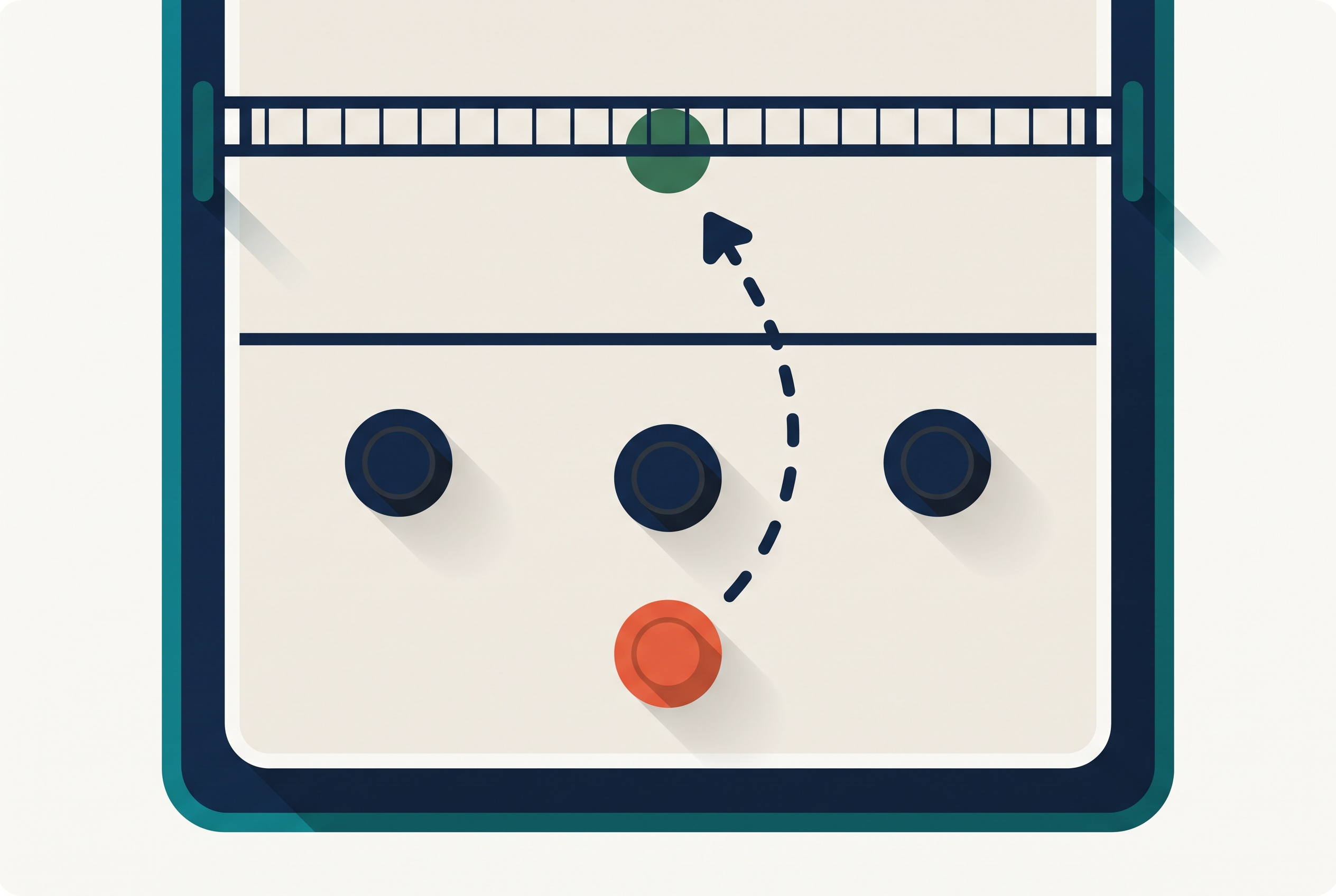
5-1 rotations — One setter sets in all six rotations; opposite hits right side.
The gentlest of the back-row rotations. Maya tucks into the right-back corner behind Jordan, who is front row on the right. Kayla, Alina, and Jordan form the passing arc, and Maya's release run to the target is only a few steps.
The trap is check 3 of the overlap rule: Jordan must keep part of a foot closer to the net than both of Maya's feet until contact. When Jordan drops deep to help receive a short-serve-heavy opponent, she can sink below Maya without anyone noticing. The fix is a landmark: Jordan holds the attack line until contact, or Maya squeezes all the way to the corner where nobody contests her depth.
Rotation 2: Setter in Zone 6
5-1 rotations — One setter sets in all six rotations; opposite hits right side.
Maya stacks at the attack line directly behind Priya, the zone 3 middle, and releases through the middle of the court. Same passing trio; the arc shifts slightly right so the middle of the court stays covered behind the stack.
Two live constraints: Maya must stay behind Priya (front-back) and between Alina and whoever holds zones 5 and 1 (side-side). This stack is the most-whistled serve receive look in volleyball, because Maya creeping around Priya's hip before contact breaks the front-back check at the instant it is judged. Coach the freeze: Maya holds her stack until she hears the serve struck, then releases. Ten minutes of freeze drills fixes what a season of reminders will not.
Rotation 3: Setter in Zone 5
5-1 rotations — One setter sets in all six rotations; opposite hits right side.
The long-run rotation. Maya starts far left, hidden behind Dre in zone 4, and sprints the full diagonal to the right-side target at contact. Every 5-1 team feels this rotation: the first tempo set is a beat late unless the pass is high enough to buy the run time.
The trap is side-to-side: Maya (zone 5) must keep a foot closer to the left sideline than Alina in zone 6 until contact. Aggressive early releases break it. Two coaching options: accept a slower first tempo and keep the hide, or move Maya's hide toward the middle of the court, closer to her exit path, and re-check the geometry in the viewer above. Passers should also expect the second ball to come from a teammate if the pass is off; out-of-system plans start in this rotation.
Rotation 4: Setter in Zone 4
5-1 rotations — One setter sets in all six rotations; opposite hits right side.
Maya reaches the front row and the character of receive changes for three rotations: no hiding, no penetration run. She stands at the net near the target, out of the pattern entirely, and the hiding job passes to Tess, the opposite, who tucks short on the right so the three passers keep their lanes.
The risk moves with the job: Tess in the back row must stay legal against the front-row player she stands behind. With the setter front row, only two conventional attackers are available (Jordan or Kayla plus Priya or Dre at the net), so this is the half of the wheel where a setter who can attack the second ball earns her keep; that tactical layer is the subject of the 6-1 discussion.
Game planning
Set your lineup in minutes, not at midnight
Fair playing time, position coverage, and suggestions you can defend to any parent. Adjust in seconds when two kids do not show.
Rotation 5: Setter in Zone 3
5-1 rotations — One setter sets in all six rotations; opposite hits right side.
Maya starts mid-net and slides one step right to the target. The passing trio is unchanged, and the alignment risk is the front-row neighbors: the outside in zone 4 must not drift inside Maya (side-side check), which happens when hitters cheat toward the middle for a quicker approach.
This is also the rotation to watch your middle's release: with Maya at zone 3's spot at contact, Priya starts slightly off the net and needs a clean path to her attack footwork. Walk it once at practice; the viewer shows the legal starting spots.
Rotation 6: Setter in Zone 2
5-1 rotations — One setter sets in all six rotations; opposite hits right side.
The last front-row rotation. Maya starts at or near the target already, the easiest setter assignment on the wheel, and the pattern's only stress is on the right side: Maya (zone 2) must keep a foot closer to the right sideline than Priya or whoever holds zone 3, and a foot in front of the zone 1 passer behind her.
Teams often use this rotation to start the set when they receive first, precisely because nothing is hard: the setter is at the target, three passers have clean lanes, and the first side-out tends to come easiest. Where you start the wheel is a lineup sheet decision, and it is worth making deliberately rather than by habit.
The Pattern Behind the Six
Read the six rotations together and the 5-1's serve receive is one idea repeated: the passing trio never changes, and the setter's hide spot walks the back row (corner, stack, far side) then disappears for three rotations of front-row calm. Teach it in that order. Passers first, until the trio's seams are automatic in any arc. Then add the three hide spots, one practice each, with freeze checks at imaginary contact. The walkthrough drill and printed cards approach from the overview guide applies unchanged; print all six diagrams with your players' names from the rotation generator and the whiteboard survives the bus ride.
Frequently Asked Questions
Who passes in a 5-1 serve receive?
The same three players in every rotation: both outside hitters and the libero. The setter, both middles (via the libero exchange), and the opposite stay out of the pattern. A constant trio is the system's biggest teaching advantage.
Where does the setter hide in each 5-1 rotation?
Back row: tucked in the right-back corner behind the zone 2 player (rotation 1), stacked behind the middle at the attack line (rotation 2), and hidden far left behind the zone 4 player with a long release run (rotation 3). Front row (rotations 4 to 6): no hiding; she starts at or near the net and the opposite tucks short instead.
Which 5-1 rotation gets whistled most for overlap?
The zone 6 stack (rotation 2): the setter creeping around the middle she is stacked behind breaks the front-back check at the moment of serve. The zone 5 rotation is second, when an early release breaks the side-to-side check with the zone 6 passer.
What is the hardest rotation in a 5-1?
Rotation 3, with the setter in zone 5: the release run to the target is the longest on the wheel, first-tempo offense arrives late unless the pass is high, and the hide spot carries a live overlap risk. Most 5-1 teams script their out-of-system plan around this rotation first.
Should we start the set in a strong receive rotation?
When you receive first, many coaches start with the setter in zone 2 (rotation 6): she is already at the target and the first side-out comes easier. Weigh it against where that start puts your best hitter's front-row rotations; the rotation generator lets you compare both in seconds.
Talk to our team
Want to spend more time coaching and less time with paperwork? Let's talk.
Tell us about your team and we'll show you how to plan games, set lineups, run the schedule, and develop players in one place, so you spend the season coaching instead of chasing admin.
Less admin, more coaching
Plan games, set lineups, and track the season in one place
Keep every family in the loop automatically
Tell us about your program
4 fields · takes 30 seconds
Lands in the same inbox as the Help button · human response only