
Volleyball
The Opposite (Right-Side Hitter): Volleyball's Counterweight
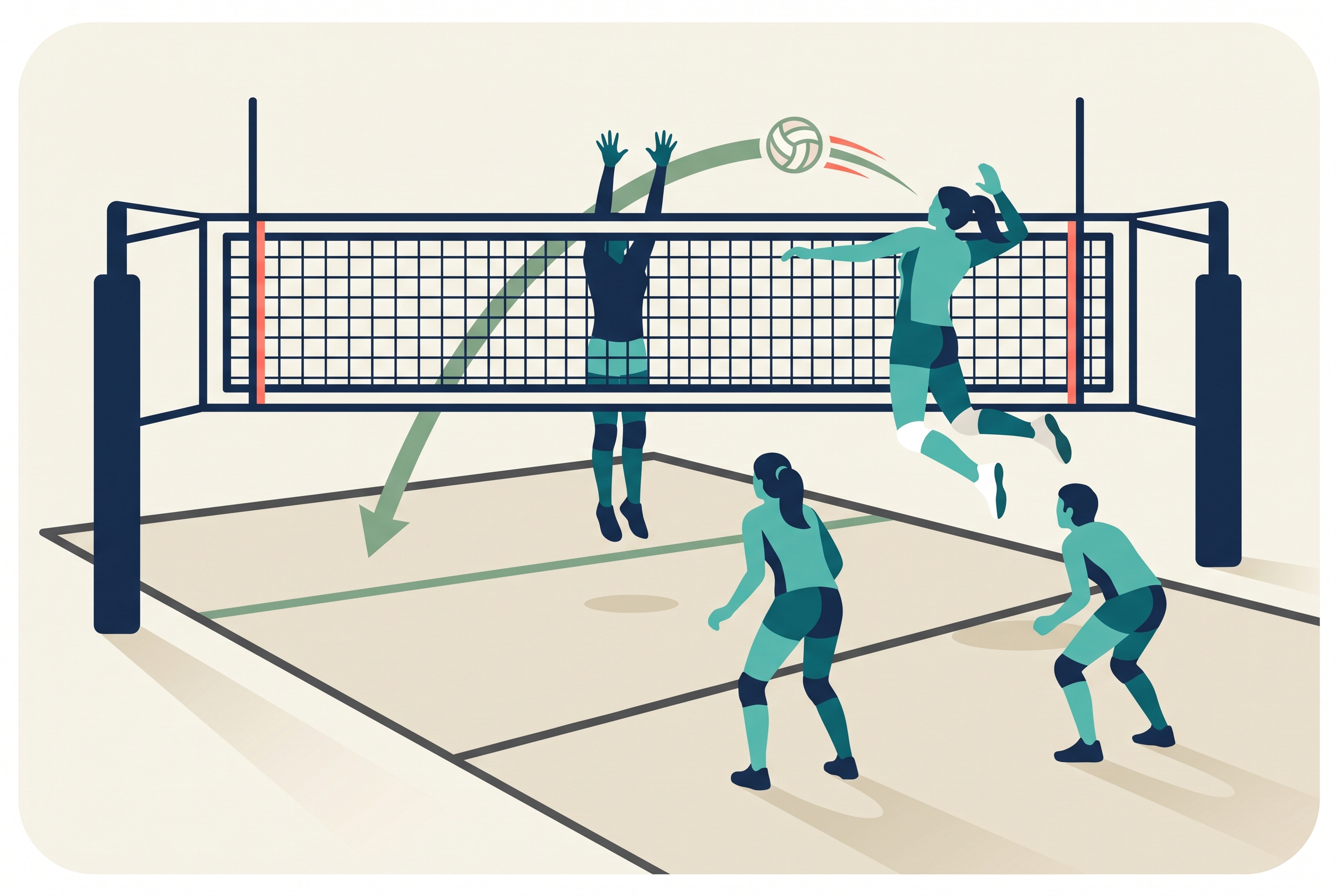
The opposite, also called the right-side hitter, attacks and blocks from the right antenna and takes her name from the rotation order: she stands opposite the setter in the service wheel, so whenever the setter is back row, the opposite is front row. The position is volleyball's counterweight, balancing the offense to the right side and matching up, block-first, against the other team's best attacker. At the sport's top level it is often the most explosive scoring role on the floor; at youth level it is the most misunderstood and most neglected. Both facts are worth unpacking.
What "Opposite" (OPP) Actually Means in Volleyball
The name is positional, not stylistic. Write the six players around the rotation wheel and the opposite occupies the slot three away from the setter, the diagonal. The consequence drives the whole system: in a 5-1, when the setter rotates to the back row, the opposite arrives in the front row, keeping three attackers at the net; when the setter is front row, the opposite drops back. The two never share a row, which is the structural reason a 5-1 works at all. Run the wheel yourself in the free rotation generator and the diagonal relationship is obvious within two rotations.
"Right-side hitter" describes the same player by court geography: after the serve, she switches to zone 2, the right front, and attacks from the right antenna. The terms are interchangeable on rosters and stat sheets; OPP and RS mean the same player.
The Job: Score From the Right, Block the Best
Offensively, the opposite attacks the "red" set to the right antenna. Because most teams funnel their defense toward the opponent's outside hitter, the opposite frequently swings against a single blocker or a late-closing double, which is why efficient opposites post the best hitting percentage among pin hitters. She also owns the back-row attack from zone 1 at levels where back-row attacking is part of the offense, giving the setter a pin option even with the opposite in the back court.
Defensively, the assignment is heavyweight: the opposite blocks against the opponent's outside hitter, who takes more swings than anyone on their roster. A right-side blocker who consistently takes away the line changes what the opposing offense is allowed to want. That matchup is the quiet half of the job, and the reason the blocking drills progression matters as much to an opposite as her arm swing.
Unlike the outside, the opposite is usually excused from serve receive: the standard three-passer formation hides her, letting her stay near the net for transition attacks. The trade is that she has nowhere to hide on blocking and defense against the hardest attacks.
Why Left-Handers Own the Right Side
The right antenna is the one spot on the court built for a lefty. A left-hander attacking from the right side meets the set on her hitting arm without the ball crossing her body, can attack the second contact on a tight pass with a natural swing, and hits angles that right-handed blockers rarely practice against. If your roster includes a strong left-handed attacker, the opposite position is her home before any other consideration, and coaches who park a lefty on the left pin are giving away geometry for free. Right-handers play the position well too, but they must develop a deliberate right-side approach, adjusting steps so the swing stays in front of the hitting shoulder.

The Neglect Problem at Youth Level
On many youth teams the opposite is whoever remains after the outsides and middles are chosen, and the position's development suffers for it. The fix is to recruit for the role's actual profile: a big arm that does not need serve-receive protection, blocking size or timing for the matchup against the opponent's best hitter, and the temperament to score on fewer, higher-leverage swings. That is a different player from a third outside, and naming the difference changes who you slot there.
Evaluation makes the distinction concrete. In Rizzler's volleyball player evaluation template, a natural opposite shows a profile of high Attacking and Blocking scores with a lighter Passing requirement, nearly the mirror of an outside's card. Keep the right side staffed two deep in the Depth Chart tab of the volleyball Game Manager, and note in the plan which outside converts to the right side in an emergency, because at most clubs the backup opposite is a converted outside and the conversion goes better when it was planned in October rather than improvised in a quarterfinal.
Training Priorities for the Right Side
Three blocks build an opposite fastest. Right-side approach mechanics: the footwork mirror-image adjustments, drilled until the swing stays in front of the shoulder from the right antenna. The line-angle block: daily reps against a live or simulated outside hitter, because this one matchup is a third of the job. And transition range: block, land, push off the net, and attack, the sequence that produces most right-side kills at competitive levels. Add back-row attacking from zone 1 as soon as the level allows it; an opposite who scores from the back row makes a 5-1 offense whole for all six rotations.
Frequently Asked Questions
What is an opposite hitter in volleyball?
The attacker who plays the right side and stands opposite the setter in the rotation order, so one of the two is always in the front row. She attacks from the right antenna, blocks against the opponent's outside hitter, and usually does not pass in serve receive.
Is opposite the same as right side hitter?
Yes. "Opposite" names the player by her spot in the rotation order (diagonal from the setter); "right side" names her by where she plays after the serve. Rosters abbreviate both as OPP or RS, and the job is identical.
What is the difference between an opposite and an outside hitter?
The outside attacks from the left, anchors serve receive, and takes the high out-of-system sets; the opposite attacks from the right, is typically hidden from serve receive, and draws the blocking assignment against the opponent's outside. The outside is the volume role, the opposite the matchup and efficiency role.
Why are so many opposite hitters left-handed?
Because the right antenna suits a lefty's geometry: the set arrives on her hitting arm without crossing her body, tight passes can be attacked with a natural swing, and her angles are the ones blockers see least. Right-handers play the position successfully but need adapted approach footwork.
Does the opposite hitter pass in serve receive?
Usually not. Standard three-passer serve receive uses the libero and the two outsides, freeing the opposite to stay near the net for blocking matchups and transition attacks. At youth levels with weaker passing depth, coaches sometimes include her, but the standard is to keep her out.
What should coaches look for in an opposite?
A big arm that produces efficient swings without serve-receive protection, blocking timing or size for the matchup against the opponent's best hitter, comfort attacking from the right side (left-handers especially), and back-row attacking upside. Score Attacking and Blocking heavily; weight Passing lightly.
What do OPP and RS mean in volleyball?
OPP is the opposite, the right-side hitter positioned diagonal from the setter in the rotation order. RS (right side) and RSH (right side hitter) are the same position under a different label; which abbreviation a team uses is habit, not a rules distinction.
Talk to our team
Want to spend more time coaching and less time with paperwork? Let's talk.
Tell us about your team and we'll show you how to plan games, set lineups, run the schedule, and develop players in one place, so you spend the season coaching instead of chasing admin.
Less admin, more coaching
Plan games, set lineups, and track the season in one place
Keep every family in the loop automatically
Tell us about your program
4 fields · takes 30 seconds
Lands in the same inbox as the Help button · human response only
Read Next
How to Build a Batting Order for 15U-18U Baseball
LearnOrganization Dashboard: Manage Your Entire League or Club
FeaturesHow to Build a Batting Order for 11U-12U Baseball
LearnPractice Schedule Template: Session Plan and Weekly Grid
ResourcesVolleyball Drills for Beginners: 8 Drills That Actually Work
VolleyballHow to Run a Wrestling Tryout: A Coach's Step-by-Step Guide
Learn