
Learn
How to Build a Batting Order for 11U-12U
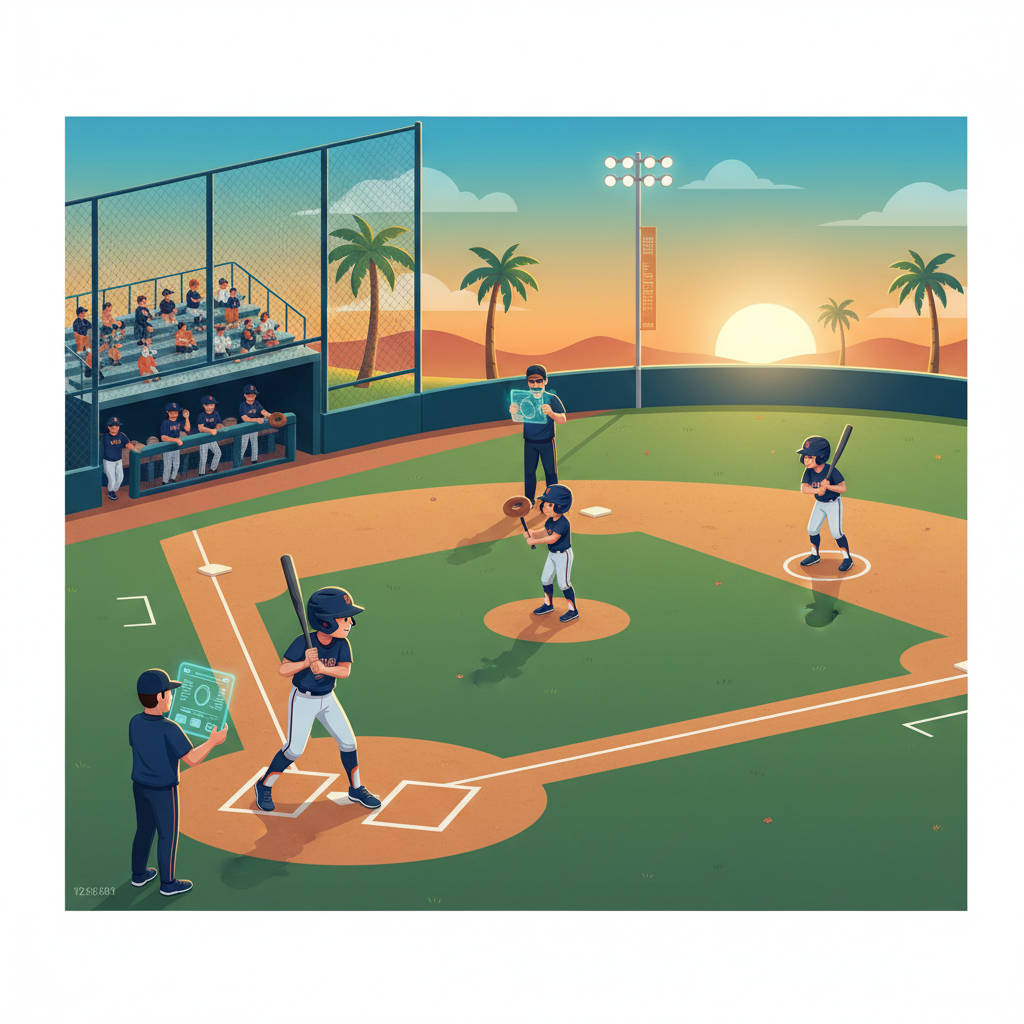
At 11U-12U, batting order construction starts to matter more than at younger ages. Players are seeing faster pitching, strikeouts are increasing, and the gap between advanced and developing hitters is widening. Your lineup should reflect where each player is developmentally while still giving every kid at-bats and avoiding the trap of batting the same five kids at the top every game.
Here's how to approach it for both rec ball and travel.
What's Different About 11U-12U Batting Orders
Pitching is real now. At 9U-10U, many leagues are transitioning from coach-pitch. By 11U-12U, kid-pitch is standard and speeds are reaching 45-55 MPH from 46 feet. Hitters who can't handle velocity will struggle, which changes how you construct a lineup.
Strikeouts are up. More strikeouts means fewer balls in play, which means the players who do make contact carry more weight. Your top-of-the-order hitters need to be players who put the ball in play consistently.
The spread between hitters is wider. At 8U, everyone hits about the same because the pitching is easy. At 12U, some kids are squaring up fastballs and others are still learning to track the ball. Your lineup needs to account for this reality without demoralizing your developing hitters.
Continuous batting order may still apply. Many LL rec divisions use continuous batting order through Majors (12U). Travel leagues typically use a standard 9-player lineup. Your lineup strategy depends on which system you're in.
Batting Order Strategy for 11U-12U Rec Ball (Continuous Order)
In continuous batting order, your entire roster bats through. Defensive substitutions happen, but the batting order stays fixed. This simplifies things, but it also means you can't "hide" a weak hitter by sitting them out.
How to approach it:
Spots 1-3: Your best on-base guys. These spots come up the most. Put your players with the highest OBP here, not necessarily the highest batting average. A kid who walks a lot is perfect for leadoff at this age. Getting on base is getting on base.
Spots 4-6: Your run producers. Players who hit the ball hard and put it in play. At 12U, "power" might mean a kid who hits line drives to the fence, not home runs. That's fine. You want contact with authority.
Spots 7-9: Mix developing hitters with a second leadoff type. Don't stack your three weakest hitters at the bottom. Mix them with a kid who gets on base. The 9-hole in a continuous order comes up right before your leadoff hitter, so it's actually a useful spot for a patient hitter who can turn the lineup over.
Rotate the order across games. Over a 15-game season, the kid batting 8th sees significantly fewer at-bats than the kid batting 1st. Move players around so everyone gets time in different spots. Rizzler's playing time tracking records innings and positions from each executed game plan, so you can see who's getting time and keep the distribution balanced.
Batting Order Strategy for 11U-12U Travel Ball (9-Player Lineup)
In a standard 9-player lineup, you're choosing your 9 best hitters (for that game) and sitting the rest. This is where lineup construction starts resembling real baseball strategy.
Leadoff (1): Best on-base percentage. Ideally, this is a player who takes pitches, draws walks, and makes contact. Speed is a bonus, not a requirement. At 12U travel, a .400 OBP leadoff hitter is a weapon.
2-Hole: The 2-hole has evolved. Old-school says "bunt and move runners." Modern approach says put your best hitter with the best combination of OBP and contact. At 12U, this is often your most well-rounded hitter.
3-Hole: Your best overall hitter. High average, some pop, situational hitting ability. This is the kid you trust with runners on base.
Cleanup (4): Most power. At 12U, that might mean a kid who hits the ball to the outfield consistently. Doubles are the new home runs at this age.
5-6: Solid bats. Players who make contact and occasionally drive the ball. They won't carry your lineup but they keep rallies going.
7-8: Your weaker bats in the starting lineup, but don't think of them as throwaway spots. A well-placed contact hitter at 7 can be the difference in a tight game.
9: In a standard order (not continuous), the 9-hole is traditionally the weakest hitter. Some coaches use it as a second leadoff spot. At 12U travel, there's a real argument for putting a fast, patient hitter here who can get on base for the top of the order.
Common 11U-12U Batting Order Mistakes
Mistake: Same batting order every game for the entire season.
At rec level, this guarantees unequal at-bats and sends a message to bottom-of-the-order kids. At travel level, it misses opportunities to adjust based on opposing pitching and recent form. Rotate.
Mistake: Batting your fastest player leadoff regardless of OBP.
Speed matters for baserunning, not for getting on base. A kid who's fast but swings at everything and bats .180 is less valuable at leadoff than a slower kid who bats .300 and walks 20% of the time.
Mistake: Stacking your lineup top-heavy and giving up on the bottom.
This is especially damaging in continuous batting order. If your 8-9-10 hitters are your three weakest bats in a row, you're giving up an inning's worth of at-bats every time through.
Mistake: Refusing to move a struggling hitter down.
If your 3-hitter is 0-for-his-last-12, moving him to the 6-hole for a game isn't punishment. It's development. Less pressure, lower-stakes at-bats, a chance to find his swing. Don't let ego (yours or his) keep a struggling kid in a high-pressure spot.
Mistake: Ignoring matchups against lefty/righty pitchers.
At 12U travel, some kids hit significantly better against one side than the other. It's worth noticing, and worth adjusting when the data supports it.
Let AI Help
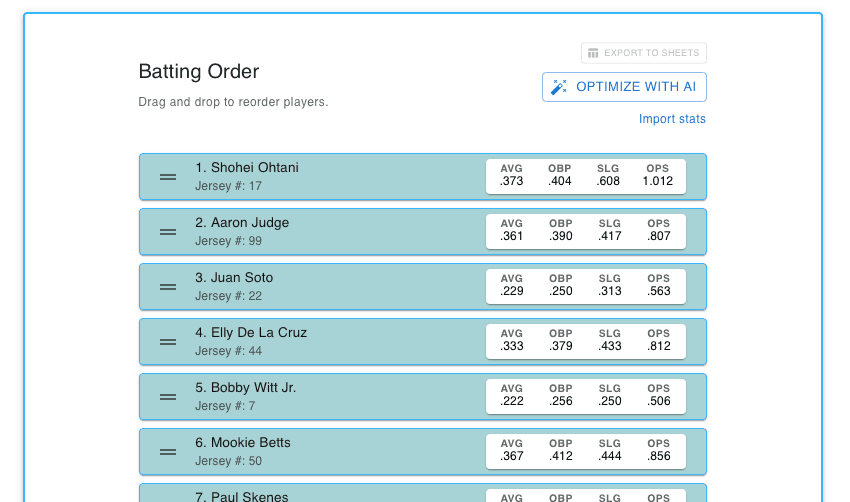
At 11U-12U, you probably have enough game data to make Rizzler's AI Batting Order useful. If you've scored 3-5 games in Rizzler or imported stats from GameChanger, the AI has real data to work with. It'll generate a statistically sound lineup in seconds, and then you adjust based on the things data doesn't capture (confidence, hot streaks, which kid ate a full pizza 30 minutes before the game).
Frequently Asked Questions
Should the batting order change every game at 11U-12U?
In rec ball: yes, rotate positions across games for fairness. In travel: adjust based on matchups, recent form, and rest, but maintain some consistency so players know their role.
My best hitter wants to bat leadoff because he's fast. Should I let him?
Probably not. Your best hitter should bat 2nd or 3rd where they'll get more at-bats with runners on base. Put your best OBP player at leadoff, and that might be a different kid. More on batting order construction →
How do I handle a continuous batting order with 13 players?
Build the order with your best OBP guys at 1-3 and your best contact/power hitters at 4-6. Mix developing hitters with capable ones at 7-13. Rotate the order game to game. Rizzler's lineup builder supports continuous batting orders, so the whole roster bats through.
When should I start using stats to build my lineup?
Now. At 11U-12U, you should have enough games to see real patterns in OBP, strikeout rate, and contact quality. What stats to track at 10U-11U → · What stats to track at 12U →
Part of Rizzler's age-segmented coaching guides. See also: Batting Order for 9U-10U → · Batting Order for 13U-14U → · Fielding Rotations for 11U-12U →
Ready to put real data behind your 11U-12U lineup?
Running a travel organization with multiple teams? Our team can help.
Talk to our team
Want to spend more time coaching and less time with paperwork? Let's talk.
Tell us about your team and we'll show you how to plan games, set lineups, run the schedule, and develop players in one place, so you spend the season coaching instead of chasing admin.
Less admin, more coaching
Plan games, set lineups, and track the season in one place
Keep every family in the loop automatically
Tell us about your program
4 fields · takes 30 seconds
Lands in the same inbox as the Help button · human response only
Read Next
How to Run a Water Polo Tryout: A Coach's Step-by-Step Guide
LearnHow Much Does Rizzler Cost? Pricing & Plans
FAQHow to Plan a Youth Baseball Tournament Weekend
LearnOpposite Hitter in Volleyball: The Right-Side Role Explained
VolleyballHow to Reduce No-Shows at Practice
LearnAmerican Legion Baseball Age Chart 2026: Eligibility
Rules