
Rizzler Sports Logo
How it WorksPricingFree Lineup Generator
Learn

The Softball Tryout Evaluation Form, Built for Fastpitch
A softball tryout evaluation form scores every player on the same set of fastpitch skills across nine categories: athleticism, softball IQ, throwing, catching, infield, outfield, hitting, plus pitching and catcher rows for the players who attempt them. What makes a softball form different from a generic one is what's inside the rows: windmill pitching mechanics, slap hitting for left-handed speed players, and timings tuned to 60-foot base paths. This page covers the categories, a filled-out 12U example, and the scale definitions that keep a whole evaluator crew consistent. The blank printable lives at the tryout evaluation form template, and the event logistics live at how to run a softball tryout.
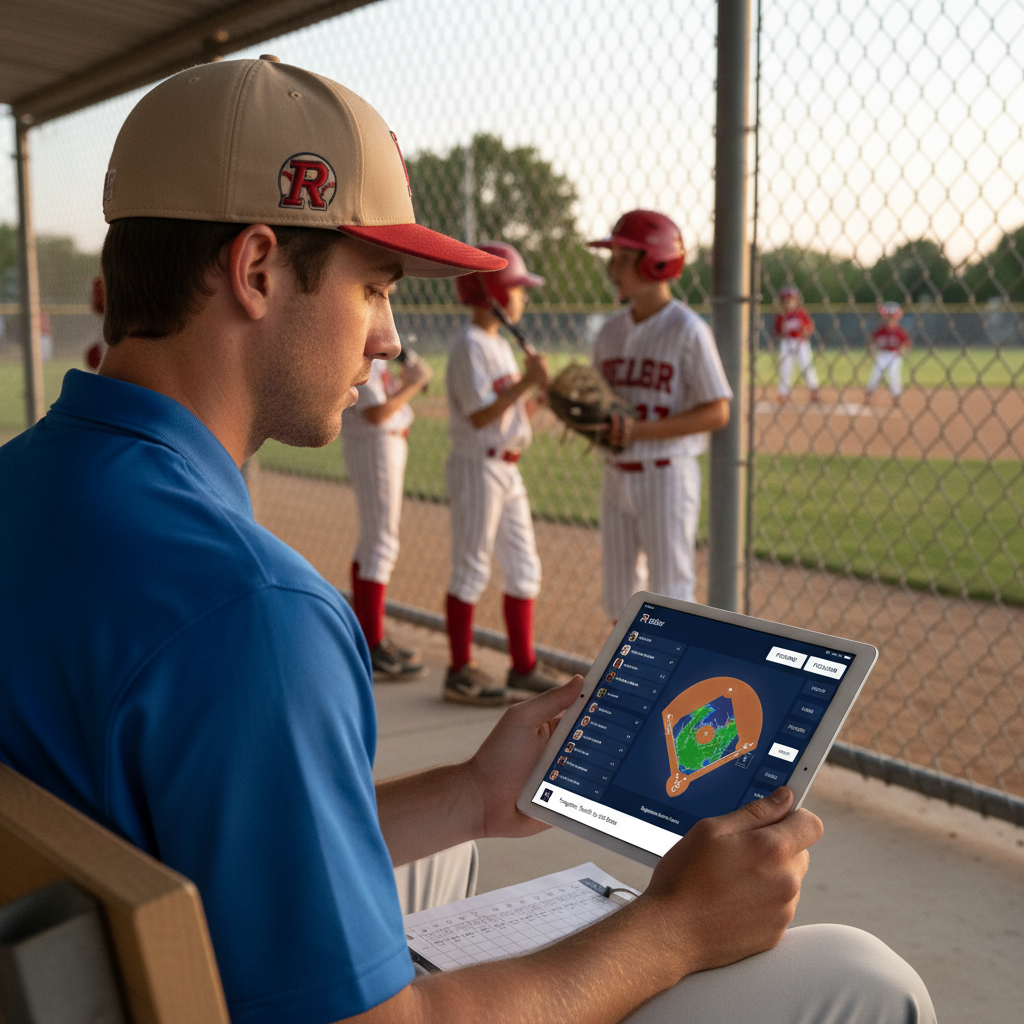
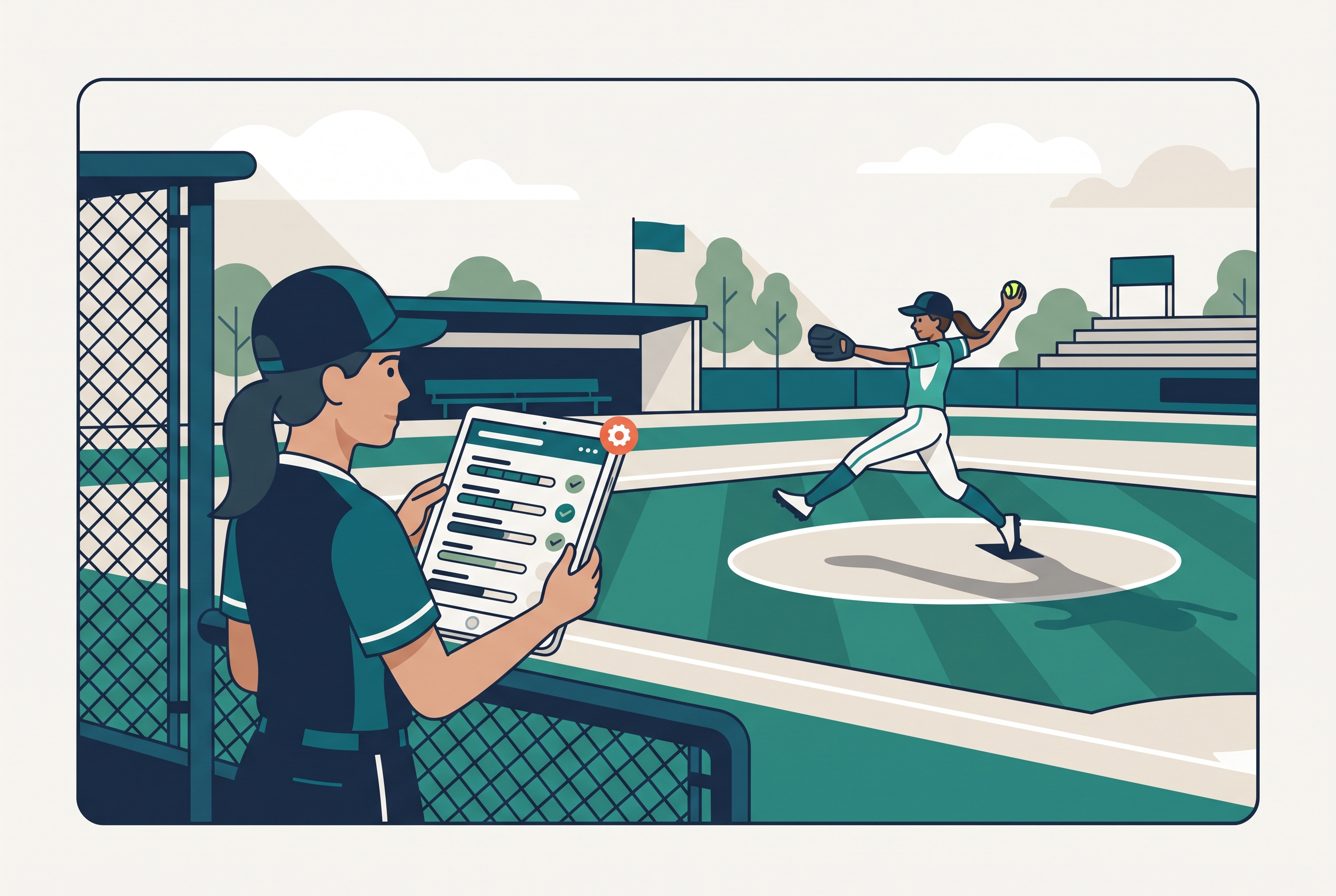
Softball coach recording tryout evaluation scores on a tablet near the dugout fence

The 9 categories on a softball tryout form

Score nine categories: athleticism, softball IQ, throwing, catching, infield, outfield, pitching, catcher skills, and hitting. Rizzler provisions this nine-category structure as the default softball evaluation template, and the specialist rows matter even more in fastpitch than in baseball, because a true windmill pitcher changes what a whole roster can do.
CategorySkills to scoreSoftball-specific notes
AthleticismSpeed, footworkTime home to first; 60-foot paths reward quickness over stride
Softball IQRules knowledge, decision makingSituations: runner on second, slap hitter up, where's the play?
ThrowingStrength, accuracyShorter diamond means accuracy and release speed beat raw arm
CatchingMechanics, reliabilityQuiet hands on short hops and quick transfers
InfieldMechanics, rangeGrounders at, glove side, backhand; charge on the bunt
OutfieldRead on hits, rangeLive fungo reads; shallow positioning discipline
PitchingMechanics, accuracy, composureWindmill mechanics, strike percentage, response to a barrel
Catcher skillsBlocking, catcher IQ, throwdownsBlock series in gear; glove-to-glove time to second
HittingContact, powerFront toss or live arm; score slap and bunt game separately in notes
Score two or three skills per category and stop there. A 70-player org tryout already produces close to 1,500 marks with this structure. Longer forms don't get filled in; they get skimmed.

A filled-out example: a 12U fastpitch candidate

Here is a completed form for a 12U left-handed slapper and middle infielder, scored 1 to 10 across a two-day tryout. Reading a finished form teaches the system faster than any instructions.
Player: #3, left-handed slapper / middle infielder Group: 12U Session: day 2 of 2
CategoryScore (1-10)Evaluator note
Athleticism9Fastest home-to-first time of the tryout, 3.1 from the left side
Softball IQ6Good instincts on the bases, still learning defensive rotations
Throwing5Quick release, accuracy fades past 80 feet
Catching6Reliable on routine, fights the in-between hop
Infield7Real range to the glove side, charges the ball well
Outfield6Enough speed to cover mistakes, reads improving day two
Pitching(blank)Does not pitch
Catcher skills(blank)Did not attempt
Hitting6Slap game is ahead of her power swing; drag bunt is a weapon
Total: 45 / 70 scored Projects: leadoff, second base, premium runner
The blanks matter. She skipped two specialist rows, so her total is out of 70, not 90, and any ranking compares scored rows only. Never fill a blank with a guessed middle score; it quietly buries your best specialists and inflates your generalists.

Set the scale, then calibrate the crew
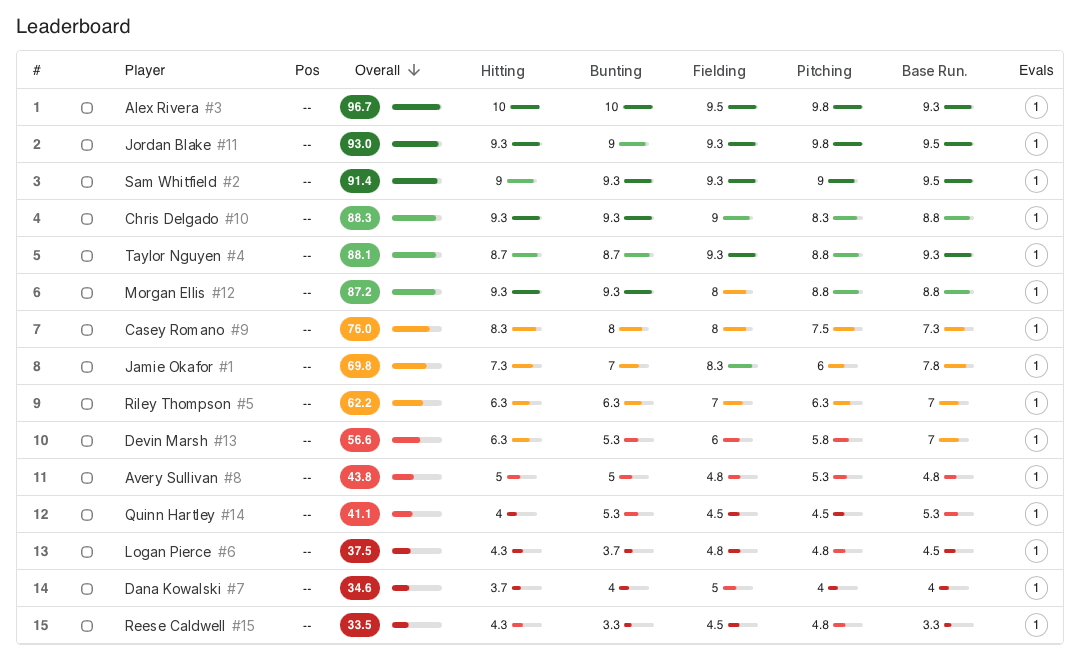
Use 1 to 5 on paper and 1 to 10 when scoring in an app. Then write anchor sentences for the categories coaches argue about most. For 12U windmill pitching: a 7 means consistent strikes with sound mechanics and something off-speed; a 5 means strikes with the fastball and mechanics that need cleanup; a 3 means the session was mostly balls. For slap hitting, decide up front whether it scores inside the hitting row or in the notes, and make every evaluator do it the same way.
Calibration is ten minutes: two coaches score the same three players early, compare numbers, and settle gaps before spreading out. Do it again after lunch on a two-day tryout. Scores drift as evaluators tire, and the afternoon group deserves the morning's standard.

Ready to take your game to the next level?

Position weighting: pitchers, catchers, slappers

Keep one form and weight it when ranking by position. Pitcher candidates: the pitching row plus composure effectively doubles, and a great bullpen with average infield scores still makes your roster. Catchers: blocking and throwdown times outrank almost everything else, and a recorded glove-to-glove time is worth more than three opinion scores. Slappers and speed players: athleticism plus the short game is a roster skill in fastpitch, so read the hitting note, not just the number, before you cut a 9-speed kid with a 5 bat.
At 14U and up, add measured rows where you have tools: pitch velocity, exit velocity off front toss, and catcher pop times. By high school and heavy travel tryouts those numbers, not the 1-to-10 rows, do the sorting at the top of the list.

Two formats: one sheet per player, or the whole group on one page

Run the form in one of two formats, or both. The per-player sheet is the format above: one page per player, categories as rows, an evidence note beside every score. Use it at stations and for any player whose roster spot is a real discussion. The compact roster sheet flips the layout: one row per player, the nine categories abbreviated across the top, a whole age group on a page or two. Use it when one coach is scanning a big field and wants slappers, arms, and gloves comparable at a glance.
Group: ______ Evaluator: ______ Date: ______ Score each cell 1 to 5; leave specialist columns blank if not attempted.
#PlayerAthIQThrCatIFOFPitC-SkHitTotalRec
1
2
3
4
5
Rec: Y = yes, B = bubble, N = no. Columns: Athleticism, Softball IQ, Throwing, Catching, Infield, Outfield, Pitching, Catcher Skills, Hitting.
What the roster sheet cannot hold is the note that says "drag bunt is a weapon," so keep a per-player sheet for the players you are deciding between. The downloadable pack below includes both formats, plus a team sheet that totals each row automatically and a draft board that ranks the group from the scores.

Scoring at scale without the spreadsheet night

At a small tryout, paper forms and an evening with a spreadsheet work. At an org tryout with 100-plus registrants across multiple fields, transcription is where the process breaks: sheets go missing, totals get keyed wrong, and offers go out late. Scoring in Rizzler, each evaluator enters numbers on a phone at their station, the ranked list builds during the tryout, and the Team Tryouts workflow carries the same players from registration and check-in through offers and acceptances, up to 300 players on the Club plan. The softball template comes pre-loaded and is editable on Pro and Club if your org scores different categories. See the softball tryouts page for the full workflow, and the baseball version of this form if you run both programs.

Frequently Asked Questions

What should a softball tryout evaluation form include?

Nine categories: athleticism, softball IQ, throwing, catching, infield, outfield, hitting, plus pitching and catcher rows for players who attempt them. Inside the rows, account for fastpitch specifics: windmill mechanics, the slap and bunt game, and speed timed on 60-foot base paths.

How is a softball evaluation form different from a baseball one?

The category skeleton is the same nine rows, but the contents differ: windmill pitching instead of overhand mechanics, slap hitting as a scored skill for lefties, shorter-diamond throwing standards that favor release and accuracy, and outfield reads at shallower depths. A generic baseball form under-scores exactly the players fastpitch values most.

How do I score a player who doesn't pitch or catch?

Leave those rows blank and total only the scored rows. Rank players on comparable rows, then treat pitching and catching as separate ranked lists. Filling blanks with middle scores inflates generalists and hides your specialists.

What scale works best for softball tryouts?

1 to 5 on paper, 1 to 10 in an app. Define the middle number per category before the tryout, attach a short evidence note to every score, and calibrate evaluator pairs on the first few players. The scale matters less than everyone using it identically.

Get the full template pack: player sheets, team sheet, draft board

The forms above are free to copy straight from this page. The pack adds the print-ready and editable versions of all of it: individual player sheets, a full team sheet that scores your whole roster on one page with totals that add themselves, and a draft board that ranks players from the scores. Use the form below, mention softball tryout evaluation pack in the message box, and we will email the whole pack to you.

Talk to our team

Running softball tryouts at scale? Let's talk.

Tell us about your club, league, or school and we'll come back within one business day with a walkthrough of registration, check-in, evaluations, invites, and offers in one place.

  • Cut tryout admin from days to minutes

  • Online registration and check-in for hundreds of players

  • Evaluate, rank, invite, and track offers in one place

Tell us about your program

4 fields · takes 30 seconds

Lands in the same inbox as the Help button · human response only