
Volleyball
6-2 Serve Receive: The Same Three Patterns, Run by Two Setters
Serve receive in a 6-2 is the back-row half of a 5-1, run twice. Whichever setter is currently in the back row hides and releases to the target; the other setter is a front-row hitter who stays out of the pattern at the net. Because the two setters sit diagonal in the lineup, the wheel repeats its three receive shapes twice per cycle, once for each setter. That symmetry is the 6-2's teaching gift: master three patterns and you have mastered all six rotations. This page walks them with interactive diagrams, the setter swap logic, and the traps specific to having two setters on the court. The cross-system theory lives in the serve receive overview.
For the walkthrough, our Ridgeview Hawks run the 6-2 with Maya and Sofia setting from opposite corners of the wheel, Jordan and Kayla outside, Priya and Dre middle, Alina libero. In every rotation below, "the setter" means whichever of the two is back row; that is always exactly one of them.
The Three Shapes (Each Happens Twice)
Shape 1: Setter in Zone 1, Corner Tuck
6-2 rotations — Two setters; the back-row setter sets so three hitters are always front row.
Rotation 1 — Setter (S1) in 1
Build this with your roster — free →
No login required
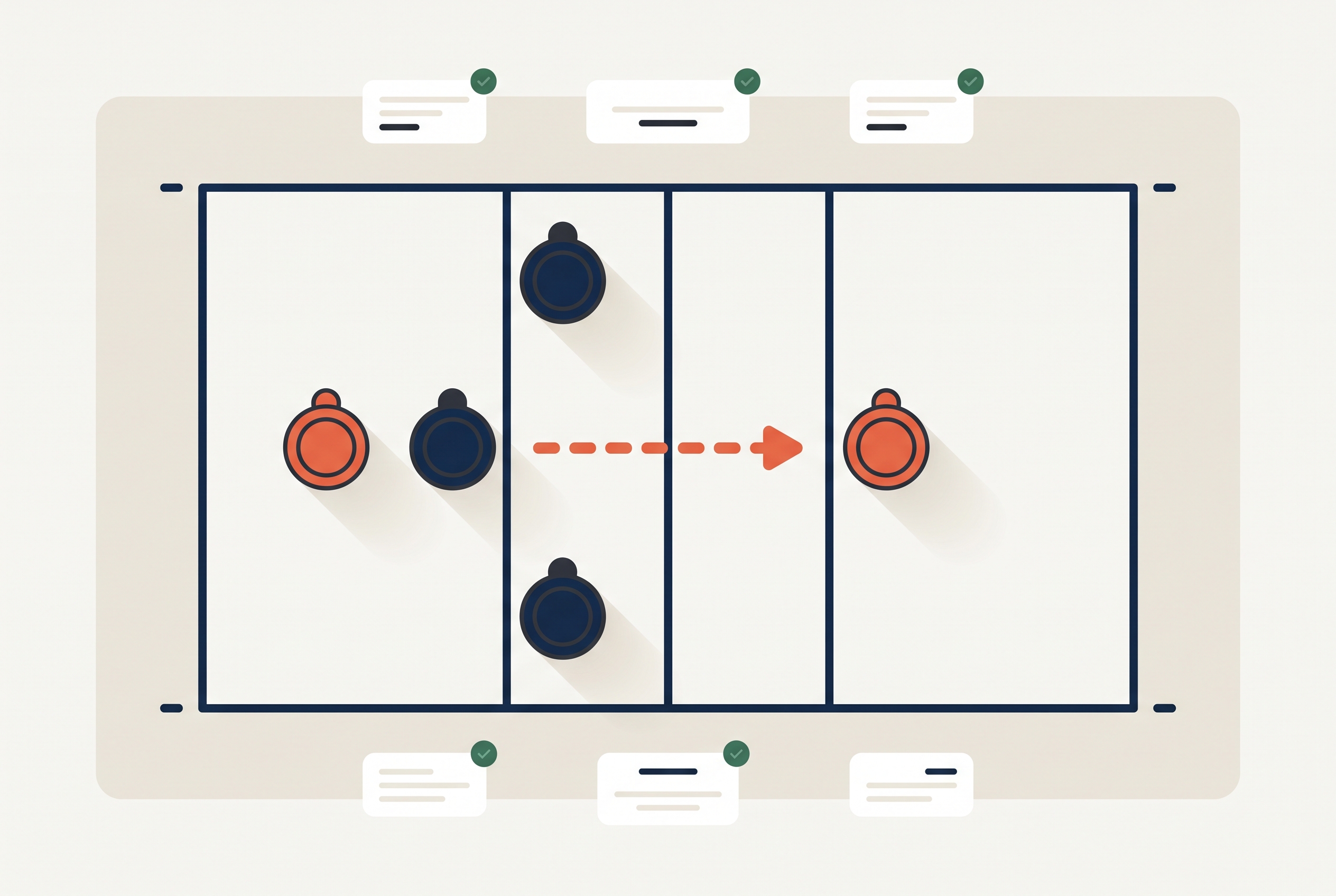
The back-row setter tucks into the right-back corner behind the right-side front-row player and takes the short release run to the target. Passers are the standard trio: both outsides and the libero. The trap is the front-back check with the player she hides behind, who must keep a toe closer to the net than the setter's feet until contact.
The 6-2 wrinkle: the front-row player in zone 2 is the other setter, now wearing her hitter hat. She holds the net, keeps the sideline landmark, and above all does not drift deep to "help" receive, which is exactly how the front-back check breaks.
Shape 2: Setter in Zone 6, the Stack
6-2 rotations — Two setters; the back-row setter sets so three hitters are always front row.
Rotation 2 — Setter (S1) in 6
Build this with your roster — free →
No login required
The back-row setter stacks at the attack line behind the zone 3 middle and releases through the middle. This is the most-whistled moment in the 6-2, as it is in every system that stacks: the setter must stay behind the middle (front-back) and between the zone 5 and zone 1 players (side-side) until the serve is struck. The freeze habit, hold the stack until you hear contact, is the fix, and it is worth its own ten minutes of practice time.
Meanwhile the front-row setter is one of three legal attackers, which is the whole point of the 6-2: even in the stack rotation, the offense keeps a full front line.
Shape 3: Setter in Zone 5, the Long Run
6-2 rotations — Two setters; the back-row setter sets so three hitters are always front row.
Rotation 3 — Setter (S1) in 5
Build this with your roster — free →
No login required
The back-row setter hides far left behind the zone 4 player and sprints the diagonal at contact, the longest release on the wheel. The side-side check against the zone 6 passer is the live risk, broken by early releases. As in the 5-1 version of this rotation, you either accept a slower first tempo or move the hide spot toward her exit path.
One 6-2-specific comfort: because the front-row setter is a genuine right-side attacker, an off pass in this rotation still leaves a conventional out-of-system attack. The 6-2 degrades more gracefully here than the 5-1 does.
Rotations 4 Through 6: The Setters Swap Jobs
6-2 rotations — Two setters; the back-row setter sets so three hitters are always front row.
Rotation 4 — Setter (S2) in 1
Build this with your roster — free →
No login required
When the wheel carries the first setter into the front row, the second setter arrives in the back row, and the three shapes repeat exactly: corner tuck, stack, long run. Nothing about the patterns changes; only the personnel swap. Use the viewer's rotation stepper to walk rotations 4 through 6 and watch the mirror.
The swap itself is the 6-2's coaching overhead. Both setters must run identical release patterns and call the same target spot, or your hitters get two different offenses on alternating rotations. Pick one house style for each hide spot and drill both setters on it; the rotation generator draws each rotation with your actual names so both setters can study the same six pictures instead of interpreting a whiteboard from memory.
The Trap Unique to the 6-2: Setter-on-Setter Overlap
Because the setters are diagonal, one is always front row while the other is back row, and they are never overlap neighbors of each other. The real unique trap is role confusion at the moment of transition rotations: the setter who just rotated to the front row instinctively drifts toward the target to set, while the back-row setter is releasing to the same spot. Two players converging on the target concedes the right side of the court in receive and can drag the front-row setter out of her legal spot before contact.
The fix is verbal and boring: whoever is back row calls "mine" before every serve of the set. Teams that assign the call never double-release; teams that rely on memory do it about once a match, always at 22-23.
Choosing Receive Patterns for Growing Teams
The 6-2 is usually a development system, two setters getting real reps, so match the receive to the passers you have rather than copying the three-passer standard. A young 6-2 runs happily with four passers (add the opposite-side hitter) while outside hitters learn their lanes, then narrows to three. The five-person W defeats the purpose in a 6-2, since it drags the back-row setter into the pattern; if your team still needs the W, you likely want the 4-2 for another season. The decision criteria for that call live in the 6-2 system guide.
Frequently Asked Questions
Who passes in a 6-2 serve receive?
The standard trio: both outside hitters and the libero, in all six rotations. Both setters stay out of the pattern, the back-row one hiding to release, the front-row one holding the net as a hitter. Developing teams sometimes add a fourth passer while lanes are being learned.
Where does the setter hide in a 6-2?
The back-row setter uses the same three hide spots as a 5-1 setter: tucked in the right-back corner (zone 1), stacked behind the middle at the attack line (zone 6), and far left behind the zone 4 player (zone 5). Each spot occurs twice per cycle, once for each setter.
Does the front-row setter receive serve in a 6-2?
No. She plays as a right-side attacker that rotation and stays out of the pattern at the net. Her receive job is purely negative: hold the sideline and net landmarks so she never breaks an overlap check by drifting to help.
Why does my 6-2 keep getting whistled in the stack rotation?
The back-row setter is leaving the stack a beat before serve contact, breaking the front-back check with the middle she hides behind. Alignment is judged at the instant of contact. Run freeze drills: whistle at imaginary contact, everyone holds, check feet.
Is 6-2 serve receive easier than 5-1 serve receive?
The patterns are identical, but the 6-2 asks two setters to execute them consistently instead of one, and it never has the 5-1's three calm front-row-setter rotations. Easier per pattern, harder per roster: you need two setters who release identically.
Talk to our team
Want to spend more time coaching and less time with paperwork? Let's talk.
Tell us about your team and we'll show you how to plan games, set lineups, run the schedule, and develop players in one place, so you spend the season coaching instead of chasing admin.
Less admin, more coaching
Plan games, set lineups, and track the season in one place
Keep every family in the loop automatically
Tell us about your program
4 fields · takes 30 seconds
Lands in the same inbox as the Help button · human response only
Read Next
Practice Manager: Build a Timed Practice Plan in Minutes
FeaturesMiddle Blocker in Volleyball: Role, Skills, and Training
VolleyballVolleyball Drills at Home: Solo Work That Actually Transfers
VolleyballQuality At-Bat (QAB): Definition, Criteria & Youth Benchmarks
StatsVolleyball Tryout Evaluation Form: What to Score (Free Template)
LearnRizzler Plans & Pricing: Free vs Coach vs Club
Comparison