
Learn
Baseball Team Fundraising Ideas, Ranked by What You Keep
Most baseball fundraising advice is a list of forty ideas with no numbers attached. This page ranks the ideas by the only metric that matters: what percentage of the money raised actually reaches your team, and roughly how many dollars per player each method produces. The short version: a well-run hit-a-thon keeps about 95 percent of what it raises and out-earns candy bars by five to one, an adults-only casino night is the biggest single-event number on this list, and local sponsorships are the most underused money in youth baseball. Everything below applies equally to softball teams.
Why travel teams fundraise
Travel baseball families typically spend $3,000 to $8,000 per player per year once team fees, tournaments, travel, and equipment are tallied, and most programs collect dues in installments, usually a payment at fall commitment and another ahead of the spring season, rather than one annual bill. That structure is exactly why teams fundraise, and the reasons are more specific than "sports are expensive":
- To lower the next installment. A fall fundraiser that nets $400 per player is $400 off the spring payment every family is about to see. Fundraising works when it maps to a bill families recognize.
- To cover what dues don't. Team fees typically cover only 40 to 60 percent of true costs. The gap, extra tournament entries, a second uniform set, indoor facility time, is either fundraised or billed as mid-season surprises.
- To keep good players whose families are stretched. Every travel coach eventually has a family quietly priced out. A team fund lets the program cover part of a player's dues without a public conversation, and that is the difference between keeping and losing a kid who belongs on the roster.
- To kill surprise assessments. Teams that fundraise on a plan do not pass the hat in a tournament hotel lobby. Fundraising resentment comes from surprise, not effort, so tell families at commitment what the budget is and what the fundraiser is expected to cover.
What you keep, by method
The ranking that should drive your choice. Percentages are what reaches the team after vendor cuts, prizes, and fees; dollar figures are typical net for a reasonably run effort.
| Method | You keep | Typical net | The catch |
|---|---|---|---|
| Hit-a-thon / pledge event | ~95% (card fees only) | $200-550 per player | Needs 4-6 weeks of outreach runway |
| Casino / poker night | 50-70% after costs | $8,000-20,000 per event | Adults only; check state charitable gaming rules |
| Local sponsorships | ~100% | Varies by market | Someone has to ask |
| Stadium concessions shifts | ~100% of the payout | $1,000-2,000+ per shift crew | Parent labor, early mornings |
| Premium item raffle | 70-100% | $1,000-3,000 per raffle | Get the prize donated; check state raffle rules |
| Team-run youth clinic | ~90% (field + insurance) | $1,500-4,000 per clinic | Your players and coaches are the product |
| Discount cards | 60-70% | $40-80 per player | Kids sell door to door |
| Shopping rebate apps | 100% of the rebate | $20-60 per family per season | Passive; needs family adoption |
| Product sales (candy, popcorn, cookie dough) | 40-50% | $30-60 per player | The vendor keeps half |
Two patterns worth noticing. First, the methods at the top raise money from the team's own network with nothing in the middle, which is why they keep nearly everything. Second, the methods at the bottom make a vendor money and give your team the leftovers. If your season needs $5,000 and you choose cookie dough, you are signing up to sell $11,000 of cookie dough.
The hit-a-thon, done properly
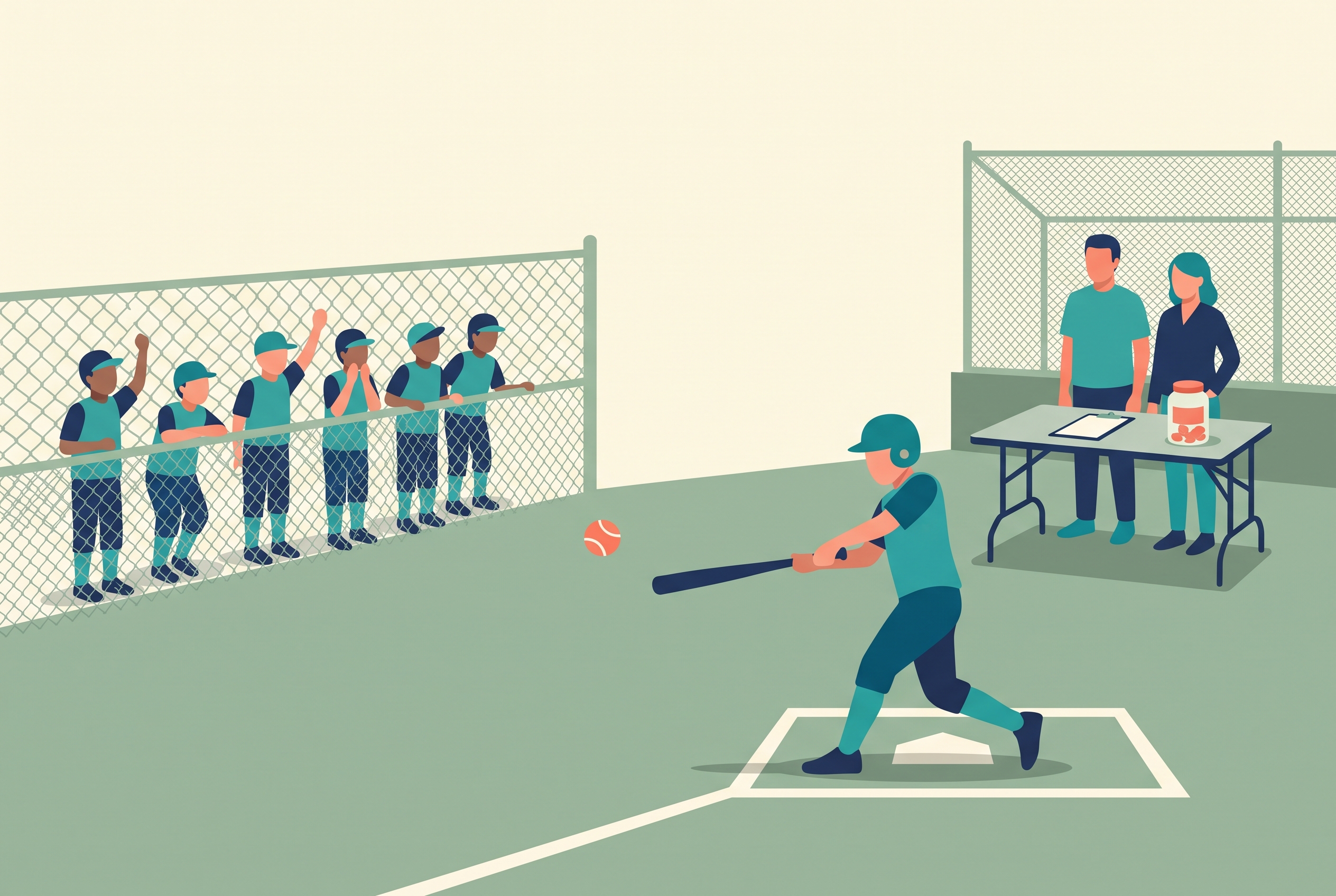
The hit-a-thon is the best fit in baseball because the event is the sport itself: every player takes a set number of swings (15 to 25 pitches, 20 is standard) and supporters pledge per hit or give a flat amount. Teams that run flat-donation-only events see around $200 per player; teams that push per-hit pledges with active family outreach see $350 to $550 per player, which puts a 13 to 15 player travel roster at $5,000 to $8,000 from one Saturday morning. A 15-player event takes about 90 minutes including setup.
The structure that produces those numbers:
- Pledge mix. Aim for roughly 60 percent per-hit pledges ($3 to $5 per hit, with a $20 to $25 home run bonus where age-appropriate) and 40 percent flat gifts ($25 to $75). Per-hit pledges out-raise flat ones because the donor is buying a story, not writing a check.
- Collect online. Online pledge pages recover 95 percent or more of what is pledged; paper pledge sheets historically recover 55 to 65 percent. Online platforms typically take no platform fee and pass through card processing at about 2.9% plus 30 cents.
- Runway. Pick the date and goal 4 to 6 weeks out, launch pledge pages 2 to 3 weeks out, send progress updates weekly, and confirm field, feeder, and scorekeepers the week before. The outreach window is where the money is made; the event itself is just the finale.
Softball teams run the identical event; some add a pitching version where supporters pledge per strike thrown.
Casino night: the biggest single-event number
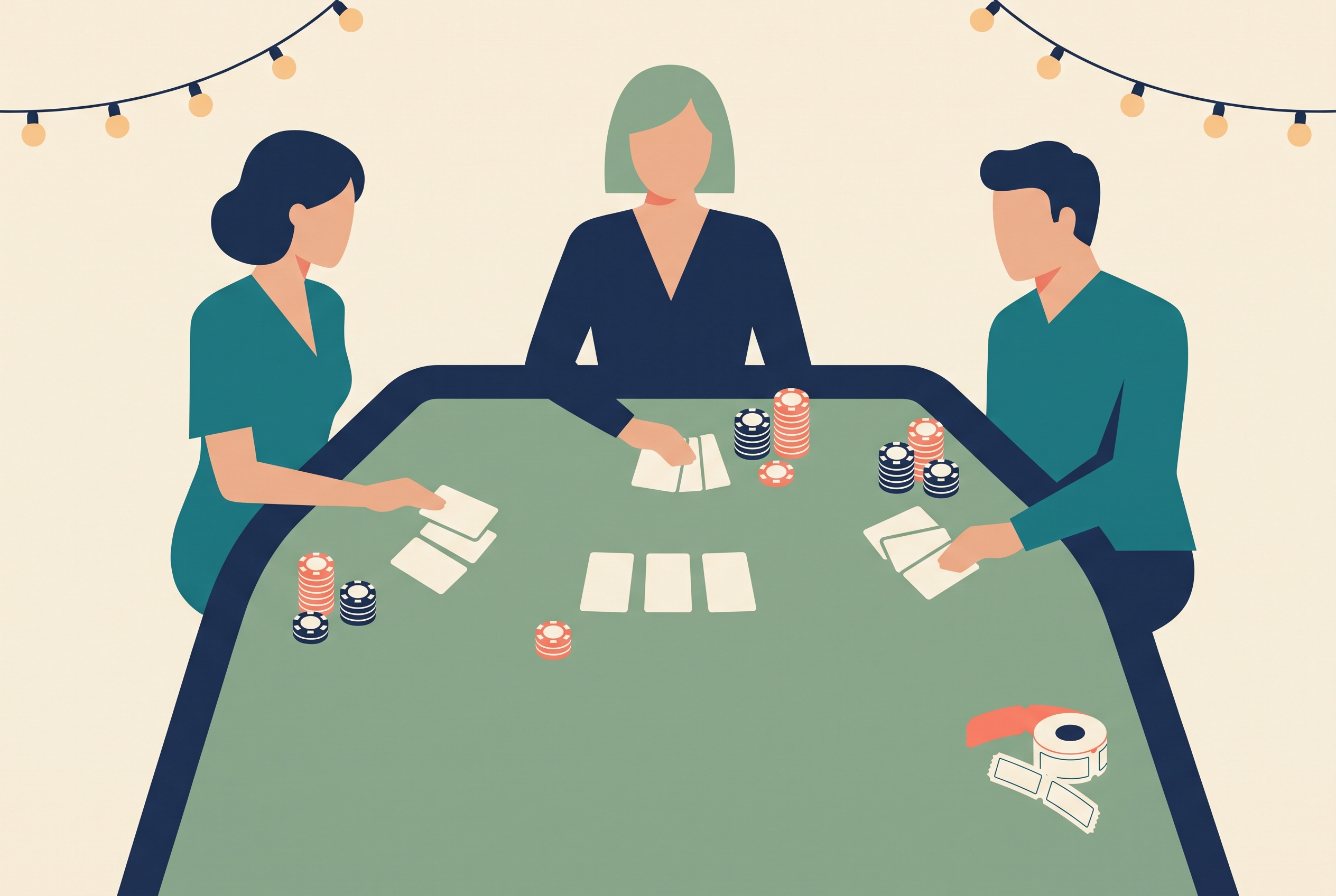
An adults-only poker, Monte Carlo, or Vegas night is how travel programs raise five figures in one evening: a well-organized event with 100 to 200 guests typically nets $8,000 to $20,000 after expenses. The model stacks four revenue streams on one night: tickets (a $75 ticket is a common anchor), chip buy-ins ($10 to $25 per bundle, the highest-margin stream), a sponsor tier for local businesses ($500 to $1,000 to put their name on a table), and a raffle or auction finale where chips convert to entries. Costs are real, which is why the keep-rate is 50 to 70 percent rather than 95: table and dealer rentals run $100 to $300 per table and $150 to $250 per dealer, plus venue and food. A donated venue (a sponsor's restaurant on its closed night, a VFW hall) moves the whole difference into the team's column.
Two rules keep it clean. First, nobody wins cash: guests play with event chips and trade winnings for raffle entries or donated prizes, which is what keeps the night on the right side of most states' charitable gaming rules. Second, check your state before you book anything: charitable gaming is legal in most states for qualifying nonprofits, but licensing, prize limits, and eligibility vary, and a few states prohibit these events outright. Your league or club's nonprofit status is usually the qualifying entity.
Local sponsorships: the most underused money in youth baseball
Every team plays in front of the same local businesses that buy outfield banners at the town field, and most travel teams never ask. A simple three-tier package works: a banner-and-website tier, a jersey or equipment-bag tier, and a title tier that puts a business name on the team's tournament season. Price to your market, but anchor the ask to something concrete the business can picture: "covers our team's entry at the regional tournament" beats "supports youth sports." The ask letter is one page: who the team is, how many families and games the sponsor's name reaches, the three tiers, and a direct sentence asking for a specific tier. Hand it to the owner in person, follow up once a week later. The teams that treat this as a repeatable system, with a sponsor list they maintain and renew every year, fund real fractions of their budget this way, and renewals are far easier than first asks. Sponsors are also your first call for casino night tables and raffle prizes, which is one more reason to keep the list warm.
Four underused ideas that actually work
- Stadium concessions shifts. Pro and college stadiums, concert venues, and speedways staff their concession stands with nonprofit volunteer groups and pay the group a flat fee or a percentage per stand. A parent crew working a handful of dates can clear $1,000 to $2,000 per shift for the team fund. It is pure parent labor with zero selling, which is exactly why the teams that do it keep doing it. Search your nearest major venue's name plus "nonprofit concessions program."
- Premium item raffle. One donated high-demand prize (the classic is a premium cooler, packed by parent donations), tickets priced so 150 to 300 tickets covers the goal. It out-earns bake sales by an order of magnitude for a tenth of the effort. Raffles are regulated state by state, so run it under the club's nonprofit and check the rules.
- Team-run youth clinic. Your 13u-18u players and coaching staff run a Saturday skills clinic for the local 6-10 year olds. Families pay $30 to $60 per kid, your only costs are field time and insurance, and 40 to 80 registrations is a $1,500 to $4,000 day. It doubles as recruiting for your program's younger teams, and the older kids coaching the younger ones is the best look your program will ever have.
- Shopping rebate apps. Team fundraising apps (FlipGive, RaiseRight and similar) rebate a percentage of families' everyday gift-card and online purchases, up to around 15 percent at some retailers, into the team account. Nobody sells anything. The money is real but slow: treat it as a season-long drip that quietly covers a tournament entry, not an anchor event. Super Bowl squares boards fall in this same low-effort family: popular and simple, but they are gambling in most states, so run them as a free-entry or donation-based board unless your state and league allow otherwise.
Run it like a season, not an emergency
The teams that fundraise painlessly do three things. They pick one anchor event per year (the hit-a-thon or the casino night) and support it with one passive stream, instead of running five small efforts. They schedule it the same way they schedule practices: on the calendar at the start of the season, not when the account runs dry. They maintain the sponsor list year over year, because a renewing sponsor is ten minutes of work. And they tell families the number at commitment: "our budget is $X per player, collected in two installments, and the fall fundraiser typically knocks $Y off the spring one." Rizzler's team management keeps the roster, schedule, and family communication in one place, which is the same infrastructure a fundraiser runs on; if you are comparing tools for the season, the travel baseball apps comparison covers the field.
Frequently Asked Questions
What is the most profitable fundraiser for a baseball team?
Per event, an adults-only casino night: 100 to 200 guests typically nets $8,000 to $20,000. Per unit of effort, the hit-a-thon: it keeps roughly 95 percent of what it raises and well-run events net $350 to $550 per player from one morning.
How much money can a baseball team raise in one fundraiser?
A 13 to 15 player travel team running a hit-a-thon with online pledges and active outreach typically raises $5,000 to $8,000. A casino night with 100+ adult guests typically nets $8,000 to $20,000 after costs.
Are casino night fundraisers legal?
In most states, yes, when run by a qualifying nonprofit with no cash prizes: guests play with event chips and trade winnings for raffle entries or donated prizes. Licensing, prize limits, and eligibility vary by state, and a few states prohibit charitable gaming entirely, so check your state's rules before booking anything.
How do you get local businesses to sponsor a youth baseball team?
Offer a short tiered package (banner/website, jersey or bag, title tier), anchor each tier to something concrete it pays for, deliver a one-page letter in person, and follow up once. Renewals are the real value, so keep a sponsor list and go back every year.
Do these ideas work for softball teams?
All of them. The hit-a-thon runs identically, and softball adds a pitch-a-thon variant where supporters pledge per strike.
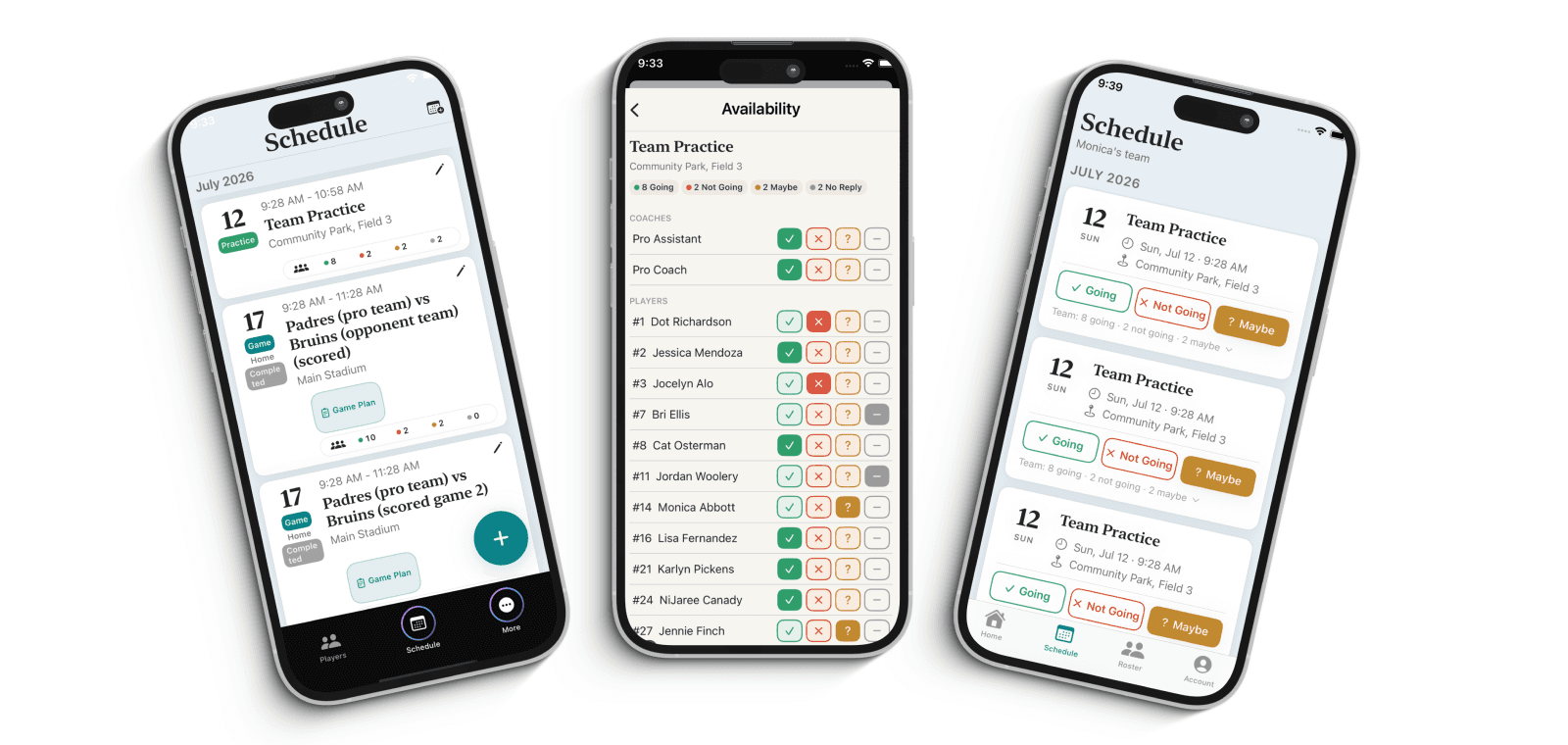
Roster, schedule, and family communication in one place makes every fundraiser easier to run.
Talk to our team
Want to spend more time coaching and less time with paperwork? Let's talk.
Tell us about your team and we'll show you how to plan games, set lineups, run the schedule, and develop players in one place, so you spend the season coaching instead of chasing admin.
Less admin, more coaching
Plan games, set lineups, and track the season in one place
Keep every family in the loop automatically
Tell us about your program
4 fields · takes 30 seconds
Lands in the same inbox as the Help button · human response only
Read Next
Middle Blocker in Volleyball: Role, Skills, and Training
VolleyballTournament Planning for 10U-11U Baseball
BlogWhat Stats Should You Track at 10U-11U Baseball?
StatsTravel Baseball Age Chart 2026: Every League's Cutoff
RulesRizzler for Rec League Coaches
For CoachesSports Team Communication App: RSVP, Alerts, and Reports
Features