
Volleyball
Fair Playing Time in Volleyball, Without the Spreadsheet Headache
Equal playing time in volleyball is managed through the rotation, not a stopwatch: because the game substitutes by rotation spots and scores by rallies, "fair" is measured in sets and service rotations rather than minutes. That is actually good news, since it means a coach can plan fairness before the match instead of doing guilt-driven math during it. Here is what fair should mean at each level, the substitution patterns that share court time cleanly, and how to track the real numbers so the conversation with a frustrated parent is thirty seconds of fact instead of a season of friction.
What "Equal" Should Mean, by Level
Fairness has a definition problem before it has a tracking problem, and the definition legitimately shifts with age. In rec and 12U volleyball, equal means equal: every rostered player plays in every match, in comparable amounts, and the standings can pay for it, because the program's product is development. School JV teams sit near the same standard. From 14U club upward, most programs shift to "meaningful time": everyone dressed plays real rotations in every match, but crunch sets go to the lineup that earns them. Varsity and national-level club are performance rosters, where playing time is earned and the coach's obligation is honesty about it, not equality.
Publish your standard before the season, in writing, at the parent meeting. Nearly every playing-time war stems from a parent assuming rec rules while the coach runs performance rules; the sentence "at this level, we guarantee meaningful rotations, not equal sets" costs nothing in October and saves Decembers.
Why Volleyball Playing Time Is Really a Rotation Problem
Sports with free substitution manage minutes; volleyball manages the wheel. A player enters at one rotation spot, travels through six positions, and exits where the plan says, with each governing body capping team substitutions per set (12 under USAV, 18 under NFHS, 15 in NCAA women's play). Add the libero, who plays half of every rally without costing a substitution, and "how much did she play?" becomes a question about rotations and sets, not clock time.
That structure gives coaches three clean sharing patterns. Paired swaps: two players share one rotation spot, one playing front-row turns and the other back-row, which halves each's court time but doubles participation and matches players to their strengths. Set-based lineups: run lineup A in set one, lineup B in set two, and your strongest mix in set three; across a two-match week, everyone starts. Rotation-spot promises: the eight-player rotation where subs enter at designated spots every match, so the bench knows exactly when they enter before warm-ups end. All three are plannable on paper with a printable lineup sheet, and all three fall apart the same way: the plan lives in the coach's head, the match gets tight, and the promise quietly dies at 20-20.
Plan It Before the Match, Track It During
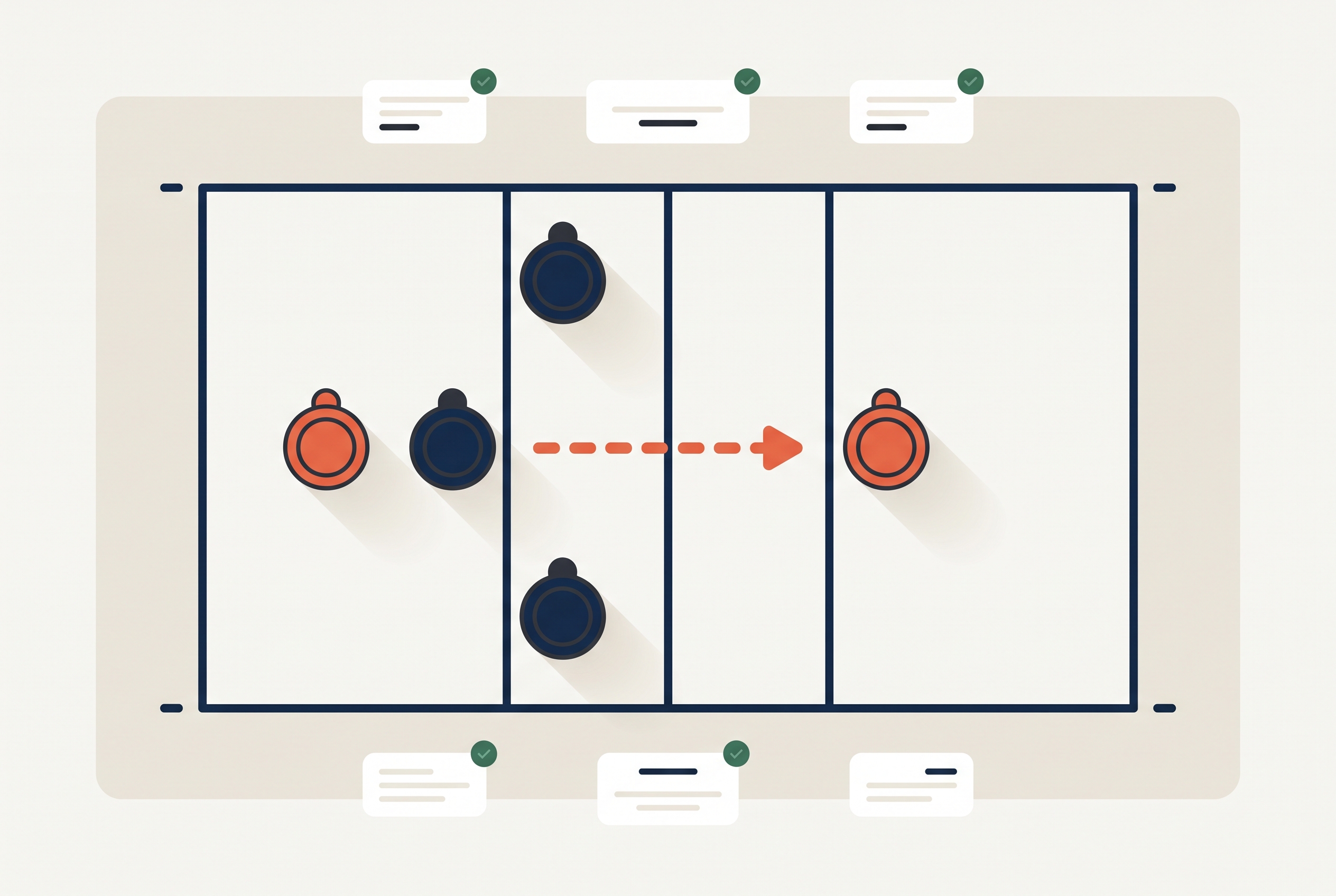
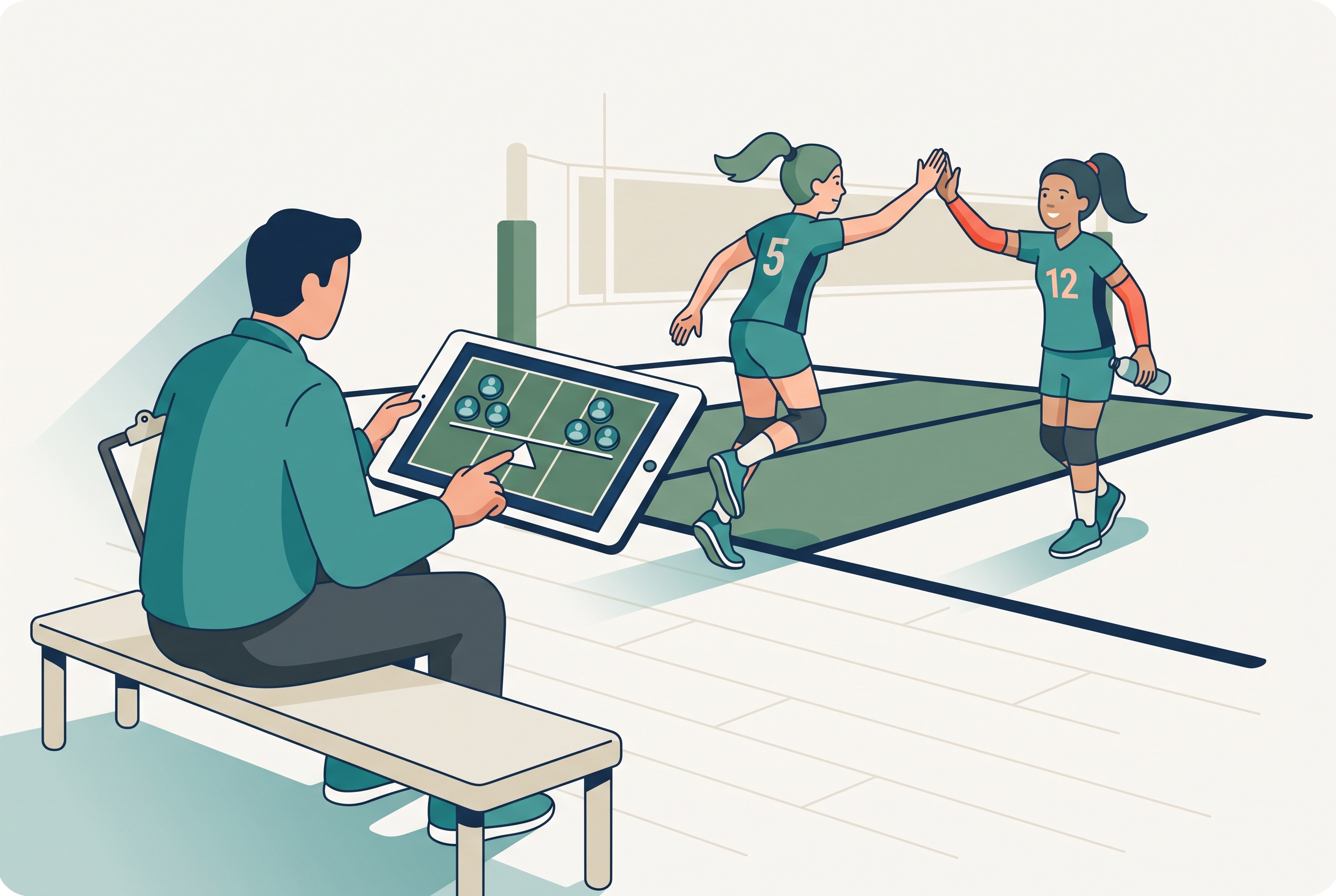
The fix is making the plan visible and the count automatic, which is what the volleyball Game Manager in Rizzler does. The Rotation Plan tab builds the lineup and shows all six rotations with overlap validation, so a paired-swap or set-based plan is concrete before you leave the house; the free rotation generator is the no-login version for sketching. The Playing Time tab then tracks per-set and cumulative time as you run the match, so the "who has not played yet tonight?" question has an answer on the bench, not in the car afterward. Serve Order and Depth Chart round out the picture: who serves in which rotation, and who backs up each position when you shuffle sets.
Two numbers are worth watching across a season, not just a match. Total sets played per player is the fairness headline, the one parents actually count from the stands. Rotations at their position is the development number: a middle who "played every match" but always as a back-row fill-in did not get middle reps. Cumulative tracking is what turns a vague sense of balance into a list you can act on Tuesday.
The Parent Conversation, Defused
The playing-time complaint is the most common youth-sports conflict, and volleyball's substitution rules make it worse because parents cannot see the plan from the bleachers; a kid who plays three back-row rotations per set looks benched to anyone who missed the swap. Three habits defuse it. State the standard at the parent meeting, in the same sentence structure every season. Show the season view when asked: cumulative sets and rotations from the Playing Time tab, which converts "you never play her" into a two-column comparison. And pair the number with a development path: playing time at this level is earned through measured skills, here is her evaluation, here is what moves it. A parent who leaves that conversation with a number and a plan rarely returns angry; the general playbook for the conversation itself lives in our balancing playing time guide.
Fair Does Not Mean Formless
A caution from the other direction: equal-time systems fail when they become random-time systems. A 12U player who plays different positions in every match, entering at unpredictable moments, gets equal minutes and no development. The paired-swap and rotation-spot patterns work precisely because they are predictable: the same player enters the same spot, plays the same role, and can be coached against a stable job description. Fairness and structure are not in tension; the rotation plan is what delivers both, and a coach who publishes next match's rotation plan to the team the night before will find that most playing-time anxiety, from players and parents alike, was really scheduling anxiety wearing a costume.
Frequently Asked Questions
How do you give equal playing time in volleyball?
Through the rotation plan, not the stopwatch: paired swaps where two players share a rotation spot, set-based lineups that alternate by set, or designated sub-entry spots each match. Plan it before the match and track sets and rotations per player so the balance is measurable.
Is there an equal playing time calculator for volleyball?
Volleyball fairness does not divide by minutes the way soccer or basketball does; the working equivalent is a rotation plan plus a per-player count of sets and rotations. Rizzler's volleyball Game Manager plans the rotations and tracks playing time per set and cumulatively, which does the calculator's job inside the match workflow.
Should volleyball playing time be equal at every age?
Standards should shift with level: truly equal at rec and 12U, meaningful rotations for everyone at 13-14U club, earned time on varsity and national-level rosters. What should never vary is that the coach states the standard in writing before the season starts.
How do you handle a parent upset about playing time?
With the season's numbers and a development path: cumulative sets and rotations played, the player's skill evaluation, and the specific improvements that earn more time. Hold the conversation away from match night, and never negotiate mid-tournament.
Does the libero count toward playing time?
Meaningfully, yes: the libero plays roughly half of every rally in the back row without using substitutions, so she often logs more rally time than anyone except the setter. Count her sets like any player's, and remember her replacements never touch the team's sub limit.
Talk to our team
Want to spend more time coaching and less time with paperwork? Let's talk.
Tell us about your team and we'll show you how to plan games, set lineups, run the schedule, and develop players in one place, so you spend the season coaching instead of chasing admin.
Less admin, more coaching
Plan games, set lineups, and track the season in one place
Keep every family in the loop automatically
Tell us about your program
4 fields · takes 30 seconds
Lands in the same inbox as the Help button · human response only
Read Next
What Baseball Stats Should You Track at 13U-14U?
StatsHow to Run a Swim Team Tryout: A Coach's Step-by-Step Guide
Learn6-2 Serve Receive: All 6 Rotations, Diagrammed
VolleyballWhat is Playing Time Tracking in Youth Baseball?
LearnBest Baseball Tournament Planning Tools in 2026
LearnHow to Run a Water Polo Tryout: A Coach's Step-by-Step Guide
Learn