
Learn
How to Build a Batting Order for 13U-14U Baseball
At 13U-14U, most travel leagues use a traditional 9-man batting order (some still allow continuous), and lineup construction starts to look like real baseball. The batting order at this age should place your highest on-base hitters at the top, your power hitters in the middle, and your developing hitters in spots where they can contribute without constant pressure.
What Changes at 13U-14U
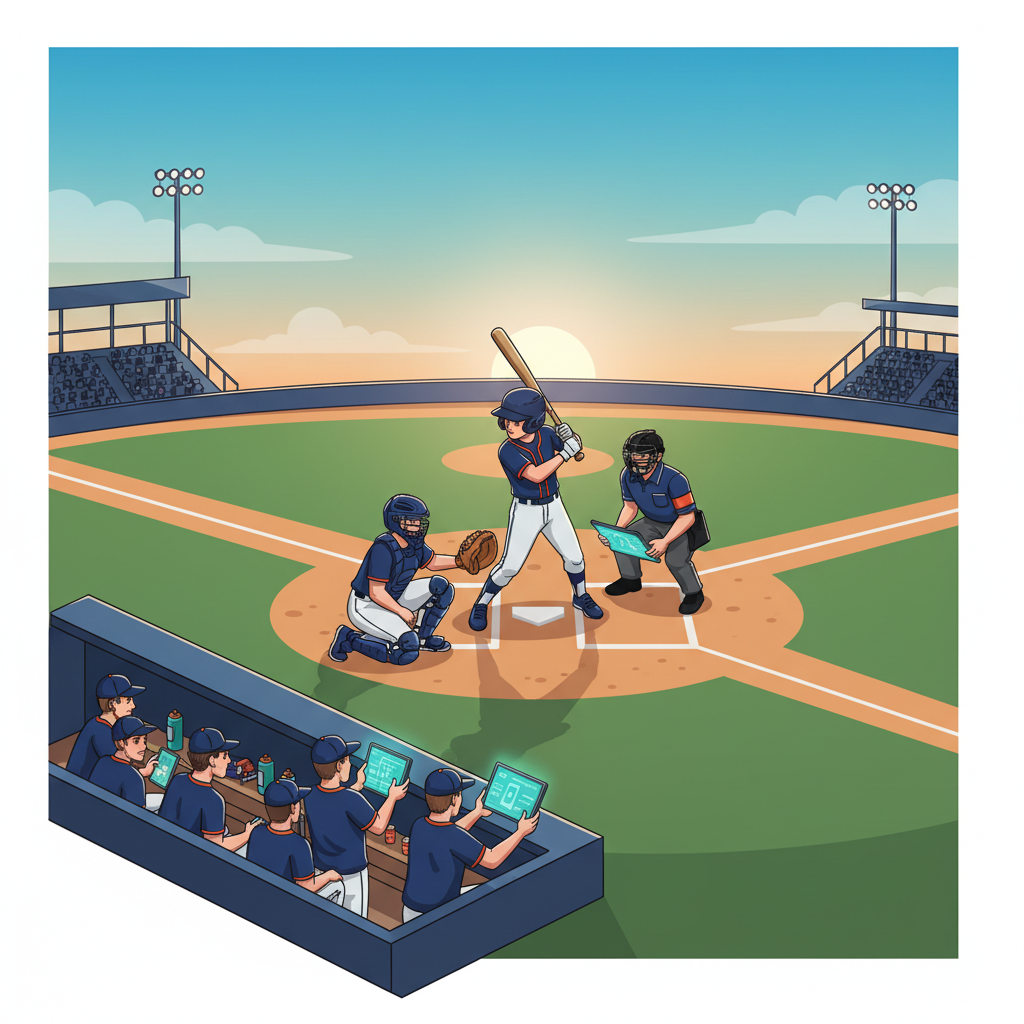
The game transforms at this age. Pitchers throw harder and with more movement. Catchers make throws to second base that actually arrive on time. Defensive positioning matters. The batting order becomes a genuine strategic tool rather than a fairness rotation.
If your league uses a 9-man lineup, you're choosing who starts and who sits for at-bats, which means lineup construction has both competitive and developmental consequences. For leagues still using continuous batting orders, the positional strategy below still applies to where you slot each hitter.
The 13U-14U Lineup Framework
| Position | What to Look For | Key Stat |
|---|---|---|
| 1 (Leadoff) | Gets on base. Sees pitches. Doesn't chase. Speed is a bonus, not a requirement. | OBP |
| 2 | Contact hitter who can move runners. Handles bat well; can hit to the right side, bunt if needed. | AVG, low K rate |
| 3 | Best overall hitter. Combines contact and power. | OPS |
| 4 (Cleanup) | Most power. Drives in runs. Can afford to strike out occasionally because he hits for distance. | SLG |
| 5 | Second-tier power hitter or a consistent contact hitter who's reliable with runners on. | OPS, RBI |
| 6 | Solid contact, developing power. A "tweener" who's growing into a middle-of-the-order role. | AVG |
| 7 | Developing hitter with one standout tool (speed, patience, or gap power). | OBP or SLG |
| 8 | Often your weakest overall hitter. In a 9-man lineup, this is the spot with the least pressure. | ✗ |
| 9 | Some coaches put a "second leadoff" here: a player who gets on base ahead of the lineup turning over. Others use it for their weakest hitter. Both approaches work. | OBP |
Data-Driven Lineup Decisions at 13U-14U
At 13U-14U, you have enough games (20-50 in travel ball) to make data-informed decisions. The stats that matter most for lineup construction:
OBP is the single most important stat for determining lineup position. A player with a .420 OBP belongs near the top of the order regardless of his batting average. Learn more about OBP.
OPS combines on-base ability with power. It's the best single number for "how productive is this hitter." Your highest-OPS players should hit 3-4-5. Learn more about OPS.
K-rate matters for contact spots (2-hole, 6-hole). A player who puts the ball in play 80% of the time is more valuable in run-scoring situations than a player who strikes out 40% of the time, even if the second player hits for more power.
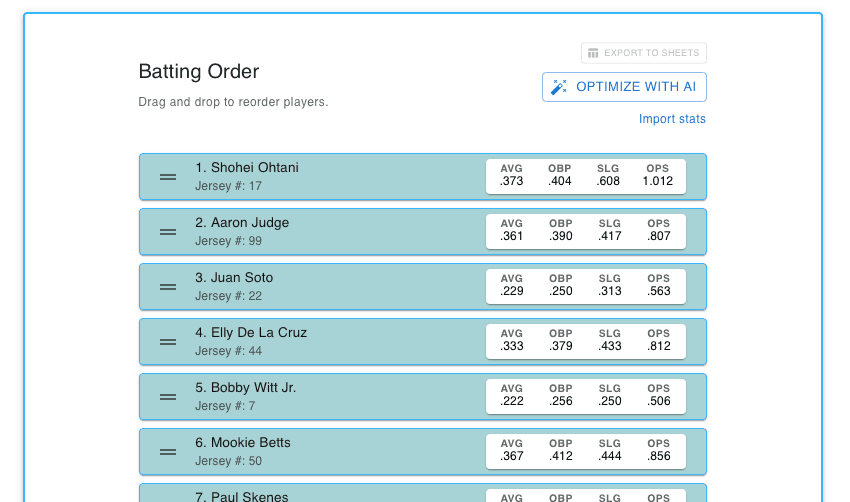
Rizzler's AI batting order reads your roster's stats and suggests an order you can adjust slot by slot. The more games you score, the bigger the sample the suggestions rest on. At 13U-14U, importing GameChanger data midseason gives the AI a strong foundation.
Platoon Considerations at 13U-14U
At this age, some players start showing splits: they hit differently against left-handed and right-handed pitchers. If you're tracking data in Rizzler, AI stats analysis helps you dig into the numbers to see whether real patterns are developing. It's not always worth adjusting the lineup for a matchup at 13U, but it's worth knowing, especially in tournament play.
Balancing Competition and Development
Even at 13U-14U, the kid hitting 9th today might be your 3-hole hitter by 15U if he's developing. Don't lock players into "bottom of the order" identities. Rotate the 7-8-9 spots. Give developing hitters occasional at-bats in the 5-6 hole to see how they respond to pressure, and watch their stats to see where they perform best.
Frequently Asked Questions
Should I use a traditional 9-man lineup or continuous batting at 13U-14U?
If your league allows both, travel teams generally benefit from a 9-man lineup for competitive games and a continuous order for pool play and regular season. The 9-man lineup lets you optimize; the continuous order develops the full roster.
How do I make a batting order with 12 players at 13U-14U?
In a 9-man lineup, three of your 12 players sit for at-bats each game, so rotate who starts and keep the 7-8-9 spots moving to protect development. If your league allows a continuous order, all 12 bat, and the framework above still applies to where you slot each hitter.
How much should I change the lineup game to game?
Your 1-5 hitters should be relatively stable (barring injury or a significant slump). Your 6-9 hitters should rotate more frequently to keep development on track. Adjust based on data, not gut feel.
When should I start using stats to build the lineup?
Now. At 13U-14U with 20+ games of data, stats are reliable enough to inform lineup decisions. OBP, OPS, and K-rate are the most useful. Track stats in Rizzler or import from GameChanger.
Does Rizzler's AI handle 9-man lineups?
Yes. Rizzler's AI batting order supports both 9-man and continuous batting orders. It builds the order from your roster's stats and the lineup format you choose, and you can edit any slot.
Ready to build your 13U-14U lineup with real data?
Managing lineups across a full travel program? Our team can help.
Talk to our team
Want to spend more time coaching and less time with paperwork? Let's talk.
Tell us about your team and we'll show you how to plan games, set lineups, run the schedule, and develop players in one place, so you spend the season coaching instead of chasing admin.
Less admin, more coaching
Plan games, set lineups, and track the season in one place
Keep every family in the loop automatically
Tell us about your program
4 fields · takes 30 seconds
Lands in the same inbox as the Help button · human response only
Read Next
Pitching Analytics: Track, Chart, and Develop Your Pitchers
FeaturesLearn: Youth Sports Coaching Guides
LearnGame Planning: Lineup, Fielding & Pitching in One View
FeaturesHow to Create a Baseball Lineup: Step by Step
LearnRizzler vs SportsEngine: Team Coaching vs League Platform
ComparisonLittle League Field Dimensions by Division
Rules