Learn
How to Run a Track and Field Tryout: A Coach's Step-by-Step Guide
To run a track and field tryout, you measure every athlete against event-specific time and mark standards (sprints, distance, hurdles, jumps, and throws), then place each athlete in the events where they score best. Many track programs are no-cut, so a "tryout" is usually an evaluation and event-placement day rather than a selection day: you are sorting athletes into the right events and setting qualifying standards to compete in meets. The hard part is rarely the stopwatch. It is organizing the whole event so the timing stays fair, the day runs on time, and you can defend every placement afterward, especially when you are moving hundreds of athletes through in a single afternoon. This guide walks through exactly how to conduct a track and field tryout from first planning to finalized event groups, whether you are a youth club placing athletes, a school program setting an event roster, or a large league putting 300 athletes in front of 15 to 20 coaches.
What Skills Should You Evaluate at a Track and Field Tryout?
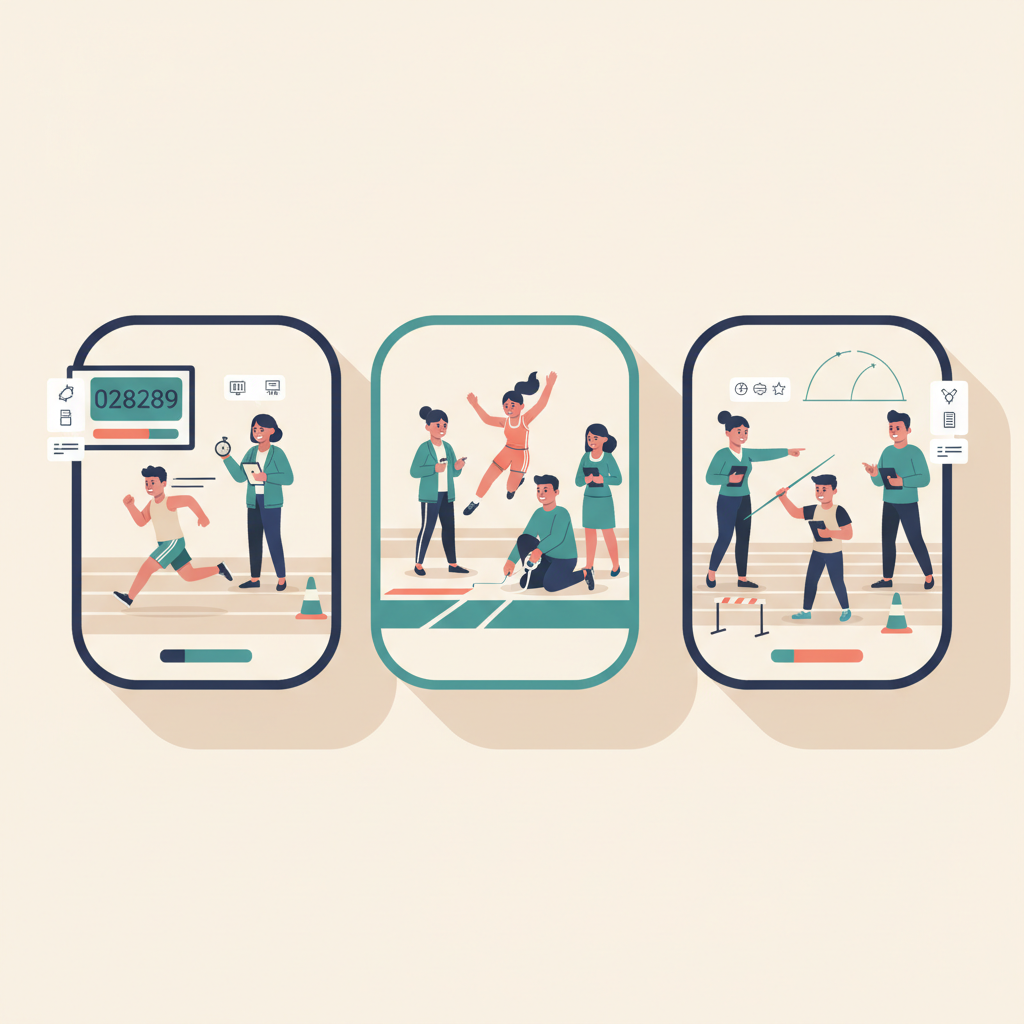
Evaluate track and field athletes by event group: sprints, middle distance and distance, hurdles, jumps, and throws. Unlike a team sport, the measure is mostly objective: a time on the clock or a mark on the tape. The job at the tryout is to time and measure athletes in a few events, then place them where their numbers are strongest. Most coaches add an intangibles category (hustle, coachability, and willingness to learn a new event) because raw athletes often grow into hurdles, jumps, or throws with coaching. A short, shared list of standards keeps a large evaluation panel consistent.
Here is what evaluators look for in each event group and how each is typically assessed at a tryout:
| Skill | What evaluators look for | How it's assessed |
|---|---|---|
| Sprints | Top-end speed, acceleration off the start, and form at speed | Timed 40, 60, or 100 meter against the event standard |
| Middle distance and distance | Sustained pace, aerobic endurance, and finishing strength | Timed 800 to 1600 meter run, or a one to one-and-a-half mile test |
| Hurdles | Speed combined with rhythm, lead-leg and trail-leg mechanics, and coordination over barriers | Timed hurdle reps after a short teaching block; tall, coordinated sprinters are often tried here |
| Jumps | Explosiveness, approach control, and takeoff (long jump, triple jump, high jump) | Measured jumps for distance or height after a few teaching reps |
| Throws | Power, technique, and a weight or strength base (shot put, discus, javelin) | A measured throws test and a strength test after a few days learning technique |
| Intangibles | Hustle, focus, attitude, and ability to learn a new event | Observed throughout; used to add or deduct points and to guide event placement |
The point of the day is placement, not elimination. Athletes should state their event interests but stay open to coach placement, because a tall coordinated sprinter may become your best hurdler and a strong athlete may become a thrower with a few days of teaching.
How Do You Score a Track and Field Tryout?
Score track and field with two tools together: objective times and marks against event standards, and a 1-to-5 rubric for the things a clock cannot capture (technique, trainability, and intangibles). The times and marks rank athletes within an event objectively, while the rubric helps you place raw athletes who have not yet learned an event. Publish the qualifying standards ahead of time so athletes know the mark they need to compete in each event.
In a no-cut program, standards usually act as a gate to compete in meets rather than to make the team: some programs keep athletes who finish within a set margin of the standard on a probationary basis until they hit the mark. Either way, lead with the numbers and use the rubric to fill in the picture.
Two rules make the evaluation trustworthy at scale. First, align your evaluators on how every event is timed and measured before the tryout, so a start is called the same way and a mark is read the same way by every coach on the track. With 15 to 20 evaluators running the same events, this calibration is what keeps results comparable. Second, record each time or mark immediately while it is fresh, and add a short note. "Great closing speed, weak start" tells you far more in a week than a bare time.
How to Set Up Track and Field Tryout Stations at Scale
Set up one station per event group and rotate small groups through them so the track stays busy and every athlete gets identical attempts. Use the track and field markings to define each station: a sprint timing lane, a distance start area, a hurdle lane, a jumps pit, and a throws ring or sector.
How you staff those stations depends on size. At a small tryout, one coach can run a whole event. At scale, with 300 athletes and 15 to 20 coaches, you do the opposite: put several evaluators at each station so a large group keeps moving, and have every coach time or measure the same attempts against the shared standards. Some programs run it in panels, splitting evaluators across stations, while others move all coaches to one station at a time so everyone times the same event together, which is common for the sprint and distance tests. Either way, the goal is multiple independent readings per athlete, which you average for a more reliable result than any single timer could give. Keep a staffed check-in table at the entrance so you always know who has arrived and who is still expected.
Track and Field Tryout Timeline: From Planning to Finalized Event Groups
Plan to start two to three weeks before tryout day, then move through registration, check-in, evaluation, review, and placement. Here is the full end-to-end checklist for hosting the event:
Two to three weeks before: Planning
- Lock the date, track, and rain plan; reserve the facility
- Decide event groups, roster size, and qualifying standards for each event
- Build (or reuse) your evaluation form with the event standards above
- Recruit and brief evaluators; align all 15 to 20 coaches on timing and measuring
- Open online registration so you have a confirmed athlete count
Registration
- Collect each athlete's name, age or grade, event interests, and contact info
- Assign every athlete a tryout number (bibs) so evaluators record by number, not by name, which keeps results objective even with hundreds of athletes
- Send a confirmation with arrival time, location, and what to bring
Tryout day: Check-in
- Check athletes in against your registration list and hand out numbers
- Group athletes by event interest and brief them on the station flow
Tryout day: Evaluation
- Run athletes through each event station; evaluators time and measure and add notes in real time
- Give a short teaching block before hurdles, jumps, and throws so raw athletes get a fair attempt
- For multi-day tryouts, repeat key events on day two so a single off-day doesn't sink an athlete
After the tryout: Review and decide
- Combine every evaluator's times and marks into one ranked list per event
- Discuss event placement as a staff, using notes and standards alongside the numbers
- Finalize event groups and meet roster
Placement: Confirm, communicate, and finalize
- Tell athletes their event group and any standard they still need to hit
- For no-cut programs, set probationary plans for athletes near the standard
- Send respectful, timely notice to athletes who weren't placed where they hoped
- Confirm final event groups and communicate next steps (practice schedule, fees)
Run Your Entire Track and Field Tryout with Rizzler Sports
A tryout at scale is a logistics problem before it is a track and field problem. Three hundred registrations, hundreds of check-ins, a stack of timing and measuring sheets for every coach, then the follow-up: confirming event placements, tracking who accepted, and managing standards by event. Rizzler Sports handles all of it in one place, which saves coaches and administrators hours of work per tryout. Athletes register online, coaches record times and marks on a phone or tablet at every station, results rank automatically, and you send and track placements without a single spreadsheet or group text.
Running a larger program, a full club, a travel organization, or a school district? We will set your tryout up end to end and show you how much staff time it saves.
Talk to our team
Running a tryout at scale? Let's talk.
Tell us about your club, league, or school and we'll come back to you within one business day with a walkthrough of how much staff time Rizzler Sports saves by running your tryout end to end: registration, check-in, evaluations, invites, and offers in one place.
Cut tryout admin from days to minutes
Online registration and check-in for hundreds of players
Evaluate, rank, invite, and track offers in one place
Tell us about your program
6 fields · takes 60 seconds
Lands in the same inbox as the Help button · human response only
Frequently Asked Questions
Does track and field have tryouts or cuts?
Many track programs are no-cut, so the day is really an evaluation and event-placement session rather than a selection one. You time and measure athletes, place them in the events where they score best, and use qualifying standards as a gate to compete in meets. Some programs keep athletes near the standard on a probationary basis until they hit the mark.
How long should a track and field tryout be?
Most track and field tryouts run two to three hours, or two sessions across two days for larger programs, because you are timing and measuring multiple events. Build in time for check-in and warm-up before the clock starts.
How do you staff coaches at a large track tryout?
At scale, do not assign one coach per event. With 300 athletes and 15 to 20 coaches, put multiple evaluators at each station, or move all coaches through one event at a time, and have everyone time and measure the same attempts against shared standards. Averaging several independent readings per athlete is more reliable, and far faster, than a single timer working through hundreds of athletes.
What should athletes bring to a track tryout?
Running shoes or spikes, athletic clothing, water, and any event-specific gear they own. Tell athletes to arrive early enough to check in and warm up before timing begins, and to be open to trying events the coaches suggest.
Should athletes pick their own events?
They should state their interests, but stay open to coach placement. A tall, coordinated sprinter may become your best hurdler, and a strong athlete may become a thrower with a few days of teaching. Use the times and marks to guide athletes toward the events where their numbers are strongest.
Read Next
Pitching Stats: Every Mound Stat Explained for Coaches
StatsPlaying Time Fairness Across Your Little League
For LeaguesLittle League Catcher-to-Pitcher Rule — What Coaches Need to Know
RulesHow to Run a Wrestling Tryout: A Coach's Step-by-Step Guide
LearnRizzler Plans & Pricing — Free vs Pro vs League & Club
ComparisonDoes Rizzler Work on Android?
FAQ