
Learn
How to Run a Swim Team Tryout
To run a swim team tryout, you evaluate every swimmer on stroke technique and time standards across the four competitive strokes (freestyle, backstroke, breaststroke, and butterfly), plus starts, turns, and endurance, then use those results to place swimmers in the right training group. The measure in swimming is largely objective: a legal stroke and a time on the clock. The hard part is rarely the stopwatch. It is organizing the whole event so the timing stays fair, the deck runs on time, and you can defend every placement afterward, especially when you are moving hundreds of swimmers through a single session. This guide walks through exactly how to conduct a swim team tryout from first planning to final offers, whether you are a club running placement evaluations, a competitive team selecting a roster, or a large program moving several hundred swimmers past a couple dozen coaches in a single session.

What Skills Should You Evaluate at a Swim Team Tryout?
Evaluate swimmers on the four competitive strokes plus the connecting skills: freestyle, backstroke, breaststroke, butterfly, then starts, turns, and endurance. Each stroke is judged two ways at once: a legal, technically sound stroke (especially the tricky breaststroke kick) and a time against the standard for the swimmer's age and distance. Most coaches add an intangibles category (coachability, focus, and willingness to learn) because younger swimmers refine timing and technique with practice. A short, shared set of standards keeps a large evaluation panel consistent.
Here is what evaluators look for in each area and how each is typically assessed at a tryout:
| Skill | What evaluators look for | How it's assessed |
|---|---|---|
| Freestyle | Body position, rotation, steady kick, and bilateral breathing; held across a full length | Timed swim of one or more lengths against the age-group standard |
| Backstroke | Flat body line, steady kick, straight-arm recovery, and consistent stroke count | Timed length watching for a legal, balanced stroke |
| Breaststroke | A legal or near-legal kick (the hardest stroke for beginners), with pull-kick-glide timing | Timed length; coaches flag illegal kicks for development rather than cutting |
| Butterfly | Two-beat dolphin kick, simultaneous arm recovery, and rhythm over a short distance | Timed short swim; even a partial legal fly is informative for older groups |
| Starts and turns | Legal start off the block or wall, streamline off the wall, and quick legal turns | Observed during the timed swims and a few dedicated reps |
| Endurance | Stamina across multiple lengths and recovery between efforts | A typical practice set (warm-up laps plus a main set) over about an hour |
| Intangibles | Coachability, focus, attitude, and willingness to learn | Observed throughout; used to adjust placement and overall score |
The session usually mimics a real practice: swimmers warm up with a few laps, then complete a typical set so coaches can judge endurance and technique under fatigue, not just a single fast length. Younger swimmers are often asked to show at least two legal strokes; experienced swimmers are judged on technique plus speed and endurance.
How Do You Score a Swim Team Tryout?
Score swimming with two tools together: objective times against age-group standards, and a 1-to-10 technique rubric per stroke for what the clock cannot capture (legality, body position, and efficiency). The times rank swimmers within a stroke and distance objectively, while the rubric flags swimmers whose times are slow today but whose technique will get fast with coaching. Publish the time standards by stroke, distance, and age group ahead of time so families know the targets.
Placement, not just ranking, is the goal: use the combined picture to sort swimmers into the right training group so each swims with peers at a similar level. A swimmer with a strong freestyle but an illegal breaststroke kick is a development plan, not an automatic cut.
Two rules make the evaluation trustworthy at scale. First, align your evaluators on how every stroke is judged and timed before the tryout, so a legal breaststroke kick and a clean turn mean the same thing to every coach on the deck. With a couple dozen evaluators watching the same swimmers, this calibration is what keeps results comparable. Second, record each time and technique note on your tryout evaluation form immediately while it is fresh. "Fast free, breaststroke kick needs work" tells you far more in a week than a bare time.
How to Set Up Swim Team Tryout Stations at Scale
Set up the tryout by stroke and skill and rotate small groups of swimmers through the lanes so the pool stays busy and every swimmer gets identical efforts. Assign lanes to each stroke, a lane or two for starts and turns, and a set of lanes for the endurance main set, with evaluators stationed along the deck.
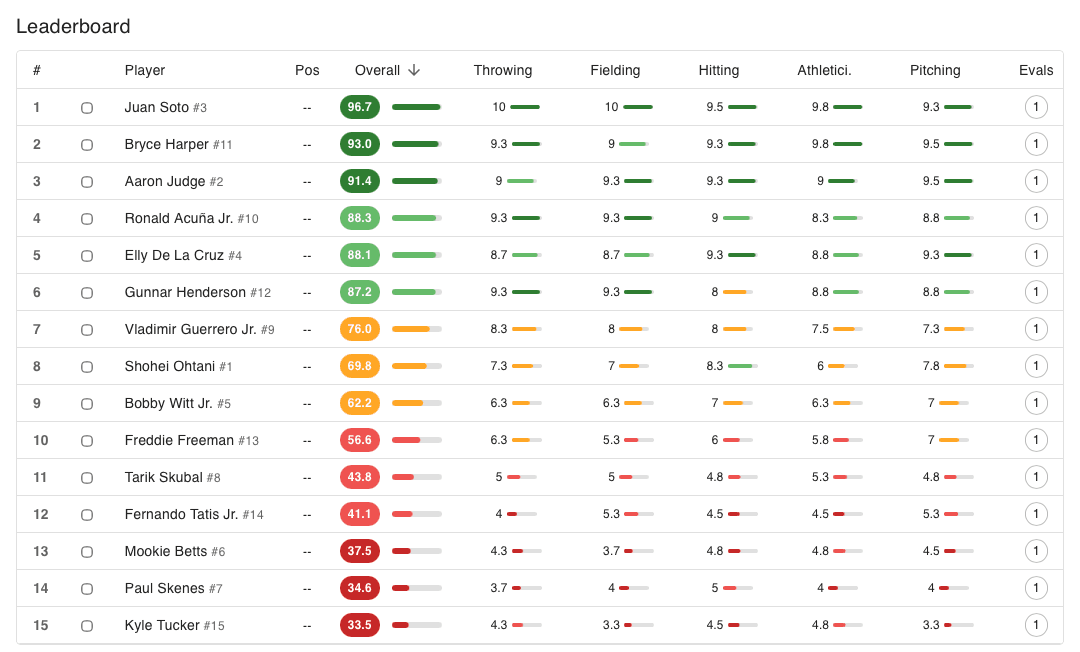
How you staff those lanes depends on size. At a small tryout, one coach can time and judge a whole stroke. Once a few hundred swimmers are moving through the heats in front of fifteen or twenty coaches, you do the opposite: put several evaluators along each lane group so a large group keeps moving, and have every coach time and grade the same swim against the shared standards. Some programs run it in panels, splitting evaluators across strokes, while others move all coaches to one stroke at a time so everyone times the same swim together, which is common for the timed freestyle. Either way, the goal is multiple independent readings per swimmer, which you average for a more reliable result than any single timer could give. Keep a staffed check-in table at the pool entrance so you always know who has arrived and who is still expected.
Swim Team Tryout Timeline: From Planning to Finalized Groups
Plan to start two to three weeks before tryout day, then move through registration, check-in, evaluation, review, and offers. The youth sports seasons calendar shows how short course and long course seasons frame the usual tryout window. Here is the full end-to-end checklist for hosting the event:
Two to three weeks before: Planning
- Lock the date and pool time; reserve the lanes and lifeguards
- Decide training groups, roster sizes, and time standards by stroke and age
- Build (or reuse) your evaluation form with the strokes and standards above
- Recruit and brief evaluators; get every coach aligned on timing and technique grading
- Open online registration so you have a confirmed swimmer count
Registration
- Collect each swimmer's name, age, current strokes, and contact info
- Assign every swimmer a tryout number (cap labels or bibs) so evaluators record by number, not by name, which keeps results objective even with hundreds of swimmers
- Send a confirmation with arrival time, location, and what to bring
Tryout day: Check-in
- Check swimmers in against your registration list and hand out numbers
- Group swimmers by age or level and brief them on the lane flow
Tryout day: Evaluation
- Run swimmers through each stroke; evaluators time and grade technique and add notes in real time
- Run a typical practice set so you see endurance and technique under fatigue
- For multi-day tryouts, repeat key strokes on day two so a single off-day doesn't sink a swimmer
After the tryout: Review and decide
- Combine every evaluator's times and grades into one ranked list per stroke and age
- Discuss bubble swimmers as a staff, using technique notes alongside the times
- Finalize training groups and roster
Offers: Accept, decline, and finalize
- Extend offers and group placements with a clear accept-by deadline
- Track accepts and declines, and go to your next-best swimmer when a spot opens
- Send respectful, timely notice to swimmers who weren't selected
- Confirm final groups and communicate next steps (practice schedule, fees)
Run Your Entire Swim Team Tryout with Rizzler Sports
A tryout at scale is a logistics problem before it is a swimming problem. Hundreds of registrations, check-ins backing up the pool deck, a stack of timing and technique sheets for every coach, then the follow-up: inviting selected swimmers, tracking who accepted, and back-filling spots as swimmers decline. Rizzler Sports handles all of it in one place, which saves coaches and administrators hours of work per tryout. Swimmers register online, coaches record times and technique grades as player evaluations on a phone or tablet on the deck, results rank automatically, and you send and track offers without a single spreadsheet or group text. The structured Team Tryouts workflow is part of Rizzler's Club plan, built for clubs and teams evaluating up to 300 swimmers.
None of that tooling is sport-specific. Registration, check-in, and multi-evaluator scoring run the same way on the pool deck as they do for any other sport, and they keep working after the tryout ends: skill assessments give you a season-long record of each swimmer's development, and surveys and goal setting turn tryout results into individual targets once rosters are set.
Running a larger program, a full club, a competitive team, or a school district? We will set your tryout up end to end and show you how much staff time it saves.
Talk to our team
Running a tryout at scale? Let's talk.
Tell us about your club, league, or school and we'll come back within one business day with a walkthrough of registration, check-in, evaluations, invites, and offers in one place.
Cut tryout admin from days to minutes
Online registration and check-in for hundreds of players
Evaluate, rank, invite, and track offers in one place
Tell us about your program
4 fields · takes 30 seconds
Lands in the same inbox as the Help button · human response only
Frequently Asked Questions
How long should a swim team tryout be?
Most swim team tryouts run about an hour and mimic a typical practice: a warm-up of a few laps followed by a main set, so coaches can judge endurance and technique under fatigue. Larger programs may run several sessions across a day or two. Build in time for check-in before swimmers get in the water.
How do you staff coaches at a large swim tryout?
At a big tryout, don't put one coach on a whole stroke. With hundreds of swimmers and a staff of twenty or so, put multiple evaluators along each lane group, or move all coaches to one stroke at a time, and have everyone time and grade the same swim against shared standards. Averaging several independent readings per swimmer is more reliable, and far faster, than a single timer working through the whole deck.
What should swimmers bring to a tryout?
Swimsuit, cap, goggles, a towel, and water. Tell swimmers to arrive early enough to check in and warm up before the timed swims begin, and reassure newer swimmers that perfect technique is not expected on day one.
How many strokes should a swimmer be able to do?
Younger swimmers are often asked to show at least two legal strokes and to swim a full length without stopping. Experienced swimmers are evaluated across all four strokes plus speed and endurance. A near-legal breaststroke kick is common and is treated as a development item, not an automatic cut.
Do you cut swimmers or just place them?
Many programs place rather than cut: you sort swimmers into training groups by stroke ability, times, and endurance so each swims with peers at a similar level. Competitive teams with limited spots do select a roster, in which case you rank by time standards and technique and extend offers to the top swimmers.
Setting up a swim team tryout this season? Run the whole event with Rizzler Sports team tryouts, from online registration and check-in through multi-evaluator scoring, offers, and final rosters.
Read Next
Baseball Practice Plans: 8U, 12U, 14U, and High School Sessions
LearnStrikeouts (K): Batting Stat Definition & Youth Context
StatsHow to Build and Manage a Football Roster
BlogBest Free Baseball Lineup Generators in 2026
LearnSoftball Practice Plan Template: Free Printable PDF and Excel
LearnLittle League Pitching Rules: Complete Guide for Coaches
Rules