
Learn
How to Build a Batting Order for 9U-10U Baseball
At 9U-10U, most leagues still use a continuous batting order, but kid pitch becomes standard, skill gaps start to widen, and strategic lineup thinking begins to matter. The batting order at this age should balance development fairness with putting your team in a position to compete, leaning heavily toward fairness in rec leagues and slightly toward competition in travel.
What Changes at 9U-10U
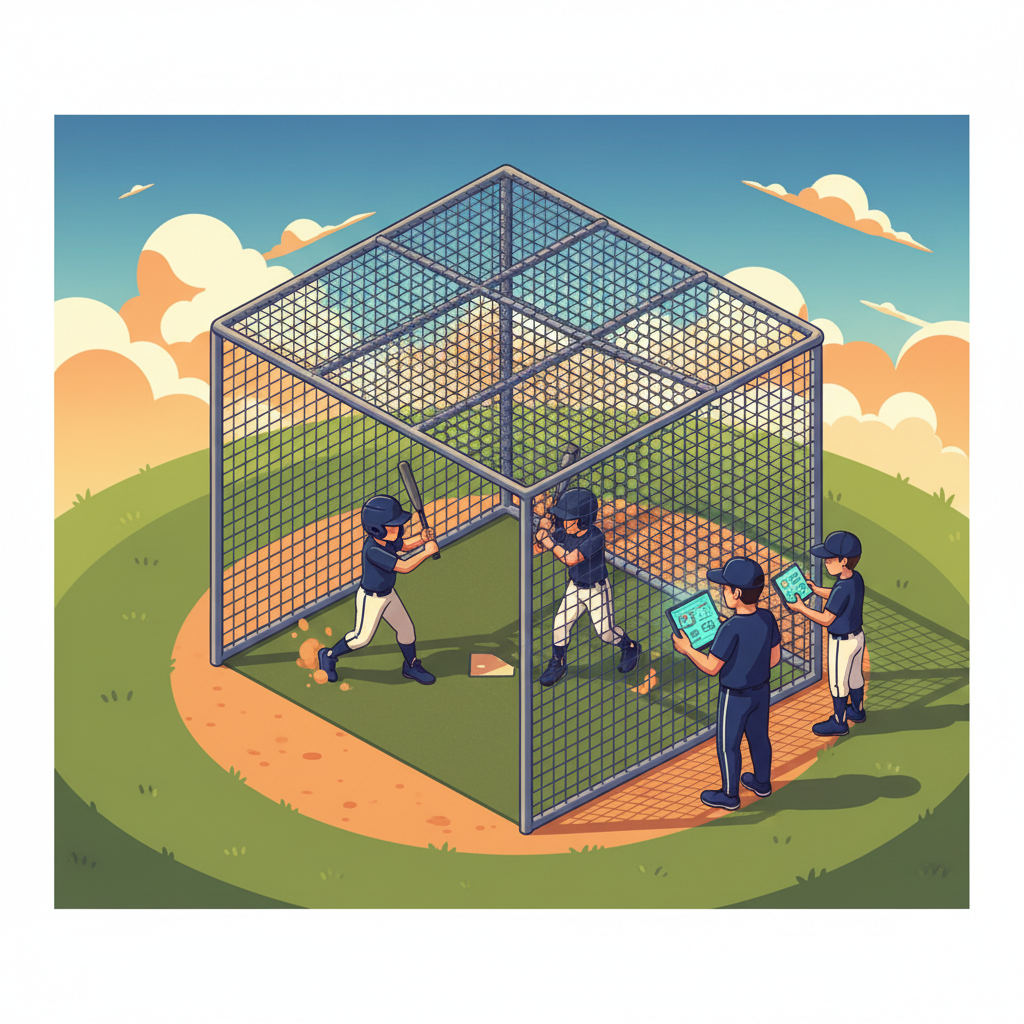
At this age, kid pitch is real. Pitchers throw strikes inconsistently, walks are frequent, and stolen bases are easy. The batting order starts mattering more because the top of the lineup sees more at-bats in walk-heavy games, and contact hitters who put the ball in play are genuinely more productive than kids who strike out.
The skill gap also widens. Your best 10-year-old might be hitting line drives while your least experienced kid is still working on making contact. The batting order needs to account for both, giving developing players at-bats in meaningful spots while setting up your team to score.
9U-10U Lineup Strategy
Leadoff (1st): A player who makes contact and gets on base. At 9U-10U, walks count as getting on base, and patience at the plate is a real skill. Put a kid here who sees a lot of pitches and doesn't chase bad ones.
2-3 spots: Your best overall hitters. Contact ability matters more than power at this age. These are the kids who hit the ball hard and put it in play consistently.
4-5 spots: Developing hitters who have some pop but might be streaky. In a continuous batting order, these spots still get plenty of at-bats.
Middle of the order (6-8): Mix stronger and developing hitters. Don't cluster all your weaker hitters together. Alternate so there's always an experienced hitter coming up soon.
Bottom of the order (9-12+): Your developing players. Rotate these spots game to game so no kid is always last. At 9U-10U, every kid in the continuous order gets 2-3 at-bats per game, so make sure those at-bats feel meaningful.
Rec League vs. Travel Ball at 9U-10U
Rec league: Rotate the order frequently. Give every kid a turn in the top third of the lineup across the season. Focus on development and experience. Winning is nice but secondary to making sure every kid improves and has fun.
Travel ball: More lineup optimization is appropriate, but still keep development in mind. Your 9-year-old who bats 10th today might be your 3-hole hitter at 11U if he gets enough quality at-bats now. Don't sacrifice his development for one extra run in a pool play game.
Using Data to Build Your 9U-10U Lineup
By 9U-10U, tracking basic stats starts to be useful. On-base percentage tells you who's getting on base, which matters more than batting average at this age because walks are so common. Strikeout rate tells you who's making contact versus who's swinging and missing.
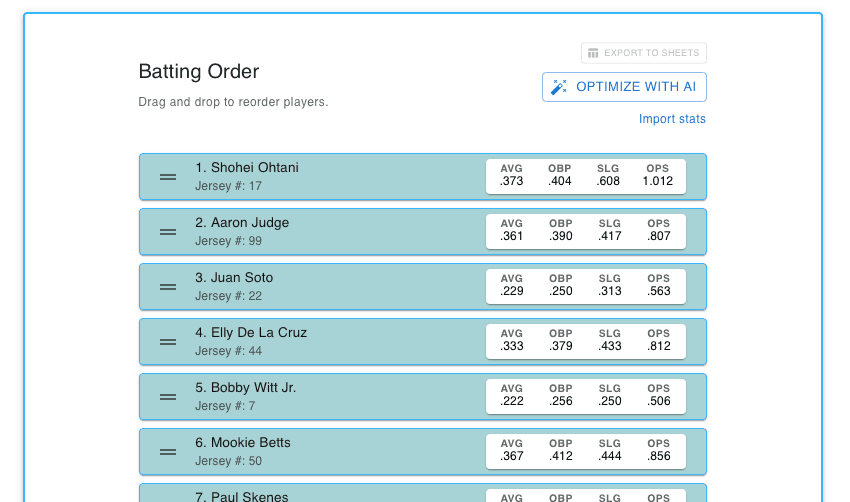
Rizzler's AI batting order reads your roster and these stats to suggest an order you can edit, with high-OBP hitters near the top. It's a tool, not a mandate. You decide whether to follow the suggestion or adjust based on what you know about your kids, and at 9U-10U the fairness rotation stays in your hands: move players through different spots game to game.
Common 9U-10U Lineup Mistakes
Using the same order every game. Even if you have a "best" lineup, rotating positions keeps kids engaged and developing. The kid who always bats leadoff learns leadoff skills. The kid who always bats 11th doesn't.
Over-indexing on batting average. At 9U-10U, a kid who walks three times is more productive than a kid who gets one hit and strikes out twice. Use OBP, not just AVG.
Ignoring the emotional impact. A 9-year-old knows when he's batting last every game. That message shapes his relationship with baseball more than any coaching instruction.
Frequently Asked Questions
Should I use a set lineup or rotate at 9U-10U?
Rotate, but with some structure. Keep your best contact hitters in the top third most games, rotate the leadoff spot occasionally, and make sure developing hitters get regular time in the top half of the order.
When should I start optimizing the batting order?
Light optimization is appropriate at 10U for travel ball. For rec leagues, focus on fairness and rotation through 10U and start optimizing more at 11U-12U.
How do I make a batting order with 12 players at 9U-10U?
Use the continuous order most 9U-10U leagues require: all 12 players bat. Put your patient contact hitter at leadoff, your best two hitters in the 2-3 spots, then alternate stronger and developing hitters through the rest of the order so there's never a long stretch of struggling bats. Rotate the bottom spots game to game.
What does 10U mean in baseball?
10U means "10 and under": every player on the roster is league age 10 or younger. Most leagues set league age by a cutoff date, so a player's league age can differ from their actual age on game day. Check your league's age chart.
How many at-bats does each player get at 9U-10U?
In a continuous batting order with 12 players and a typical 5-6 inning game, each player gets 2-3 at-bats. High-walk games mean the lineup turns over more, giving top-of-the-order hitters an extra at-bat.
Can Rizzler handle continuous batting orders for 10U?
Yes. Rizzler's game planning supports continuous batting orders. The free lineup generator builds single-game lineups, and the AI batting order suggests a stats-based order for each game that you can adjust before saving.
Ready to build smarter 9U-10U lineups?
Coordinating lineups across a whole league or club? Our team can help.
Talk to our team
Want to spend more time coaching and less time with paperwork? Let's talk.
Tell us about your team and we'll show you how to plan games, set lineups, run the schedule, and develop players in one place, so you spend the season coaching instead of chasing admin.
Less admin, more coaching
Plan games, set lineups, and track the season in one place
Keep every family in the loop automatically
Tell us about your program
4 fields · takes 30 seconds
Lands in the same inbox as the Help button · human response only
Read Next
Outside Hitter in Volleyball: Role, Skills, and Development
VolleyballBabe Ruth & Cal Ripken Age Chart 2026
RulesOn-Base Percentage (OBP): Definition, Formula & Youth Benchmarks
StatsPlanning Back-to-Back Baseball Games
BlogBaseball Practice Plans: 8U, 12U, 14U, and High School Sessions
LearnVolleyball Serve Receive: Patterns by Rotation and System
Volleyball