
Learn
How to Coach Youth Basketball: A Practical First-Season Guide
Coaching youth basketball well means resisting one temptation: coaching to win eleven-year-old basketball games. The tactics that win at 11, a full-court press against kids who cannot yet dribble under pressure, one play that isolates your best athlete, produce teams that stall at 14 when everyone can handle the ball. The coaches worth playing for teach skills first, concepts second, and set plays barely at all, and they accept some ugly Decembers as the price of good springs.
That is the philosophy. Here is the practice: what kids can learn at each age, how to run a session that keeps twelve kids moving with two baskets, a full worked 60-minute practice plan, and the game-day and admin systems that make the season manageable for a volunteer coach.
What should you teach at each age?
USA Basketball's youth guidelines and the best development programs converge on the same staircase:
| Age | What to coach | What to skip |
|---|---|---|
| 7 to 9 | Ball-handling with both hands, correct shooting form on a low hoop (8.5 to 9 feet), pivoting, athletic footwork. | Zone defense, presses, set plays. All of it. |
| 10 to 11 | Layups with either hand, passing under pressure, 1v1 moves, man-to-man defensive stance and positioning, spacing ("if your teammate drives, move"). | Zone defense (many leagues ban it here anyway), complex offenses. |
| 12 to 13 | Reading screens, help defense and rotations, transition decisions, free throws with routine. | Play calls for every possession; teach reads instead. |
| 14+ | Team concepts in full: ball-screen offense, defensive schemes, situational endgame. | Nothing, but skills still get half of practice. |
The thread through every age: skills in the morning of a player's development, tactics in the afternoon. A 10U team that can dribble, pass, and make layups with both hands beats a 10U team that knows three plays, and more importantly, it is still improving at 14.
Shooting form deserves special mention because it is where well-meaning coaches do lasting damage. A seven-year-old heaving at a 10-foot rim learns a two-handed shot-put that takes years to unlearn. Lower the hoop, use smaller balls (27.5 inches up to age 9, 28.5 for 10 to 13), and protect form over range.
How should you structure a practice?
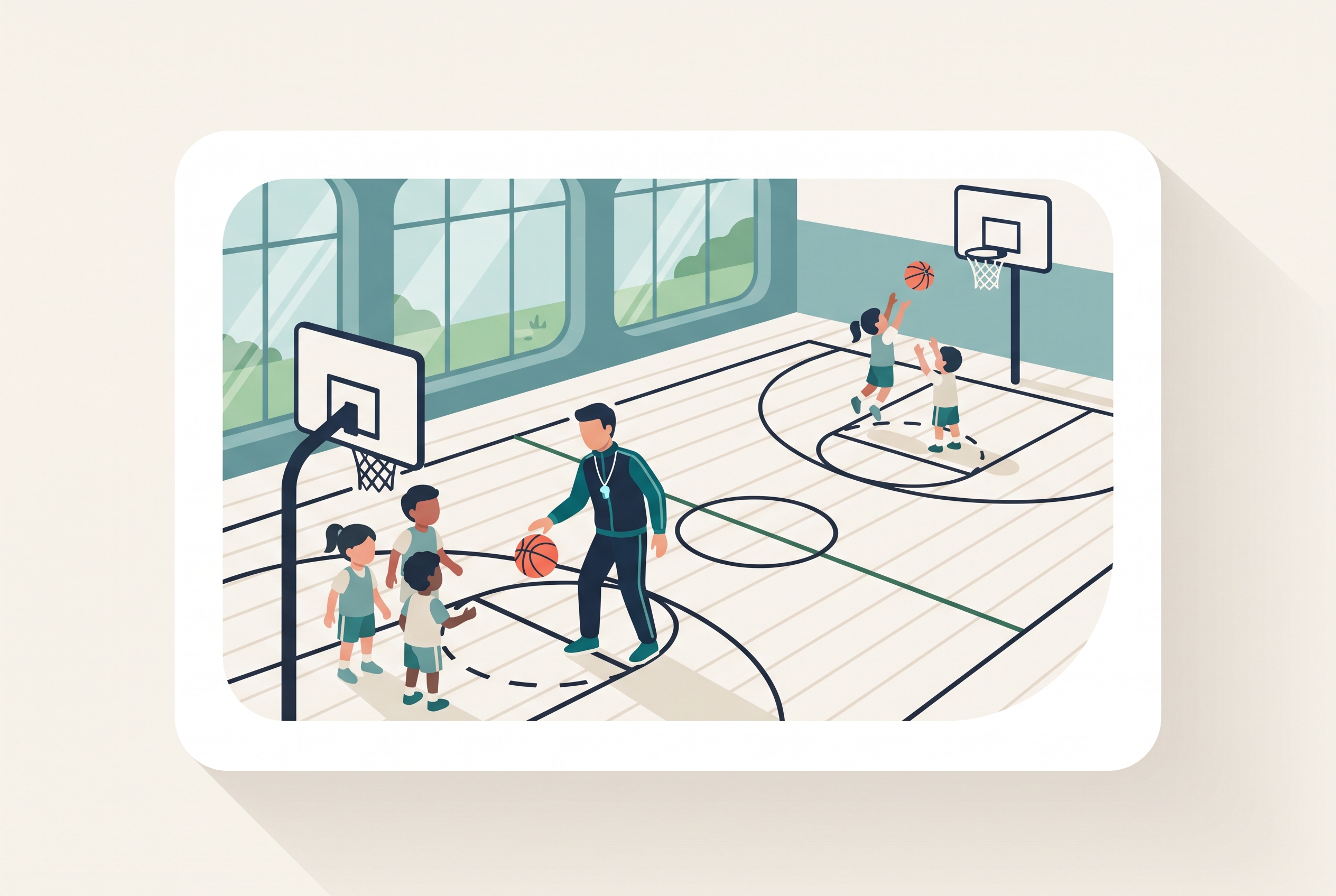
Small groups, both baskets, short segments. The enemy of youth basketball practice is the line of ten kids waiting for a layup, so design every drill for groups of three to six and run two activities simultaneously at the two ends of the court. Ten-minute segments, a loud transition, and constant scorekeeping ("this group's record is 14 makes, beat it") keep energy up for a full hour.
Non-negotiables for every session:
- Every kid, a ball, immediately. Arrival activity is two-ball dribbling or form shooting close to the rim, starting the second they walk in.
- One theme per practice. Tonight is passing under pressure. Warm-up, drills, and the closing scrimmage all point at it.
- Half of every practice is playing. Small-sided games, 1v1, 2v2, 3v3, teach decisions no drill can. 3v3 in particular forces spacing, cutting, and help defense automatically.
- Teach in ten-second bursts. Freeze the game, make one point, resume. Save anything longer for water breaks.
- End with something they will talk about in the car. A half-court buzzer-beater contest costs three minutes and buys next week's enthusiasm.
A worked 60-minute practice plan (ages 9 to 11)
Theme: passing and moving without the ball. Roster of ten, one coach plus one parent helper, two baskets, a ball per kid. Steal it as-is.
| Time | Segment | Detail |
|---|---|---|
| 0 to 8 min | Arrival: form shooting ladder | Kids shoot from three spots close to the rim, one point per make with good form (coach judges form, not just makes). Late arrivals join silently. |
| 8 to 18 min | Two-basket skill split | Basket 1: partner passing on the move, chest and bounce, down and back. Basket 2: two-ball stationary dribbling. Swap groups at 13 minutes. |
| 18 to 28 min | 3-man weave, then weave-to-layup | Groups of three, half-court weave focusing on leading the receiver. Last two minutes: full-court weave finishing with a layup, count team makes aloud. |
| 28 to 32 min | Water + one question | "When you pass, what do you do next?" Answer: cut or space, never stand. Let the kids say it. |
| 32 to 44 min | 3v3 cutthroat, both baskets | Score only counts if every player touched the ball. Make-it-take-it, losing trio rotates off. This rule quietly forces the theme better than any speech. |
| 44 to 54 min | 5v5 scrimmage with one constraint | Constraint: after every pass, the passer must cut or screen. Freeze the game at most twice for ten-second points. |
| 54 to 60 min | Free-throw pressure + closer | Each kid shoots two free throws with the team watching, then the half-court shot contest. Huddle, name one specific improvement, cheer. |
Line-standing time: close to zero. Every kid touched the ball several hundred times and played real basketball for over twenty minutes.
For two more complete 60-minute sessions, one for grades 3-6 and one for grades K-2, see the youth basketball practice plans; each opens in the free basketball practice planner, where you can change the length, swap a block, and print the coach sheet without an account.
What about offense and defense for kids?
Teach a framework, not plays. On offense, five concepts cover youth basketball completely: spacing (arm's length rule: if you can touch your teammate, move), pass-and-cut, drive-and-kick, crash or get back on a shot, and "strong side scores, weak side rebounds." A team that executes those concepts looks coached without a single play call, and every concept transfers to any team they ever play for.
On defense, man-to-man, always, at every youth age. Zones win youth games by exploiting weak outside shooting and teach nothing; man-to-man teaches stance, effort, help, and accountability. Many youth leagues restrict zones for exactly this reason. One rule to install early: see your man and see the ball, pointing at both. That single habit is 80 percent of youth team defense.
The admin system that keeps a volunteer coach sane
Basketball season compresses everything: two games a week in many leagues, gym-time changes, holiday tournaments, and a group chat that never sleeps. The coaches who last set up the logistics once instead of re-solving them weekly.
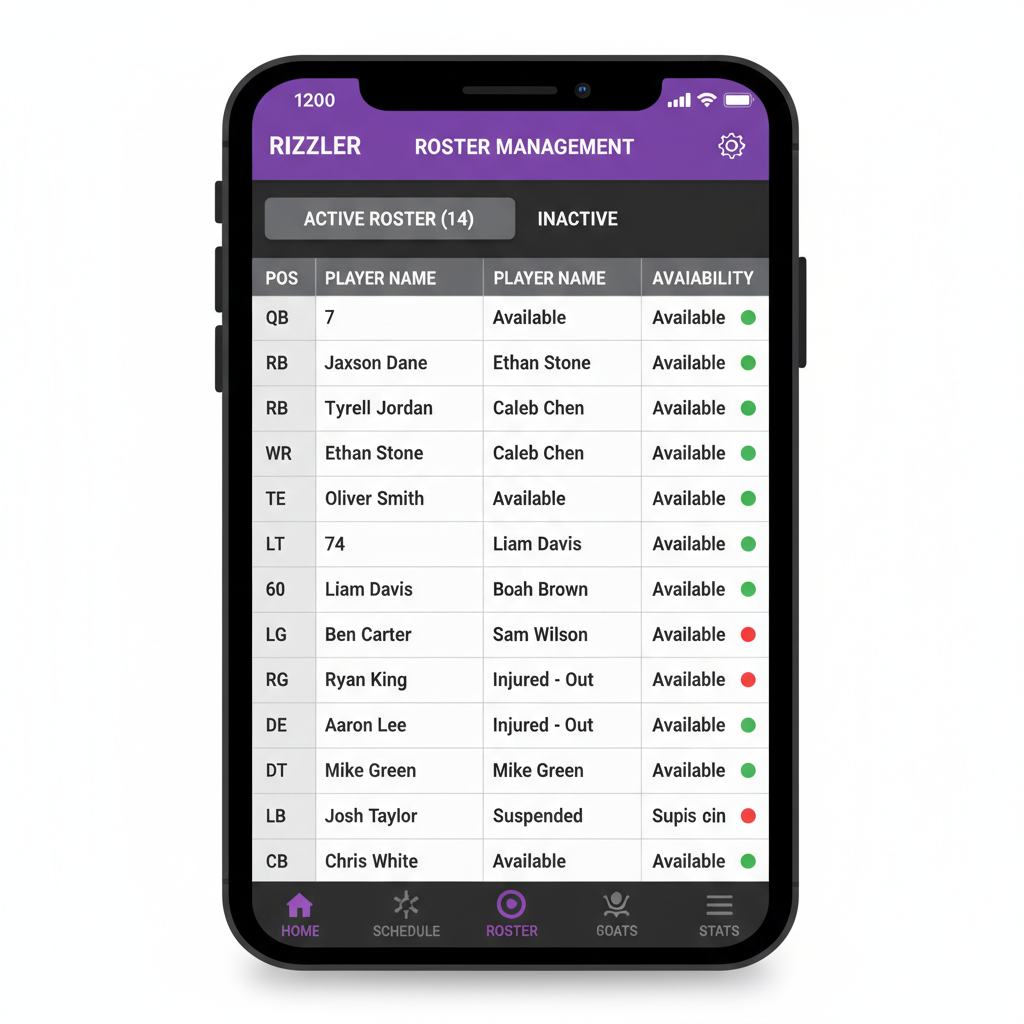
The baseline: one roster with every family's contact info, the season schedule synced to parents' phone calendars, and RSVPs on every practice and game so Thursday's headcount is visible before Saturday's tip. That whole core is free in Rizzler for any sport, and turning it on takes an evening; our team organization guide walks through it. When winter gym reshuffles hit, Coach and Club teams get email and SMS notifications out to every family automatically, which is the difference between a schedule change and a schedule crisis.
As your team gets more serious, two Coach and Club tools carry the development story. Structured player evaluations let you and your assistant score the same skills the same way, preseason and midseason, and skill reports share each player's progress with their family, so the "what should my kid work on" conversation comes with evidence. And Rizzler Reps, included for your athletes on those plans, has a live basketball drill library: assign the ball-handling work, and the app gives kids daily targets, streaks, and a leaderboard instead of a forgotten handout. If your program holds tryouts, the same evaluation engine runs those too.
One more thing worth an hour before the season: write a three-sentence coaching philosophy covering playing time, development versus winning, and what parents can expect, and send it with the schedule. Week-one clarity prevents week-eight conflict. Keep your practice plans in a reusable template and the weekly prep drops to fifteen minutes.
Frequently Asked Questions
What should I teach first in youth basketball?
Ball-handling and shooting form on a lowered hoop, in that order. Both-hands dribbling opens up everything else in the game, and correct form learned close to the rim beats range every time at ages 7 to 11. Defense starts with man-to-man stance and the "see your man, see the ball" habit. Set plays should wait years.
How long should a youth basketball practice be?
Sixty minutes for ages 7 to 11, up to 90 minutes for 12 and older. Break it into segments of about ten minutes, run activities at both baskets so groups stay small, and spend at least half the time playing small-sided games. One focused hour beats two hours with lines.
Should youth basketball teams play zone defense?
No. Man-to-man teaches stance, effort, and help principles that transfer to every level, while zones win youth games mainly by punishing weak outside shooting and teach players little. Many youth leagues restrict zone defense below 12U for exactly this reason. Play man, accept a few more points against, and bank the development.
How do I handle playing time in youth basketball?
Decide your policy before the season, put it in writing, and share it with parents at kickoff. At rec level, equal minutes planned in substitution blocks before each game; at competitive level, meaningful minutes for everyone with roles explained privately and honestly. Tracking minutes rather than trusting memory keeps the policy honest and gives you the record when a parent asks.
What size basketball and hoop height should young kids use?
Ages 7 to 9: a 27.5-inch ball on an 8- to 9-foot hoop. Ages 10 to 13: a 28.5-inch ball, moving toward a 10-foot hoop around 12. Full-size balls and rims too early corrupt shooting form, which is the hardest thing in basketball to fix later.
Ready to run a season where the admin is handled and the coaching gets your energy?
Running a basketball program with multiple teams and volunteer coaches? Our team can help.
Talk to our team
Want to spend more time coaching and less time with paperwork? Let's talk.
Tell us about your team and we'll show you how to plan games, set lineups, run the schedule, and develop players in one place, so you spend the season coaching instead of chasing admin.
Less admin, more coaching
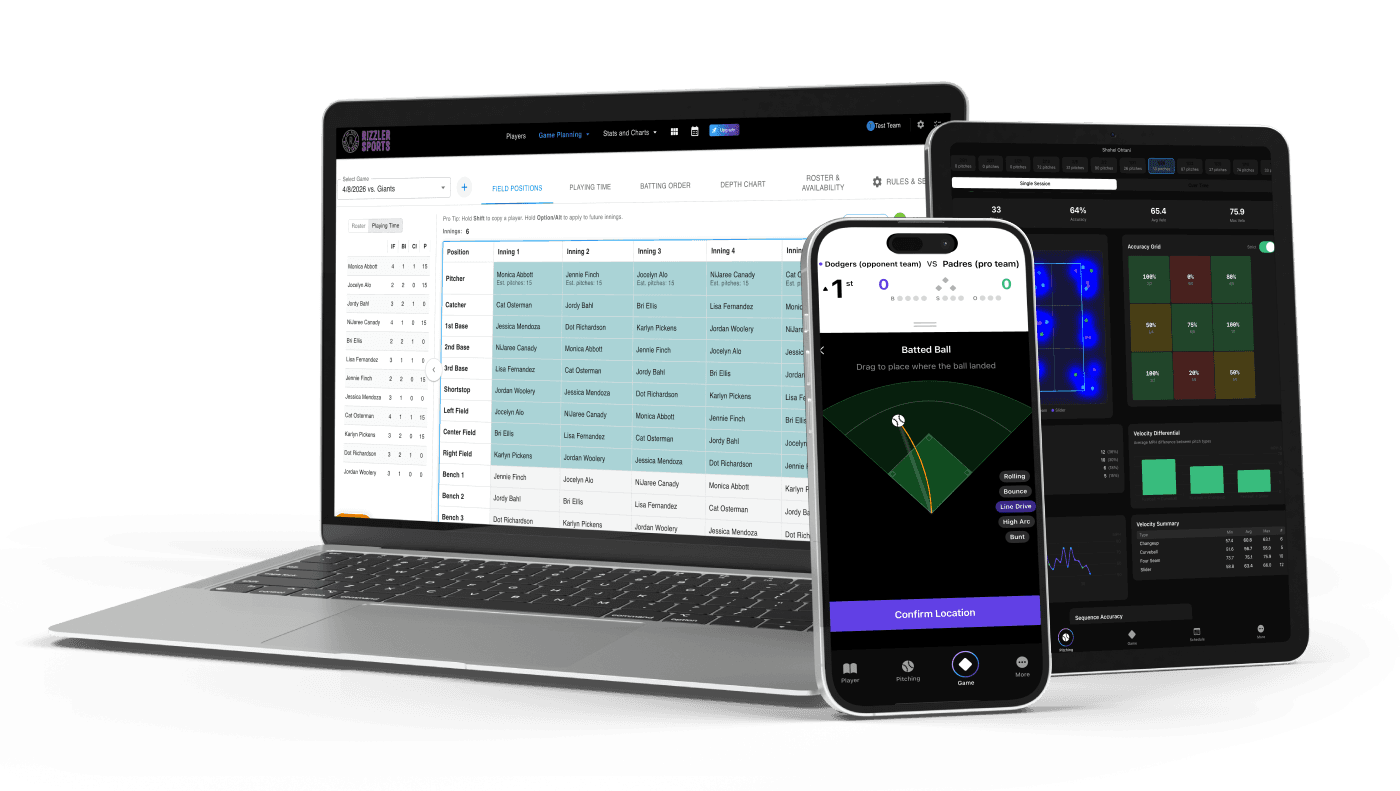
Plan games, set lineups, and track the season in one place
Keep every family in the loop automatically
Tell us about your program
4 fields · takes 30 seconds
Lands in the same inbox as the Help button · human response only
Read Next
What is Rizzler Sports?
FAQVolleyball Rotation Sheet: Printable + How to Fill It Out
VolleyballPractice Schedule Template: Session Plan and Weekly Grid
ResourcesBatting Average (AVG): Definition, Formula & Youth Baseball Context
StatsOutside Hitter in Volleyball: Role, Skills, and Development
VolleyballRoster Management: Organize Your Baseball Team
Features