Features
Bullpen Tracking for Youth Baseball & Softball
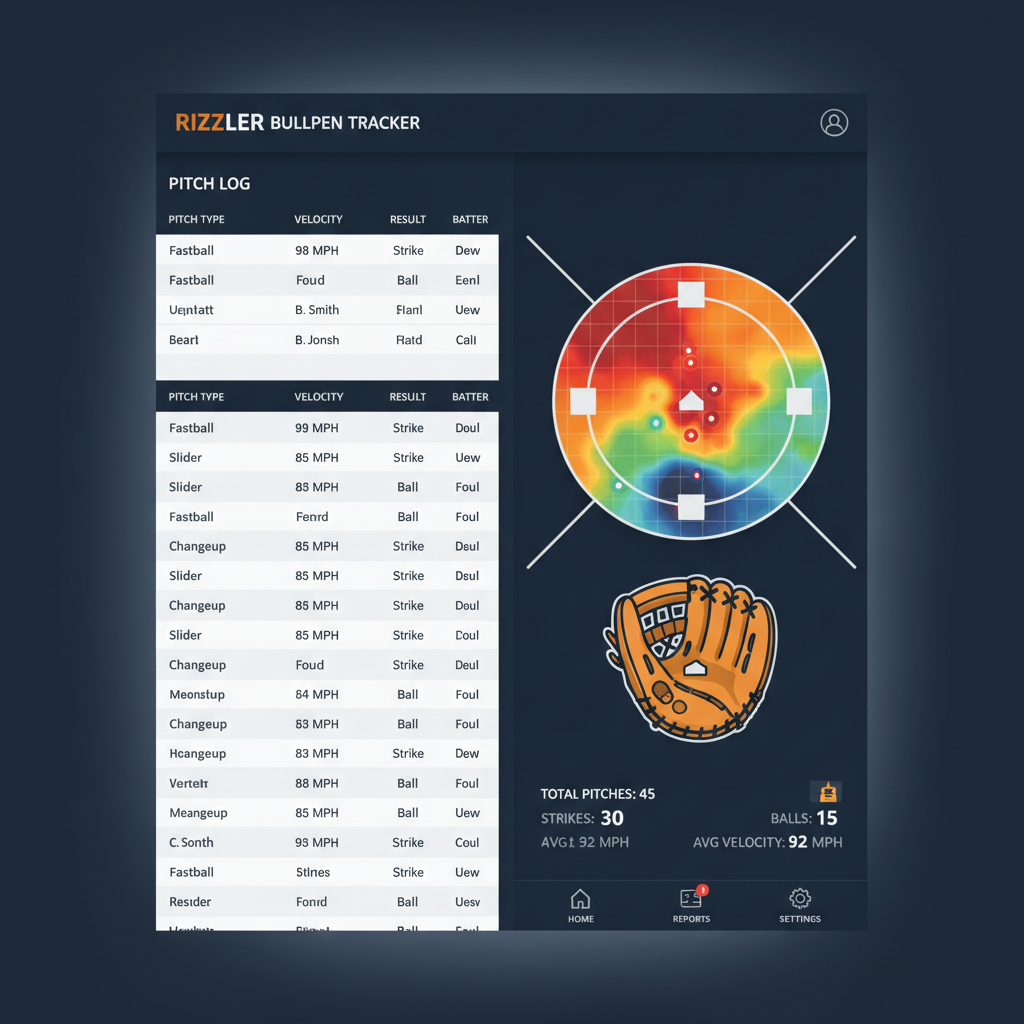
Rizzler's bullpen tracking lets coaches chart practice pitching sessions pitch by pitch, logging location, type, and outcome, then compare bullpen performance to in-game results. See whether your pitcher's curveball actually breaks the same way on game day as it does in practice.
What Is Bullpen Tracking?
Most coaches run bullpen sessions at practice and judge the results by eye. The kid looked good, his fastball was hitting spots, the changeup had decent movement. But how does that translate to a live at-bat with runners on?
Bullpen tracking closes that gap. Chart every pitch in practice the same way you'd chart pitches in a game. Build a pitch-by-pitch record of bullpen sessions. Then compare the data side by side: practice strike percentage versus game strike percentage, practice pitch location versus game pitch location, practice velocity patterns versus game velocity patterns.
For the first time, you have data on what a pitcher does in practice, not just what they do under pressure.
How Bullpen Tracking Works
Step 1: Start a bullpen session. Open Rizzler on your iPhone, select the pitcher, and start charting. Same interface as in-game pitch charting: tap the zone where each pitch lands.
Step 2: Log pitch type and result. For each pitch, record the type (fastball, changeup, curveball, etc.) and the result (strike, ball, swinging strike, foul). At the youth level, most coaches track location and result; velocity is optional if you have a radar gun.
Step 3: Review the session heatmap. After the session, Rizzler generates a heatmap showing where pitches landed. You'll see patterns instantly. Is the fastball consistently arm-side? Is the curveball landing in the zone or bouncing in the dirt?
Step 4: Compare to game data. This is where it gets powerful. Rizzler shows practice heatmaps next to game-day heatmaps. If your pitcher's bullpen strike percentage is 72% but their game strike percentage is 54%, you know they're losing command under pressure, and that's a coaching conversation worth having.
Key Capabilities
| Capability | What It Does |
|---|---|
| Pitch-by-pitch logging | Same charting interface as in-game, so the data format is consistent |
| Practice heatmaps | Visual pitch location maps for every bullpen session |
| Practice-to-game comparison | Side-by-side view of bullpen data versus game data |
| Historical session log | Review every bullpen session across the season |
| Pitcher development tracking | Track improvement in strike percentage, location consistency, and pitch mix over time |
Bullpen Tracking for Travel Coaches
Your 13U pitchers are developing secondary pitches. In the bullpen, the changeup looks great: three out of four land in the zone, the speed differential is solid. But in games, the kid won't throw it. He falls back to all fastballs.
With bullpen tracking data, you can show him the numbers: "Your changeup was a strike 75% of the time in Tuesday's bullpen. You threw it twice in Saturday's game. Let's talk about trusting it." That's a development conversation backed by data, not opinion.
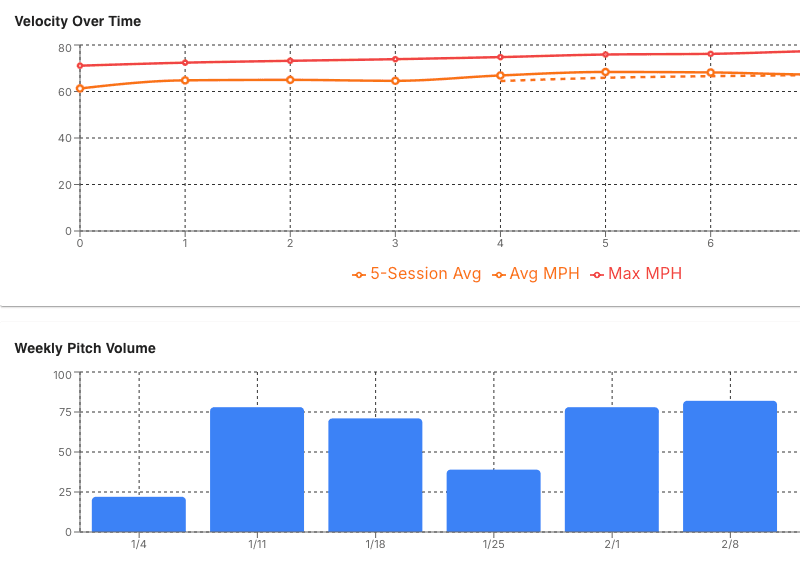
Travel coaches running 3-4 practice sessions per week can build a full picture of each pitcher's development arc. The data lives in Rizzler alongside game stats, so you can track improvement across the entire season.
Bullpen Tracking for Little League Coaches
Even at the LL level, bullpen tracking matters. You're trying to figure out which of your eight potential pitchers can throw strikes consistently. Run a 15-minute bullpen session, chart 20-25 pitches per kid, and the data tells you who's ready and who needs more practice.
Pair this with pitch count limits and rest day tracking, and you know exactly who can pitch this weekend and how their recent practice looks.
Frequently Asked Questions
Can I chart bullpen sessions on my phone?
Yes. The bullpen tracking interface works on Rizzler's iOS app: tap to chart from behind the plate or next to the mound. It's the same tap-to-chart interface as in-game pitch charting. Bullpen tracking is iOS only.
Does bullpen tracking count toward a pitcher's pitch count?
No. Bullpen sessions are tracked separately from game pitch counts. Practice pitches don't affect rest day calculations or rule compliance alerts.
How many bullpen sessions should I track?
Track as many as you want. The more data, the better the practice-to-game comparison. Most coaches who use bullpen tracking chart 2-3 sessions per week during the season.
Is bullpen tracking included in the Free plan?
No. Bullpen tracking requires the Coach plan or Club plan, and it runs on the iOS app. Compare plans →
Can I share bullpen data with pitchers and parents?
Yes. Rizzler lets you export bullpen session summaries as PDFs, useful for showing a pitcher their progress or discussing development with parents.
Bullpen tracking, including heatmaps and practice-to-game analysis, is available on the Coach plan and Club plan through the iOS app.
Talk to our team
Want to spend more time coaching and less time with paperwork? Let's talk.
Tell us about your team and we'll show you how to plan games, set lineups, run the schedule, and develop players in one place, so you spend the season coaching instead of chasing admin.
Less admin, more coaching
Plan games, set lineups, and track the season in one place
Keep every family in the loop automatically
Tell us about your program
4 fields · takes 30 seconds
Lands in the same inbox as the Help button · human response only
Read Next
How to Run a Golf Tryout: A Coach's Step-by-Step Guide
LearnRizzler for Little League Organizations
For LeaguesPitching Analytics: Track, Chart, and Develop Your Pitchers
FeaturesRizzler Reps for Basketball: Assigned Drills, Streaks, and At-Home Training
BasketballBest Baseball Tryout Management Tools in 2026
LearnRizzler vs GameChanger: Which Do You Need?
Comparison