
Learn
How to Coach Youth Soccer: A First-Season Guide That Actually Works
Coaching youth soccer well means maximizing three numbers at every practice: touches on the ball, decisions made at game speed, and smiles. That is the whole method. The best youth sessions look less like a professional training ground and more like organized street soccer, small groups, small games, every kid with a ball or about to get one. New coaches who understand this outperform experienced coaches who run lines and lectures, because at the youth level the ball is the teacher and your job is to arrange the meeting.
If a fall season is a few weeks away and you just agreed to coach, this guide is your on-ramp: what kids can learn at each age, how to structure a session, a full worked U10 practice plan, and the game-day and admin habits that keep the season sane.
What should you teach at each age?
Match the curriculum to the developmental stage, not to the soccer you watch on TV. US Youth Soccer's coaching framework and every major club academy agree on the broad shape:
| Age | What to coach | What to skip |
|---|---|---|
| U6 to U8 | Dribbling everywhere, 1v1 confidence, toe/inside touches, fun above all. Games of tag with a ball. | Positions, passing patterns, any tactic. They swarm the ball; let them. |
| U9 to U10 | First touch, passing with purpose, 1v1 attacking and defending, very basic shape (spread out, one player stays back). | Offside trap, set-piece routines, positional rigidity. |
| U11 to U12 | Receiving under pressure, combination play (give-and-go), principles of defending, playing out from the back. | Systems chess. Teach principles, not formations. |
| U13+ | Positional roles, transitions, speed of play, and the physical/mental sides: communication and body language. | Nothing is off-limits, but small-sided games still beat drills. |
The pattern across all ages: skill on the ball first, decisions second, team tactics a distant third. A U10 team that can all dribble and pass under pressure will figure out shape. A U10 team drilled on shape but weak on the ball has nothing to be organized around.
How should you structure a practice?
Use the play-practice-play shape that US Soccer teaches its grassroots coaches: start with a small-sided game, pull out one theme and work it in a focused activity, then finish with the game again and watch the theme show up. Kids arrive wanting to play, so let them, and a coach who starts with play buys attention for the middle segment.
Rules that hold every youth session together:
- One ball per player at the start. Arrival activity is dribbling in a grid, not standing. Reps begin the moment the first kid shows up.
- One theme per session. Tonight is first touch. Everything, the warm-up, the activity, your coaching points in the final game, serves first touch. Next week, something else.
- No lines, no laps, no lectures. The classic test: if more than two kids are waiting, redesign the activity. Fitness at this age comes free with the games.
- Coach in the flow. Make one point in ten seconds while the game breathes, then get out. Save the 30-second version for water breaks.
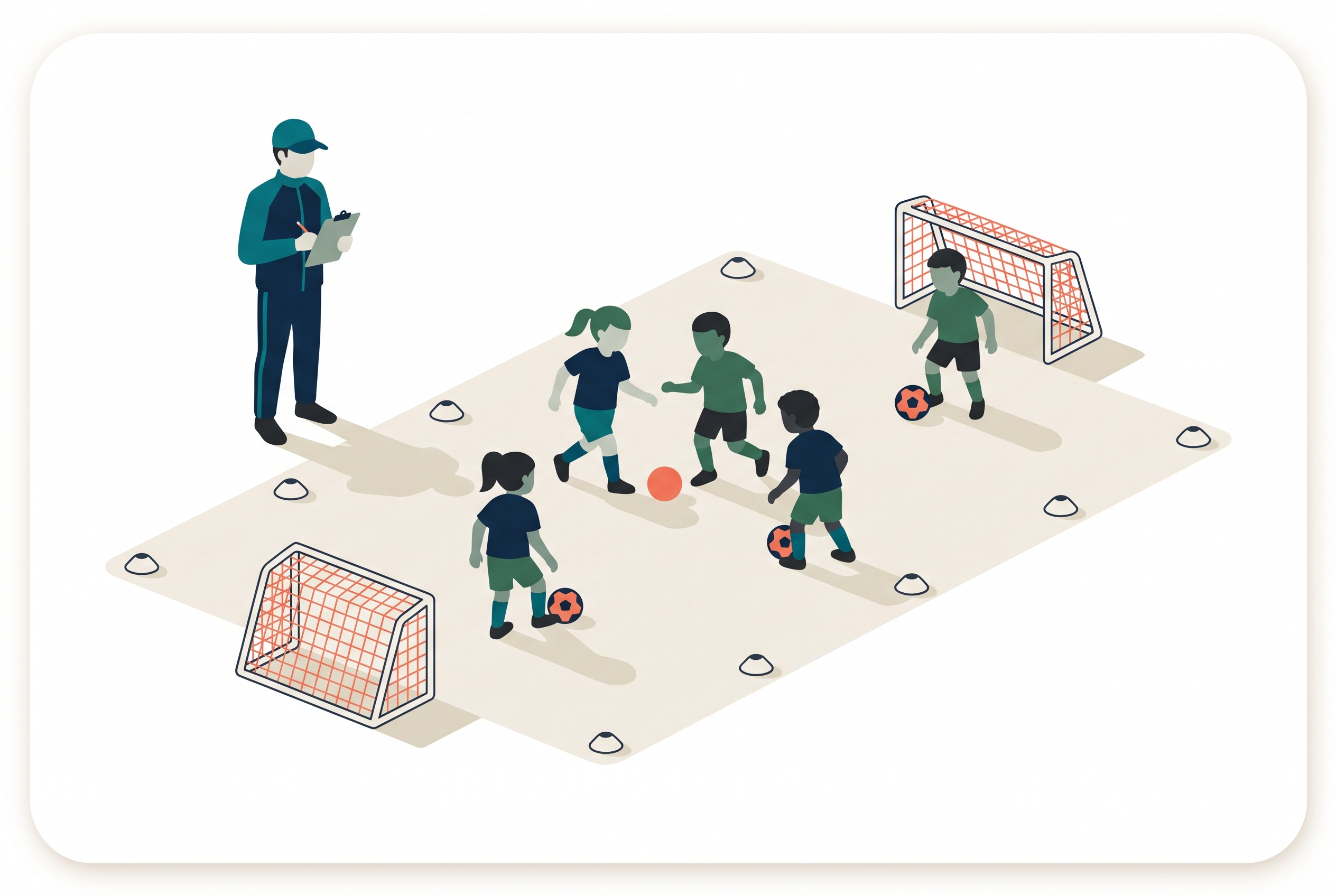
- Small-sided everything. 3v3 and 4v4 produce several times more touches, dribbles, and shots per player than 8v8. More touches is more learning per minute of your practice.
A worked 75-minute U10 practice plan
Theme: first touch and passing under pressure. Roster of 12, two adults, one bag of balls, 20 cones, pinnies. Steal it as-is.
| Time | Segment | Detail |
|---|---|---|
| 0 to 8 min | Arrival grid | Every kid dribbles in a 20x20 grid as they arrive. Call changes: left foot only, sole rolls, speed up on a whistle. Late arrivals just join. |
| 8 to 20 min | Play 1: 4v4 to small goals | Three teams of four, two play, one does keep-ups behind the goal and rotates in every 3 minutes. No coaching yet; watch who struggles with the theme. |
| 20 to 35 min | Practice: 4v2 rondo boxes | Two grids of six players: four passers on the outside, two defenders inside, defenders swap on a steal. Coaching points: first touch away from pressure, pass to the correct foot. Count consecutive passes out loud; teams chase their record. |
| 35 to 40 min | Water + one question | Ask: "When the defender is running at you, where should your first touch go?" Let kids answer. They will remember their own words longer than yours. |
| 40 to 55 min | Practice 2: 3v3 with end zones | Score by dribbling or receiving a pass in the end zone. Forces receiving under pressure and attacking decisions. Rotate the resting team every 4 minutes. |
| 55 to 72 min | Play 2: 4v4 to small goals again | Same game as segment two. Praise every clean first touch loudly. You should see the theme appear in the game; that visible improvement is your evidence the session worked. |
| 72 to 75 min | Huddle | One specific praise per team, name the theme one last time, team cheer, collect pinnies. |
Total standing-in-line time: zero. Total touches per player: several hundred. That ratio is the entire secret of youth soccer coaching.
How do you manage game day?
Prepare three things and game day runs itself. First, equal-ish playing time, planned before the game rather than improvised: write your substitution blocks on a card, because a rotation decided at halftime under a close score will always shortchange the same kids. If your league mandates minimum minutes, plan to exceed it. Second, one job per player when they sub out: watch our shape, count our completed passes. Kids on the bench with a job stay in the game mentally. Third, a two-sentence pre-game talk. Name the theme from practice, say "have fun," and release them. Any speech longer than that is for you, not them.
Then hold the sideline standard you want parents to follow. Cheer effort, coach nothing from the touchline mid-play, and never referee from the sideline. Your parents will match your volume and your subject matter almost exactly.
The admin half of coaching (the part that burns coaches out)
Ask any coach who quit after one season and the reason is rarely soccer. It is the fifty-text group chat about carpools, the "is practice still on?" messages, and re-sending the schedule every week. Solve the admin once at the start and coaching stays fun.
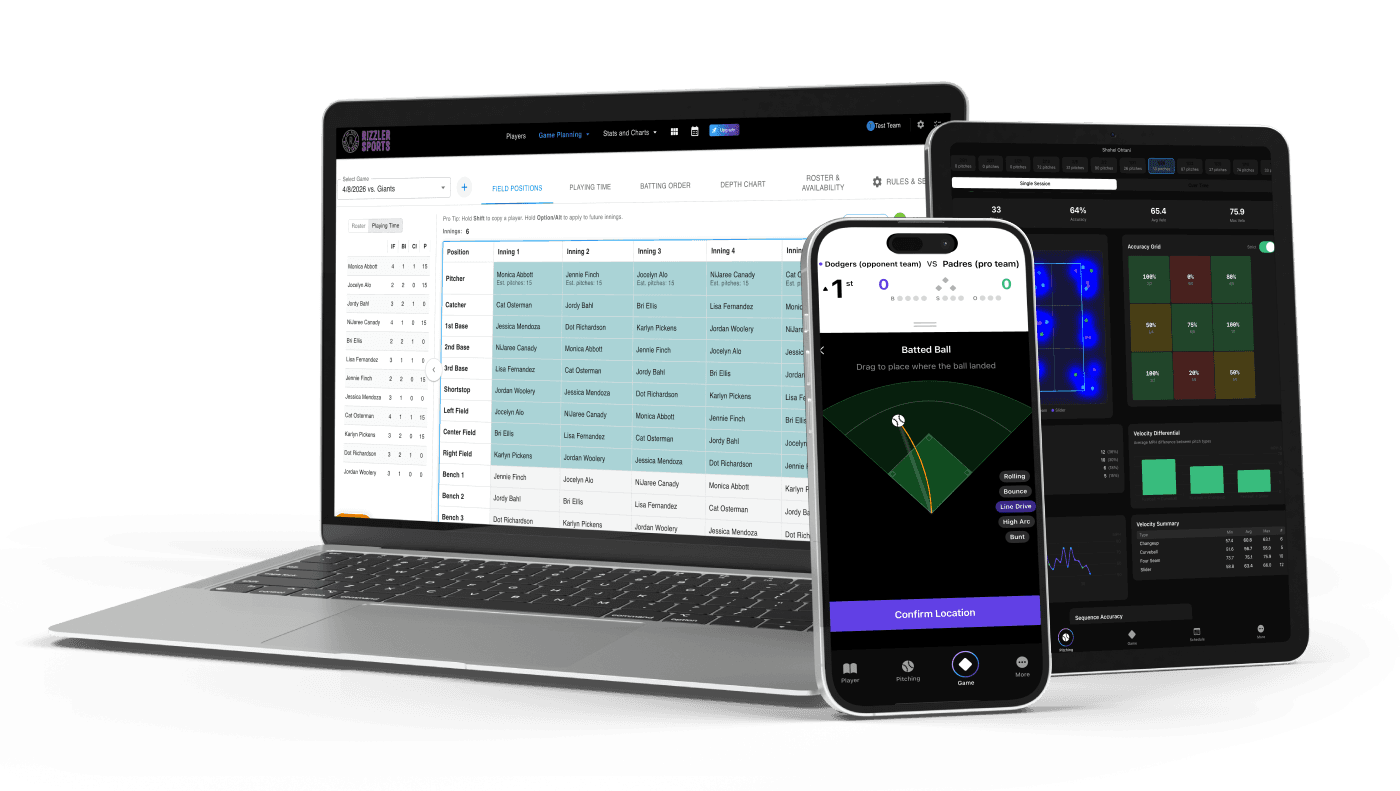
The setup that works: one roster with every family's contacts in one place, the full season schedule synced to parents' phone calendars, and RSVPs on every event so you know Thursday whether you have enough players Saturday. In Rizzler that core is free on every plan, and it works for soccer teams the same as any sport: roster, schedule sync, availability, and self-serve RSVPs. Our guide to organizing a youth sports team walks the full setup in an afternoon.
Two upgrades matter as the team gets more serious. On the Coach and Club plans you can run structured player evaluations with your assistant coaches scoring the same criteria, track skills across the season, and share each player's progress report with their family, which turns your end-of-season parent conversations from vibes into evidence. And Rizzler Reps, included for your players when you are on Coach or Club, has a live soccer drill library, so the kid who wants extra touches between sessions gets assigned work with streaks and daily targets instead of a vague "practice at home."
Finally, write down a three-sentence coaching philosophy before the season and share it with parents. Playing-time policy in week one prevents playing-time conflict in week eight, and keep a reusable practice template so planning takes ten minutes a week instead of an hour.
Frequently Asked Questions
How do I coach youth soccer with no experience?
Run small-sided games and maximize touches; you do not need playing experience to do either. Use the play-practice-play structure: open with a 4v4 game, work one theme in a simple activity like a rondo, then finish with the game. Free resources from US Soccer's grassroots pathway and US Youth Soccer's coaching manual cover age-appropriate detail, and a $25 grassroots license is worth the evening it takes.
What is the most important thing to teach young soccer players?
Comfort on the ball. Dribbling and first touch decide everything downstream, because a player who cannot control the ball cannot execute any tactic. From U6 through U10, prioritize 1v1 moves, dribbling games, and receiving, and let team shape stay loose. Tactics stick easily at 12; a weak first touch at 12 is much harder to fix.
How long should youth soccer practice be?
About 60 minutes for U6 to U8, 75 minutes for U9 to U12, and up to 90 minutes for U13 and older, once or twice a week in rec and up to three times in competitive club. Whatever the length, the design rule stays constant: no lines, one theme, and at least half the session spent playing actual soccer.
How much playing time should every kid get in youth soccer?
Equal at U6 to U10, and meaningful minutes for everyone at all youth ages. Plan substitution blocks on paper before the game so a tight score does not quietly decide the rotation. Playing time is also the number one source of parent conflict, which is why stating your policy in writing at the season kickoff matters as much as the policy itself.
What should a soccer coach do the week before the season starts?
Three things: collect the full roster with parent contacts in one place, publish the season schedule synced to family calendars with RSVPs turned on, and send a kickoff message with your coaching philosophy and playing-time policy. That hour of setup eliminates most of the mid-season chaos coaches complain about.
Ready to spend the season coaching soccer instead of chasing texts?
Running a soccer club with many teams and volunteer coaches? Our team can help.
Talk to our team
Want to spend more time coaching and less time with paperwork? Let's talk.
Tell us about your team and we'll show you how to plan games, set lineups, run the schedule, and develop players in one place, so you spend the season coaching instead of chasing admin.
Less admin, more coaching
Plan games, set lineups, and track the season in one place
Keep every family in the loop automatically
Tell us about your program
4 fields · takes 30 seconds
Lands in the same inbox as the Help button · human response only
Read Next
Tournament Planning for 12U Baseball
BlogHow to Run a Little League Evaluation Day with Rizzler
For LeaguesHow to Run a Lacrosse Tryout: A Coach's Step-by-Step Guide
LearnWhat is Playing Time Tracking in Youth Baseball?
LearnRizzler Sports Features: Every Coaching Tool in One Place
FeaturesBaseball Team Fundraising Ideas, Ranked by What You Actually Keep
Learn