Learn
How to Run a Golf Tryout: A Coach's Step-by-Step Guide
To run a golf tryout, you have every player post stroke-play scores across one or more qualifying rounds, average those scores, and use the scoring average alongside a short evaluation of the short game, putting, and course management to set the roster and place players on varsity or JV. Stroke play is the spine of the tryout because the scorecard is objective and hard to argue with, but the eye test on the practice green and around the greens separates players whose scores look similar. The hard part is rarely the math. It is organizing the whole event so every player plays the same holes under the same conditions, the cards are verified and recorded cleanly, and you can defend every roster decision afterward, especially when you are moving hundreds of players across a course over several days. This guide walks through exactly how to conduct a golf tryout from first planning to final offers, whether you are a school program seeding varsity and JV, a club selecting a competitive squad, or a large league putting 300 players in front of 15 to 20 coaches.

What Skills Should You Evaluate at a Golf Tryout?
Evaluate four core areas at a golf tryout: stroke-play scoring across qualifying rounds, the short game, putting, and course management. The scoring average carries the most weight because it captures everything a player does over a full round, but the short game, putting, and decision-making tell you which players will hold up under pressure and shoot lower as the season goes on. A short list keeps a large evaluation panel focused and consistent.
Here is what evaluators look for in each area and how each is typically assessed at a tryout:
| Skill | What evaluators look for | How it's assessed |
|---|---|---|
| Stroke-play scoring | Total strokes per round and the scoring average across all qualifying rounds; this is the primary, objective measure | One or more 9 or 18-hole qualifying rounds, often over two or more days, with each card verified |
| Short game | Contact and control on chips and pitches, distance feel, and ability to get up and down around the green | Watched during rounds and at a short-game station with set chip and pitch shots |
| Putting | Speed control on long putts, accuracy inside makeable range, and consistent pre-putt routine | Observed during rounds and at a putting station with set short and lag putts |
| Course management | Smart club selection, playing to strengths, managing trouble, and avoiding big numbers | Observed across the round; evaluators watch decisions, not just outcomes |
| Attitude and etiquette | Pace of play, composure after bad holes, honesty in scoring, and respect for playing partners | Observed throughout; used to adjust a player's overall standing |
The scoring approach above reflects how programs actually select: an average taken across multiple qualifying rounds, where players with extra rounds may drop their worst, smooths out a single bad day. The eye test on swing, short game, and course management then separates players whose averages are close.
How Do You Score a Golf Tryout?
Score golf primarily by scoring average across qualifying rounds, then layer a 1-to-5 rating for short game, putting, and course management to separate players with similar averages. The scoring average is the backbone: rank every player low to high and compare against your varsity and JV targets. Players who finish within a stroke or two of each other are common, so the 1-to-5 ratings break ties and flag the player whose short game and decision-making suggest a lower average is coming.
Two rules make the results trustworthy at scale. First, set the standards before the qualifying rounds so every coach knows the scoring average that earns a varsity spot, and so a "4" short game means the same thing to every evaluator on the course. With 15 to 20 evaluators watching the same players, this calibration is what keeps the ratings comparable. Second, verify each card and record the ratings as soon as a group finishes while it is fresh, and add a short note. "Posted 41 but rescued three pars with his wedge" tells you far more in a week than a bare number.
How to Set Up Golf Tryout Stations at Scale
Set up the tryout around qualifying rounds on the course, supported by short-game and putting stations, so every player plays the same holes under the same conditions and gets a focused look at the skills the scorecard hides. Send groups off in waves, often in a shotgun start across multiple holes, so a large field finishes in a reasonable window, and run the short-game and putting stations near the clubhouse for players before or after their round.
How you staff the event depends on size. At a small tryout, one coach can ride along and verify cards. At scale, with 300 players and 15 to 20 coaches, you do the opposite: assign multiple evaluators across the course and the practice stations so a large field keeps moving, and have every coach grade the same players against the shared standards. Some programs split evaluators across holes and stations, with rovers watching course management and verifying scores while a fixed group runs the short-game and putting tests that every player rotates through. Others rotate all coaches to the putting and short-game stations together so everyone grades the same shots. Either way, the goal is multiple independent observations per player, which you combine for a more reliable result than any single grader could give. Keep a staffed check-in table at the first tee or clubhouse so you always know who has arrived and who is still expected.
Golf Tryout Timeline: From Planning to Finalized Teams
Plan to start two to three weeks before the first qualifying round, then move through registration, check-in, the qualifying rounds, review, and offers. Here is the full end-to-end checklist for hosting the event:
Two to three weeks before: Planning
- Lock the dates and course; reserve tee times and a rain date, and confirm the qualifying format (9 or 18 holes, number of rounds)
- Decide age or grade groups, varsity and JV sizes, and your scoring-average targets
- Build (or reuse) your evaluation form with the categories above
- Recruit and brief evaluators; align all 15 to 20 coaches on the standards and rating scale
- Open online registration so you have a confirmed player count
Registration
- Collect each player's name, age or grade, handicap or recent scores, and contact info
- Assign every player a tryout number and group them into tee-time foursomes so evaluators record scores and ratings by number, not by name, which keeps scoring objective even with hundreds of players
- Send a confirmation with tee time, course, format, and what to bring
Tryout day: Check-in
- Check players in against your registration list and hand out numbers and scorecards
- Brief players on the format, pace-of-play expectations, and how to verify and turn in cards
Tryout day: Evaluation
- Send groups off; players complete each qualifying round while evaluators verify cards and rate short game, putting, and course management
- Rotate players through the short-game and putting stations before or after their round
- Repeat qualifying rounds over multiple days so a single bad round doesn't define a player
After the tryout: Review and decide
- Combine every player's verified scores into a scoring average and pull the ratings into one ranked list
- Discuss bubble players as a staff, using short-game and course-management notes alongside the averages
- Finalize varsity and JV against your targets
Offers: Accept, decline, and finalize
- Extend offers to selected players with a clear accept-by deadline
- Track accepts and declines, and go to your next-best player when a spot opens
- Send respectful, timely notice to players who weren't selected, with feedback where you can
- Confirm final rosters and communicate next steps (match schedule, practice expectations, fees)
Run Your Entire Golf Tryout with Rizzler Sports
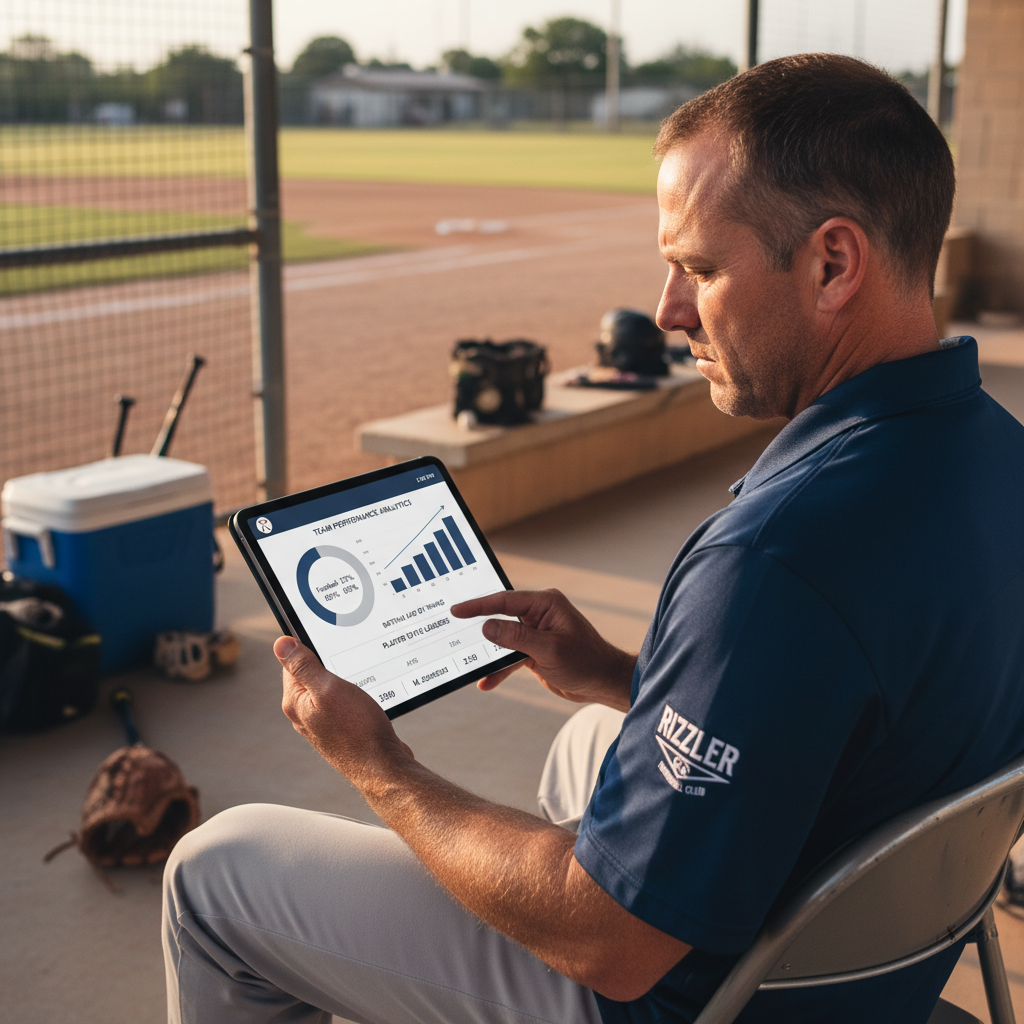
A tryout at scale is a logistics problem before it is a golf problem. Three hundred registrations, hundreds of check-ins, tee-time groupings, a stack of scorecards and evaluation forms to verify and average, then the follow-up: inviting selected players, tracking who accepted, and back-filling spots as players decline. Rizzler Sports handles all of it in one place, which saves coaches and administrators hours of work per tryout. Players register online, coaches verify scores and rate evaluations on a phone or tablet on the course and at the practice stations, scoring averages and rankings calculate automatically, and you send and track offers without a single spreadsheet or group text.
Running a larger program, a full school district, a regional club, or a multi-school league? We will set your tryout up end to end and show you how much staff time it saves.
Talk to our team
Running a tryout at scale? Let's talk.
Tell us about your club, league, or school and we'll come back to you within one business day with a walkthrough of how much staff time Rizzler Sports saves by running your tryout end to end: registration, check-in, evaluations, invites, and offers in one place.
Cut tryout admin from days to minutes
Online registration and check-in for hundreds of players
Evaluate, rank, invite, and track offers in one place
Tell us about your program
6 fields · takes 60 seconds
Lands in the same inbox as the Help button · human response only
Frequently Asked Questions
How many qualifying rounds should a golf tryout have?
Most programs use multiple qualifying rounds, often over two or more days, and average the scores so a single bad round doesn't decide a roster. Some require a minimum number of 18-hole rounds and let players who post extra rounds drop their worst. Two to four rounds is common, balanced against course access and the calendar.
How do you decide varsity versus JV?
Rank players by scoring average against your varsity and JV targets, then use short-game, putting, and course-management ratings to separate players whose averages are close. A player a stroke off the varsity line whose short game and decision-making are trending up may earn the nod over a player whose average has plateaued.
How do you staff coaches at a large tryout?
At scale, do not assign one coach to ride with one group all day. With 300 players and 15 to 20 coaches, station rovers across the holes to verify cards and watch course management, and run the short-game and putting stations with a fixed group every player rotates through, all grading against shared standards. Combining several independent observations per player is more reliable, and far faster, than a single grader.
What should players bring to a tryout?
Clubs, golf shoes, balls and tees, a glove, weather-appropriate layers, water and a snack, and any required medical or physical-clearance forms. Tell players to arrive early enough to check in, warm up on the range and putting green, and reach their starting hole before their tee time.
Does the eye test matter if scores are objective?
Yes. Stroke-play scores are the primary metric, but the eye test on swing, short game, putting, and course management explains why two players with the same average will not stay equal. A player who scrambles well and manages the course often has more room to improve, which matters when you are projecting a roster across a full season.
Read Next
Tournament Planning for 12U Baseball
BlogEvaluation Events — Run League-Wide Player Assessments Digitally
FeaturesHow to Run a Gymnastics Tryout: A Coach's Step-by-Step Guide
LearnBest Apps for Travel Baseball Coaches in 2026
LearnRizzler vs GameChanger: Which Do You Need?
ComparisonLittle League Pitching Rules — Complete Guide for Coaches
Rules